Posted on November 10, 2013 by Madsen Pirie
 It’s about this time of the year that I order my Christmas goose. I find turkey fairly bland and inclined to be dry, whereas goose is very tasty and moist. It helps that the geese are free range. I don’t put stuffing inside a goose, and during the roasting drain off about four jars of goose-fat that solidifies to a pure white solid. It keeps very well in a cold part of the fridge, and lasts me well into the year. I have two principal uses for it.
It makes for the most delicious roast potatoes. I par-boil the potatoes for 8 minutes, drain the pan, then shake the potatoes lightly with the lid on. This roughens the outsides of the potatoes a little. Then they are roasted in goose-fat for at least an hour, basting occasionally and turning once. The process makes the potatoes very soft and fluffy inside, but with a slightly crunchy outer shell that tastes better than any other cooking method can manage. Most of the goose-fat left over when the potatoes are done can be racked off and used again.
My other use for goose-fat is in pastry. Used as shortening it makes for superbly succulent pastry to be used for fruit or savoury pies and quiches. I sometimes see goose-fat on sale in supermarkets, but it is quite expensive, whereas the Christmas goose-fat is just a by-product of roast goose. Oh, and I eat my Christmas goose with Bramley apple sauce. It’s a delicious combination.
Filed under: Updates | Leave a comment »
Posted on November 9, 2013 by Madsen Pirie
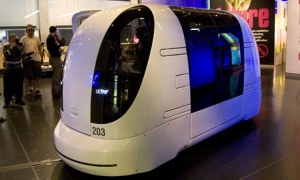 Although Google has logged more than 300,000 miles in experimental driverless cars in the US, so far only the driverless pods at Heathrow Airport have pioneered the technology in the UK. Now the town of Milton Keynes has taken a bold step, announcing the introduction of driverless pods to ply its town centre. The first 20 vehicles will be controlled by the driver, and will be brought in by 2015 to allow other road users to become used to the concept. By 2017, the first 100 fully-automated driverless vehicles should be in operation. The ‘pods’ will travel on designated routes at up to 12 mph, not a great speed, but close to the average speeds that traffic moves at in our cities. Users will be able to book them using smart-phones, and they will allow two passengers to travel in them reading newspapers, playing computer games, or otherwise taking a break from the chores and stress of driving themselves. Oxford and Cambridge Universities have worked with Arup, the engineering firm, to develop the system, and the government has put up a modest £1.5m to help seed the project, part of the £75m it is putting up to advance low carbon technologies.
I see this as the bow wave of a future in which electric drives largely replace internal combustion engines, especially in our cities. This is one of the technologies that hold the possibility of transforming our economy just as the early automobiles did. I intend to be an early adopter. I will visit Milton Keynes in 2015 to drive one, and again in 2017 to be driven by one. And yes, in the unlikely event that I will still own an internal combustion engine car by then, I will leave it at home when I do so.
Filed under: Updates | Leave a comment »
Posted on November 8, 2013 by Madsen Pirie
 I just went to see the movie “Gravity,” starring Sandra Bullock and George Clooney, and directed by Alfonso Cuarón. Most of the critics have given it a big build-up, with one even saying that it “made other spectaculars look leaden.” It is well shot, with almost the entire action taking place in space and zero gravity, and is visually convincing – I saw it in 3D and found it easy to imagine that being in space is just like that. It’s exciting, in that one thing seems to go wrong after another, rather like in “Apollo 13,” with ingenuity required if each crisis is to be overcome.
Despite all this I found it curiously empty. There are only two characters in it, and they are very lightly sketched. There is not a great deal of plot. An accident happens and they try to survive it. There are no great themes or deep thoughts. Space is dangerous; but we knew that. The movie is a series of action sequences, which is fine because the action is good. The movie begins to drag a little in some of the soliloquy sequences.
The critics were fairly kind to “Ender’s Game,” though were not overwhelmed by it, yet they were overwhelmed by “Gravity” which in my book is not a patch on “Ender’s Game.” “Ender’s Game” has mind as well as action, with ruthless Earth authorities training and using children for war without regard to what it does to them or how it will leave them afterwards. “Ender’s Game” has character development as young Ender acquires the confidence to command. “Gravity” is good to look at and has enough excitement to sustain it, but little more. My advice is to see both, but it is scenes from “Ender’s Game” that will linger in the mind afterwards.
Filed under: Updates | Leave a comment »
Posted on November 7, 2013 by Madsen Pirie
 I’m all for new ideas to be proposed to deal with any global warming in a technical way. By that I mean that we continue living life as we want to, and engineer solutions to lower the footprint that activity has on the planet. I’m not in favour of all going back to mediaeval poverty and travelling by horse and cart. The geo-engineering ideas put forward come into several categories.
There is solar radiation management, achieved by increasing the reflectivity of clouds, or by reflectors installed in space to shield the Earth, or by stratospheric aerosols to put fine particles into the upper atmosphere. One proposal is for a fleet of unmanned ships to spray salt water droplets up into the clouds.
Carbon dioxide removal can be achieved by planting large numbers of trees, or by locking carbon into the soil by burning biomass. It can be done by sequestration, separating and storing CO2. One intriguing idea is to seed the ocean with nutrients in increase marine vegetation to draw down CO2. Ocean fertilization uses iron to stimulate phytoplankton growth and increase CO2 absorption.
Most environmentalist activists oppose all such geo-engineering methods. They cite possible side effects, but their real reason is that they would allow people to continue their lifestyles instead of changing them to live as the environmentalists think they ought to live. Some oppose even experiments to test the efficacy of geo-engineering proposals, not because of dangers posed by the tests, but in case they succeed and let governments off the hook of phasing out fossil fuels.
Filed under: Updates | 2 Comments »
Posted on November 6, 2013 by Madsen Pirie
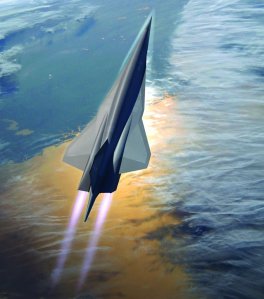 The SR-71 was legend, serving as America’s top spy plane and still holding several world speed records. It was an awesome machine, capable of mach 3, and beyond the range of interceptors and even missiles. Its successor, just announced will be twice as fast, flying at hypersonic speeds only the rocket-powered X-15 could achieve. The new plane is currently designated SR-72 by Lockheed’s Skunk Works and will be powered by an air-breathing engine rather than a rocket. The breakthrough achieved in cooperation with Aerojet Rocketdyne combines a turbojet with a scramjet. The partnership seems to have solved the problem of moving between the two modes by lowering the speed of the scramjet, which has to be flying supersonic before it can operate.
The drawback is that we are all going to have to wait. The company plans a scaled demonstrator by 2023, and the finished version could enter service by 2030. This sounds too long to my ears. I think it more likely that a secret version will be flying long before they unveil the public one for official photographs. My guess is that versions of it will be flying espionage missions by the end of this decade.
Filed under: Updates | Leave a comment »
Posted on November 5, 2013 by Madsen Pirie
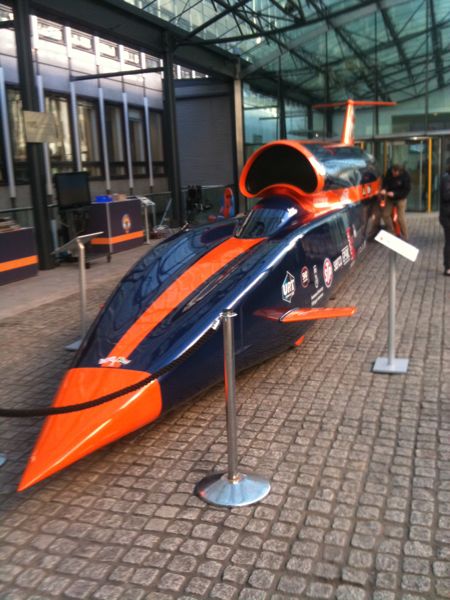
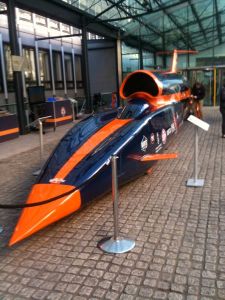 One advantage of staying and working in Westminster is that you sometimes see really neat stuff outside the Department of Business, Innovation and Skills. Yesterday they put Bloodhound SSC on show outside the entrance at the top of Victoria Street. The SSC stands for supersonic car, which is what it is. It is designed to go not only supersonic, but to exceed 1,000mph when it makes its attempt on the world land speed record. It is a car, with two wheels within the body and two rear ones mounted externally, and it is fully within the control of the driver. It was originally intended to be rocket powered, but the team later opted for both a turbofan engine and a rocket motor to give it greater control. The EJ200 jet is the one that powers the Typhoon Eurofighter, and the rocket is a hybrid, using a solid propellant and a liquid oxidizer. The combination chosen uses hydroxyl-terminated polybutadiene (HTPB), a synthetic rubber, as its primary fuel, with HTP, concentrated hydrogen peroxide, as its oxidizer.
The project draws heavily on previous technology, with the oxidant pump, for example, based on one that powered the Blue Steel cruise missile. Similarly the HTP is that which was used in the UK space programme on both Black Knight and Black Arrow rockets. It also involves several universities, notably the University of the West of England at Bristol, Swansea University and Sheffield University, and has several big name sponsors including Rolls Royce. It looks like a pretty exciting venture, driving both innovation and education.
Filed under: Updates | Leave a comment »
Posted on November 4, 2013 by Madsen Pirie
 It may be just a storm in a jam jar, but not according to Tessa Munt, a Liberal-Democrat MP who last week led a Commons debate on a proposal by the Department for Environment, Food and Rural Affairs to permit products with a lower sugar content to be sold as jams. The current minimum to merit the name is 60%, and the proposal is to lower it to 50%. Supporters say this will allow fruit preserves with 50% sugar to be sold to the Continent as jams. Critics say it will lead to runny jams, more in the Continental style, and a shorter shelf life.
It is true that French and German jams are thinner than ours on the whole, and that they go mouldy more quickly. People over there seem to prefer that consistency rather than the firmer set we go for in the UK. It is also true, however, that UK firms will still be able to make jams with 60% or more sugar content; it is just that others with a lower sugar content might appear on the shelves alongside them.
I make raspberry jam in a very traditional way, boiling up the raspberries with an equal weight of sugar. I boil for 11 minutes, then let it cool for 10 minutes before transferring it into warm jars. It makes the best quality raspberry jam with nothing else added, and it sets nice and firm without being gelatinous. For other fruit jams I sometimes add pectin. With brambles (blackberries) I add Bramley apples to help get a nice set, and I use redcurrants to get strawberry jam to set properly. And I add a little pectin to marmalade so I can reduce its sugar content to give it a slightly bitter tang that I prefer.
Filed under: Updates | Leave a comment »
Posted on November 3, 2013 by Madsen Pirie
 Dream Chaser from Sierra Nevada has made its first free flight. The unmanned vehicle was dropped from a helicopter 12,000 feet up and glided back on an automatic descent path to Edwards Air Force Base in California. All went well until the final approach when one of the landing wheels failed to deploy. This caused the craft to veer of the runway and sustain some damage. The damage was mechanical, to landing gear borrowed from a fighter jet and unlike the type that will be used in the final operational version. The accident is not expected to cause serious delay to the programme.
Unlike the Shuttle, Dream Chaser is a lifting body, and is designed to take up to 7 astronauts into low Earth orbit atop an Atlas 5 rocket. While SpaceX and Boeing are both developing capsules that will parachute down as the Apollo capsules did, Dream Chaser draws on some of what was learned in the shuttle programme and will land on wheels on a runway.
It is quite fascinating to see NASA use the private sector to pursue several alternative technologies instead of putting all its eggs in one basket as it has done before. The Dream Chaser was reported to have performed well, following the flight plan and descent trajectory. With luck the faulty wheel will be put down as one of those “oops!” moments that have happened throughout the testing of new space vehicles.
Filed under: Updates | 1 Comment »
Posted on November 2, 2013 by Madsen Pirie
 There’s a rather interesting story from NTT, the Japanese telecommun-ications company. A team led by Takahiro Inagaki at Kanagawa has successfully tested quantum entanglement at a distance of over 300km. Quantum entanglement’s wiki page tells us that it occurs “when pairs (or groups) of particles are generated or interact in ways such that the quantum state of each member must subsequently be described relative to each other.” To oversimplify, it means that when something is done to one entangled particle, its counterpart’s reaction is determined even if separated by a great distance. The important thing is that the information does not travel through space, nor does it obey the cosmic speed limit. The outcome is established in a shorter time than it would take electromagnetic radiation to convey the information that determines it. We know it is more than 10,000 times faster than light would take to cross the distance between the entangled particles, and some think it has to be instantaneous.
Why does this matter? Well, to the world it might bring quantum computing closer to reality. What interests me, however, is that it bears on the next science fiction book for young adults that I am planning to write. In it our young protagonist, plucked from the streets to become adept in mechanical mental communication (MMC), finally encounters the ultimate – a quantum entanglement communicator. It can affect a similar communicator at great distances, even across the depths of interstellar space, and instantaneously. All right, that’s a long way ahead of where we are now, and some think it will never be possible to modulate entangled particles. I think otherwise, knowing that people are clever, especially in fiction…
Filed under: Updates | 2 Comments »
Posted on November 1, 2013 by Madsen Pirie
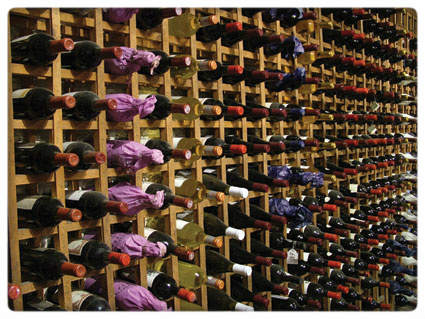
 Research from Morgan Stanley shows a shortfall between production of wine worldwide and the demand for it. In 2012 it was the biggest gap seen, with some 300m fewer cases produced than were demanded, compared with a decade ago when there was a surplus of 600m cases. A massive over-supply from 2004 to 2006 was brought about by a series of bumper crops. The low prices, followed by the financial crisis, led some vintners to take vineyards out of production. This has combined with a increase in demand, especially by the rising affluent class in China, to cause the shortfall.
Well, it happens, and I’m not worried. In farming bumper crops of one product lead to lower prices that cause farmers to switch to other crops the following year. There is often a cyclical pattern. A glut of wine brings lower prices, making it less profitable. Scarcity means high prices and more acres committed to production. I am quite confident that the higher prices resulting from the shortage will lead growers to plant more acreage in pursuit of the greater returns available.
If necessary new grape strains and hybrids will be developed to prosper in areas previously though inimical to grape-growing. As ever, technology and ingenuity, stimulated by the pursuit of success will find ways.
Filed under: Updates | 2 Comments »





 It’s about this time of the year that I order my Christmas goose. I find turkey fairly bland and inclined to be dry, whereas goose is very tasty and moist. It helps that the geese are free range. I don’t put stuffing inside a goose, and during the roasting drain off about four jars of goose-fat that solidifies to a pure white solid. It keeps very well in a cold part of the fridge, and lasts me well into the year. I have two principal uses for it.








 Madsen Pirie