Posted on September 2, 2013 by Madsen Pirie
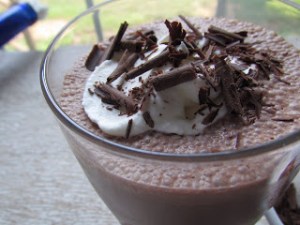 Dr Kate Loveman, a senior lecturer in 17th and 18th Century English Literature at Leicester, followed up a reference in a Samuel Pepys journal and has found recipes in manuscripts that belonged to the Earl of Sandwich in 1668. The Earl’s great great grandson is famously reputed to have put his meat between split bread a century later and invented the sandwich named after him. His ancestor’s chocolate recipe is as follows:
“Prepare the chocolatti (to make a drink). Putt the vessel that hath the chocolate in it, into a jaraffa (carafe) of snow stirred together with some salt. Shake the snow together sometyme and it will putt the chocolatti into tender curdled ice. Soe eate it with spoons.”
It was not easy for ordinary people to freeze stuff at the time, so this was very much a luxury dish. Dr Loveman tells us, “It’s not chocolate ice-cream, but more like a very solid and very dark version of the iced chocolate drinks you get in coffee shops today.” Chocolate was very much regarded as a drug in the 17th Century, so users were warned that hot chocolate could cause insomnia, excess mucus or haemorrhoids, and the iced version was “unwholesome” and could damage the stomach, heart and lungs. Today, of course, we know that chocolate is a delicious way of making ourselves happy, but understand that moderation is a wise course of action.
Filed under: Updates | Leave a comment »
Posted on September 1, 2013 by Madsen Pirie
 Volvo has released details of the concept coupé it will unveil at September’s Frankfurt motor show. It’s a lovely-looking car, but unfortunately they do not intend to put it into production. Instead it reveals their “future design direction.” It reflects the overall look of Volvo’s next generation of cars, and is a clear indication that the company is moving towards a more exciting look. The concept coupé has a plug-in hybrid powertrain combining a 2 litre petrol engine with an electric motor on the rear axle.
I rather think my next car will be an electric one. I currently drive a silver Lexus Soarer 2.5 which I have totally bonded with. It’s also a coupé, a silver dream racer with knockout looks, and I rate the look of a car as at least as important as its specifications. The only electric cars so far seem to have been utterly dull ‘family’ cars, with the notable exception of Tesla, which has made some nice-looking, but very expensive ones. I think the internal combustion engine is on its last legs (to mix my metaphors) for personal transport, and that electrics are the way we are headed. I have to admit I could be tempted by Volvo’s Concept Coupé if they were to put it into production. I’d be totally sold if they did an electric version…
Filed under: Updates | Leave a comment »
Posted on August 31, 2013 by Madsen Pirie
 Marmalade has quite a distinguished history, though most of it concerned quinces rather than oranges until comparatively recently. The Romans used to slow-cook quinces in honey and let it set as it cooled. Their word ‘melimelum’ is the origin, through the Portugese ‘marmelo,’ of our modern word. Portugese quince paste, as eaten by Henry VIII, is still sold today. Modern marmalade received a big boost when James Keiller began making it from 1797 in Dundee from Seville oranges.
I make it myself from Seville oranges, fresh when in season, tinned when not. I use 6 large ones chopped up with a spoon of pectin and three quarters of a pint of water added to the juice. Because I like mine quite bitter, I often add a lemon or a grapefruit as well, and I leave quite thick chunks of peel. If I can I let this soak overnight. I add 3.25 pounds of sugar, although the recipe calls for 4 pounds, and I bring it to the boil before adding a knob of butter. I let it simmer for about 20 minutes, and test it by putting a spoon of it onto a cold saucer and seeing if it leaves a ‘skin’ after a minute. I pour it into warm jars via a jug, and when it’s cooled a little I sometimes push the peel down with a fork before putting disks of plastic cut from shopping bags on top. I stick my own labels on it, and always have plenty of takers from people who like their marmalade tangy and chunky, as I do.
Filed under: Updates | 1 Comment »
Posted on August 30, 2013 by Madsen Pirie
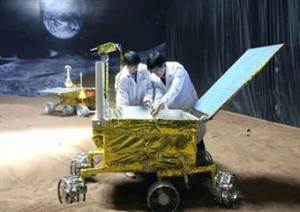 As private spaceflight initiatives make news in the United States, the Chinese government’s space programme continues to press ahead. In June three of their astronauts (dubbed taikonauts) spent 15 days in orbit and docked with their Tiangong-1 space station. Now they plan to land a probe on the moon before the end of the year. Chang’e-3 will soft-land on the lunar surface and use a radio-controlled rover to move across the terrain sending back images of what it sees, and digging into the lunar surface to analyze samples. Chang’e-3 will remain on the moon, as will a follow-up mission, but later ones are planned to return samples to Earth. And of course China has declared its intention to put humans on the moon, and is making steady progress towards that objective.
To some extend China has been catching up with space achievements the US made early on in its space programme, but these are necessary steps on the way to more ambitious programmes. You have to learn docking, living in space, soft landings and lunar lift-offs before you can implement a manned mission. But the Chinese are nothing if not ambitious, with a Mars landing as a distant objective, and their space programme enjoys popular support as a source of pride. And at a time when NASA seems to be treading water, with no clear vision of its next series of goals, the Chinese programme is moving steadily ahead to where they want to be. If successful, Chang’e-3 will complete the first lunar soft landing since 1976.
Filed under: Updates | Leave a comment »
Posted on August 29, 2013 by Madsen Pirie
 Two more stories on the driverless car suggest that we are moving very quickly towards a fundamental change in the way we get about. Google has already test-driven an adapted Toyota Prius on 100,000 miles of road in California, and several states have approved in advance the adoption of the new technology it promises.
Now Nissan has announced that it will deliver the first commercially viable ‘autonomous’ (driverless) car by 2020, and with more than one model. It delivered on its pledge to produce a zero-emission car within 3 years by producing the Nissan Leaf, so it has a good record on promises. It has dozens of research institutions on board helping it to develop the required technology.
Meanwhile Volvo has been testing a driverless car on UK roads around Westminster. I haven’t seen it yet, but this is where I work, so I might soon. It’s a specially adapted V60, and at the touch of two buttons the car takes over brakes, engine and steering, keeping it a safe distance from other vehicles. It uses a combination of radar and a camera to guide its automatic systems. The driver supervises and can take over at any time, but the autonomous car is clearly the way we are going. It works in the dark as well.
In the future the car will look nothing like today’s ones. Inside will be a table or desk where the traveller can work, and maybe a couch or a bed to sleep on. Commuting for an hour into cities for work will not be time wasted, but time available for work or leisure activities. People will simply enter their required destination and the car will do the rest. All of this will be happening at least a decade before HS2, our high speed train network, has consumed over £60bn of public funds in order to allow a small number of people to travel in a way that people will no longer want to.
Filed under: Updates | 2 Comments »
Posted on August 28, 2013 by Madsen Pirie
 We knew the Romans were good engineers. They built roads, bridges, aqueducts and walls. Many of their military victories owed at least as much to engineering as to their prowess in arms. New research shows they were even better than they thought. People wondered how they’d managed to get the Lycurgus cup to look green from the front but blood red when viewed from behind. The 1600 year-old cup depicts King Lycurgus of Thrace enmeshed in vines. In 1990 scientists looked at a few broken fragments and found the glass was impregnated with silver and gold flecks, ground down to be 50 nanometers, or a thousandth of the size of a grain of salt. It had been done deliberately.
“The ancient nanotech works something like this: When hit with light, electrons belonging to the metal flecks vibrate in ways that alter the color depending on the observer’s position.”
The researchers couldn’t experiment with the priceless cup itself, so they created tiny wells and sprayed nanoparticles of gold and silver onto them. When liquids were put on them, they changed colour with the liquid – light green for water, red for oil, etc. It seems the cup had been designed to show different colours depending on what was put into it. Now the technology as been rediscovered it has exciting potential for medical research, raising the prospect of easy-to-perform tests that can detect pathogens in urine or saliva.
Filed under: Updates | 1 Comment »
Posted on August 27, 2013 by Madsen Pirie
 It sounds almost like an April Fool story, but it’s real. Honey bees are making a valuable contribution to clearing landmines left over from the Balkans wars that followed the break-up of Yugoslavia. As many as 1.5 million mines are believed to have been sown by all sides in the conflict. Minefields in Croatia are thought still to contain approximately 90,000 mines, and thousands of people have been killed and injured by them since the fighting ceased.
The bees are trained to associate the smell of TNT and other explosives with food. Of several feeding sites set up, the ones with explosives impregnating the surrounding earth contain sugar solution, so the bees rapidly learn to associate the smell of explosives with food. The bees are described as “faster and safer than sniffer dogs” and have the advantage that as well as performing their mine-clearing services, they also make delicious honey. The bees are also light enough to avoid detonating the mines they locate.
A UK firm, Inscentinel, is reported to be training bees to sniff out explosives concealed in freight destined for aircraft cargo holds, while bees in the US are being trained to sniff out methamphetamine and cocaine. One report suggests that they might even be trained to detect some forms of cancer in humans. In addition to pollinating many of our crops and giving us honey, bees are now helping to make the world a little safer, too.
Filed under: Updates | Leave a comment »
Posted on August 26, 2013 by Madsen Pirie
 Haha! This has to be one of the coolest “situations vacant” ads that has ever appeared. SpaceX, Elon Musk’s company, the one that sent its Dragon capsule up to the International Space Station, has published a “positions open” list. Applicants are promised the opportunity to advance the course of human history, and get paid for doing so into the bargain.
First off they want a space suit design engineer to help kit out their future astronauts with wearable life support systems. Then they want a “sniffer” to smell stuff before it gets incorporated into missions. When you’re stuck in a tin can for several months on the way to Mars, you don’t really want unpleasant odours hanging around. They want space psychologists, too, to help crews deal with each other in the confinement of long voyages. Further into the future, perhaps, they want to recruit space tour guides to help fare-paying passengers enjoy and understand what they are experiencing. Finally, and obviously, they want to recruit astronauts, the guys and gals who will actually fly their hardware to Mars and beyond. OK. So this is partly a PR device, but it’s also the stuff that dreams are made on. Youngsters across the planet will drool over this and imagine themselves stepping into the vacant shoes advertised. And quite right, too. It’s people who dream that change the world, and soon perhaps other worlds, too.
Filed under: Updates | 1 Comment »
Posted on August 25, 2013 by Madsen Pirie
 Among several developments in the progress of private spaceflight, one of the most intriguing was the flight of SpaceX’s Grasshopper. This is the rocket that takes off and lands vertically, just like the rockets of 1950s science fiction. Actual space vehicles have saved energy by using some kind of atmospheric braking, being a heat shield and parachute like Apollo and Soyuz, or thermal tiles and wings like the Shuttle. Elon Musk thinks that viable economic spaceflight will need fully reusable rockets, hence the Grasshopper. The 10-story high vehicle lifted 250 metres and made a lateral deviation of 100 metres before returning to land on its launch pad.
Meanwhile Sierra Nevada was putting its Dream Chaser through some ground manoeuvres, pulling it along a runway at different speeds of up to 60 mph to test its braking, steering and on-board systems. In a few weeks time the vehicle will be tested at altitude and unmanned approach and landing. Dream Chaser does not use wings, like the shuttle, but is a lifting body whose entire shape provides its aerodynamic properties. It echoes a decades-old project, the Boeing X20 called Dyna-Soar, which was planned to do the same but was abandoned half a century ago.
In yet more private spaceflight news, Virgin Galactic announced it now has 625 people signed up for suborbital space hops. At $250,000 a time passengers will reach outer space (just) and experience a few minutes of weightlessness. They hope to fly SpaceShip2 under power by the end of the year, and begin the first commercial flights next year.
Filed under: Updates | Leave a comment »
Posted on August 24, 2013 by Madsen Pirie
 Some people will think that rabbits which glow green in the dark are cute, while undoubtedly others will recoil in horror at yet another human interference with ‘nature.’ Without doubt the heir to the UK throne will be in the latter group, yet these animals have a very serious purpose, one that could be a great boon to humankind. The animals, genetically engineered to incorporate genes from luminous sea jellies, are not the first to have luminosity incorporated into their DNA. These ones, part of a joint project by universities in Turkey and Hawaii, are designed to test techniques to be used in generating animals that can aid human medicine. The aim is to produce animals whose milk contains human medication. Already we have drugs that are purified from the milk of transgenic goats, and the scientists are looking at animals that might produce blood-clotting enzymes to treat haemophiliacs, and transgenic goats whose milk contains an anti-malarial vaccine.
The economic significance is that such production methods will be cheaper than building giant pharmaceutical plants, and will give poorer countries access to relatively low cost and low tech treatment. Once it has been established that the inserted characteristic is being passed on to fertile offspring, large numbers of the animals can be bred to combat in affordable ways some of the diseases that afflict those in poorer countries. It will be interesting to watch environmentalists condemning people in poor countries to continued suffering and death because they find the idea of genetic modification distasteful.
Filed under: Updates | Leave a comment »




 Dr Kate Loveman, a senior lecturer in 17th and 18th Century English Literature at Leicester, followed up a reference in a Samuel Pepys journal and has found recipes in manuscripts that belonged to the Earl of Sandwich in 1668. The Earl’s great great grandson is famously reputed to have put his meat between split bread a century later and invented the sandwich named after him. His ancestor’s chocolate recipe is as follows:









 Madsen Pirie