



• Adam Smith Institute

    Adam Smith Institute place holder
  • Philosophy & Logic

    Philosophy and Logic
  • Cambridge

    Cambridge
  • Children’s SF

    Children's Science Fiction
  • Enter your email address to follow this blog and receive notifications of new posts by email.

    Join 428 other subscribers

The problem is not lack or funds or of mortgages, it is that too few houses are being built

house-on-hillThe BBC reports that a Local Government Association finding that almost 400,000 homes in Britain have been given planning permission but are not being built. The study blames government restrictions on how much councils can spend on housing. Note the assumption that this must all be done from public funds.  The LGA criticizes the cap on the amount that local authorities can “invest” in public housing.  “Invest” is Brownspeak for “spend,” of course.

Government has eased the planning laws a little, but has devoted considerable effort to helping people raise loans to buy houses with.  Wrong.  If you increase the money going into housing without building more houses, the prices will rise.  Here are some of the problems:

1.  There is more demand.  Population is increasing, more are choosing to live alone, and people live longer and occupy housing for longer.

2.  There are restrictions on supply.  Those with houses in the country oppose any more being built as these will diminish their amenity, and the value of their own homes will go down if more become available.

3.  Eco-lobbyists who oppose economic growth and expansion use delaying tactics to make development time-consuming and costly.

We are building about 140,000 houses a year against an estimated need for 300,000 a year.  Of house sales each year, some 37.3% go to first time buyers, which is why the average age of becoming a home-owner is rising, and why many young people are coming to regard renting as their only option.

The need is simply for more houses. The country lobby produces unrealistic figures to suggest that all of these, and more, could be built on brownfield (used) land.  In fact more than 70% of those currently being built are on brownfield land; more greenfield land will be needed to increase the numbers.  Some more issues:

Only 8% of UK land is urban space. Large tracts of ‘greenbelt’ land are not environmentally friendly, but given over to intensive farming, with prairies of monoculture involving heavy use of fertilizers and pesticides.

On the Continent one often sees houses on hillsides or nestling at the edge of woods. They are often quite pretty, but here they seem to be regarded as a disfigurement of the landscape. For some crazy reason we try to build all our houses together.

The solution is to change our attitudes and presume a right of development for property owners.  If you want to build a house on your land, you should be able to unless it causes major nuisance to others.  And those 400,000 homes granted planning permission but not yet built should be turned over to private citizens and housing associations to develop, rather than having local authorities lobbying government for more public money.

Electric cars, mostly by Tesla, make more news but will need more batteries

Tesla-SElon Musk is confident he can soon produce a 200 mile range electric car with a price tag of $35,000, not far from the average price of a car bought in the US. With his supercharger stations giving the necessary infrastructure, it could be the breakthrough to making electric cars an everyday reality. He’s going to need more batteries, though, more than the entire laptop industry uses, and that means more factories to produce them.

Tesla faces some competition at the luxury end.  Until now its products have had a clear run for rich customers prepared to pay for a high-performance clean car.  Soon, though, there’s to be an i3 from BMW, a B-class EV from Mercedes, and Cadillac’s plug-in hybrid ELR.  Fortunately for Tesla, none of them will match its performance. The i3’s range will be 100 miles, with 0-60 in 7 seconds, while the ELR will have only 35 miles on electric power and 0-60 in 8 seconds.  Against them Tesla’s Model S wins hands down with 265 mile range and 0-60 in 4 seconds, plus free supercharging.  Tesla is simply ahead on the technology of electric cars.

A report reveals that 5 major US cities contain half the electric cars on US roads. Some 52% are based in San Francisco (19.5%), Los Angeles (15.4%), Seattle (8%), New York (4.6%) and Atlanta (4.4%).  It’s partly limited range that means cities are their main habitat, but it’s also incentives.  Tax breaks and access to carpool lanes seem to make a difference that other states and cities are bound to notice.

Woolly mammoths will roam the Earth again, despite conflicting opinions over whether it is possible or desirable

mammothsA recent report quotes Sir Ian Wilmut, whose team cloned Dolly the sheep, the world’s first cloned mammal, on the subject of bringing back extinct mammoths. He suggests in the academic journalism site, The Conversation, that it might be possible to convert tissue cells into stem cells.  He says that it will take hundreds of thousands of cells from a closely-related species such as the Asian elephant, plus scores of mammoth cells.

Sir Ian explains how it might be possible to introduce four selected proteins to give adult cells the characteristics of embryo stem cells. He also writes that stem cells can also be induced to form gametes, but he suggests it is not known whether those stem cells could form viable eggs and sperm to fertilize the eggs.

Sir Ian is concerned that this should only be done if the mammoth produced can enjoy a decent life.  This would certainly involve making more than one, since the woolly mammoth was a social, herd species.

A further report tells of ongoing attempts to recreate the ancient grasslands of Northeast Siberia in Pleistocene Park, where reindeer and bison have already been introduced.  It would be ideal territory for our new mammoths to roam.

Prof Adrian Lister of the Natural History Museum is more skeptical, pointing out that the mammoth DNA has been broken for thousands of years into “an alphabet soup of bits and pieces of DNA left in that frozen tissue.”  However,

One plan involves piecing together the mammoth genome, using broken strands, collected from many different samples. By comparing this genome with the mammoth’s closest living relative, the Asian elephant, researchers hope to find the genetic variation that made a mammoth a mammoth. They will then use Asian elephant DNA to plug any holes in the code.

Despite the caveats and difficulties, I am pretty certain that woolly mammoths will roam the Earth again.  Human technology and ingenuity will find ways of making this possible.  We won’t be certain that they will be exact and authentic reproductions of the ancient beasts, but they’ll be close enough.  Nature itself shows at least as much variation.

Hundreds of young lives have been saved by extended drinking hours

beersA study from Lancaster University Management School has shown that since pubs and bars were allowed to extend drinking time, hundred of young people have been spared death and serious injury as a result.  Since the law was changed in 2005 to allow drinking beyond the previous 11.0 pm curfew, the number of road crashes fell by 13 percent, or 1,643 a month.  The most dramatic reduction was among young people aged 18-25, with a 33 percent fall recorded on Friday and Saturday nights, and many fewer of them suffering death or serious injury.

The obvious explanation is that people are drinking over a longer period instead of rushing to beat the 11.0 pm closing time.  Instead of large numbers being on the roads together, their journeys are spread out.  It has also been suggested that people plan evenings anticipating late drinks with a taxi at the end of it, rather than downing a few quick ones and driving home.  It could also be that people are less inebriated because their drinking is spread out over a longer period.

The anti-alcohol lobby, which basically opposes all drinking, will probably go into meltdown at this news, and will doubtless produce utterly bogus statistics (widely exposed as fraudulent) about what they call “alcohol-related” incidents.  No doubt we’ll be told that the health consequences of the extra drinking facilitated by the extended hours, easily outweigh the lives and serious injuries saved on the roads.  But for now let’s celebrate that a sensible piece of legislation has achieved the results it was designed to, and let’s be happy for the hundreds of youngsters whose lives have not been abruptly ended or seriously impaired.  We can all drink to that.  Cheers!

With the UK showing signs of economic recovery, has austerity worked, or would stimulus have worked better?

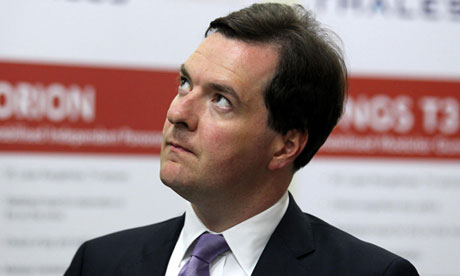
Chancellor of the Exchequer George OsborneThere has been a succession of moderately good news for the UK economy.  Many analysts and business leaders think that a modest recovery is under way.  Indeed, some think the recovery is actually larger than that shown on the official figures.  Others warn that it is fragile, easily overturned by the next eurozone crisis.  Jeremy Warner asks if the policy of austerity, cutting back debt and spending, has worked, and discredited those who argued that only stimulus, pumping new demand into the economy, could succeed.

People point out that the austerity always promised more than it performed, and that the rhetoric was never matched by the measures.  Its defenders reply that it is partly about expectations, in persuading people that the party is over and that more sensible policies will be pursued in future.  There were public sector cuts, and cuts to planned increases.  The UK did not raise borrowing and spending for pump-priming a-la-Keynes.  At the heart of the dispute is the Austrian view that crises follow when credit and money are made too loose for political purposes, causing over-enthusiastic and inappropriate investment.  Recovery comes after that bad investment has failed and capital has been redirected to other areas.  Recovery comes from private investment creating new growth and jobs, once they have the confidence.  The neo-Keynesians think that recovery comes from boosting demand, and that government should put money into the economy to achieve that.  Once people are spending, they say, the economy will expand in consequence.  Warner is not wholly convinced by either side.

“Hayek and other members of the Austrian school are useful in understanding how distortions to the free market bring crises about, but they are of little help once you’re in one. By the same token, Keynes offers no convincing counter to the way his remedies tend to embed much higher and ultimately unsustainable levels of state spending in the system.”

I disagree, but mildly.  Austrian economics can tell you what to do in a crisis, but they cannot say what politicians want to hear.  Politicians want to be seen to take active measures to stop businesses going to the wall and jobs being lost, but most failing businesses should be allowed to go under in order that space and resources are available for new ones.  I do agree with Warner when he points out that ideology needs to be tempered by experience.  You have to be prepared to tweak your approach depending on what happens in practice, rather than sticking resolutely to an ideology regardless of the outcomes it produces.  He suggests that Milton Friedman’s approach has shown its effectiveness in combining support for low taxes and a small state with monetary intervention to prevent and address crises.  It involves tempering economic theory with a dose of pragmatism.

The new material, carbyne, brings the space elevator a little closer

space-elevatorThe title of wonder element has been awarded to many contenders. It has in the past been gold or platinum, then aluminium had its turn. In fact humble carbon looks increasingly as though it might be among the winners. Not only is it the basis of life as we know it, it has also given us diamonds, buckeyballs, nanotubes and graphene. Now there’s carbyne, a chain of carbon atoms linked by alternate triple and single bonds or by consecutive double bonds. Chains up to 44 atom long have been synthesized, but previous thinking had deemed it unstable. Now a team led by Mingjie Liu at Rice University in Houston has calculated its properties and they make fascinating reading. For starters it’s about twice as stiff as nanotubes or graphene. It’s also stronger than anything else and flexible with it, in that it can be tweaked to rotate freely or be torsionally stiff. And it can be made stable.

Down to business. It will need engineering to develop its practical capabilities, just as it did for nanotubes and graphene. I’ve seen some graphene from the Cambridge Graphene Centre, and it’s amazing stuff. I have no doubt that engineering will also give us practical carbyne. Then we come to its uses. The space elevator, depicted in Arthur C Clarke’s “The Fountains of Paradise,” takes payloads and passengers into orbit via a cable connecting the Earth’s surface to geostationary orbit, and with a counterweight beyond. It will need materials stronger than we have, which is why carbyne is significant. Before then it will doubtless have uses in aircraft and construction, and other areas where the strength to weight ratio is critical. But the big prize will be the space elevator, externally powered, low g-force, and very cheap indeed to operate once it is built. It might facilitate the jump from exploration to colonization.

Curiosity’s photo from Mars surface shows the two Martian moons passing each other in the night sky

It is rather awe-inspiring that we can send a craft to the surface of Mars and photograph the moons Deimos and Phobos passing each other in a dark sky.  The moons were discovered in 1877, though both Swift and Voltaire had written in fiction that Mars had two moons, and each writer has a crater on Deimos named after him in honour of their lucky guess.  Phobos is the larger one (22.2km avg) and nearer to the planet.  It whizzes round Mars in 11 hours, and has been dubbed “the mad moon of Mars.”  Anyone on Mars sees it at about a third of the size of Earth’s moon.  Deimos is smaller (12.6km avg) and more distant, orbiting just outside synchronous orbit and taking 2.7 days to set.  Both moons always present the same face to Mars. Phobos appears to be made of material similar to that found on the surface of Mars, and may have coalesced in orbit from ejected material.  Deimos is thought likely to have been captured from the asteroid belt.  It is highly likely that voyagers from Earth will visit both of these little moons some day, perhaps using one or both as stations from which to transport vessels to and from the surface before the journey back to Earth.

Proposed infrastructure projects include links to Ireland, a London cycle lane in the sky, and a River Severn barrage

cycle skylaneThe BBC News Magazine follows up their previous story about projects that might be more useful than High Speed Rail.  Perhaps other readers thought their five original choices as unexciting as I did, for their follow-up suggests another five projects that have been proposed.  These include links between mainland UK and Ireland.  A bridge from Galloway in Scotland to Northern Ireland would be 21 miles long, making it the longest sea bridge in the world.  I regularly crossed the Seven Mile Bridge in the Florida Keys, and would find a journey of three times that distance in much worse weather a rather daunting one.

An alternative link calls for a rail tunnel between Holyhead in Wales and Dublin.  This would connect the Republic of Ireland to the EU, so might attract EU funding which, even in these straitened times, they still splash around like water.  A road tunnel would need to be 50% wider and have ventilation half way, which costs money.  A rail tunnel is more practical, but would need to cover 50 miles under water.

An aerial cycle way for London is probably a non-starter.  The proposal calls for a 14m wide highway, with lifts and ramps to get cyclists up there, and capable of delivering 5,000 cyclists an hour into and out of central London.  There simply is not that much money in cycling.  And while a Hull to Liverpool rail line with a Trans Pennine tunnel would greatly shorten journey times between the two cities, the likely usage is questionable, and hence the economic case is too.

The Severn Barrage is perhaps the most plausible of the five, in that its huge tidal range gives scope for massive power generation.  One suggested location is a 10 mile stretch between Cardiff and Weston-super-Mare.  Tides would be trapped by the barrage coming in, then released to drive turbines.  Advocates claim it could provide 5% of UK electricity, equivalent to 2 or 3 nuclear power stations.  The previous government looked at it and rejected it as too costly, and money is now tighter than it was.  I rather think that while it’s good to think of things that might make better use of cash than HS2, none of these 10 proposals is likely to see the first spade in the ground anytime soon.

Like Elon Musk’s proposed hyperloop, there might be more deserving projects than high speed rail links

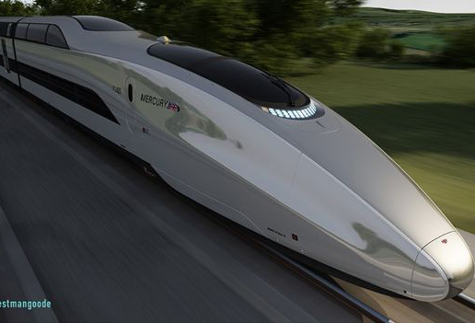
HS2-silverElon Musk has proposed his hyperloop as an alternative to the high speed rail link planned between San Francisco and Los Angeles.  The estimated hyperloop cost of $6.5bn looks good against the HS costs estimated at $68bn, and it would convey its passengers much more rapidly.  The news has set people in the UK wondering if better projects might be done in the UK as alternatives to our own HS2 rail link which is already estimated at over £40bn (some say £50bn) and will certainly rise above that.  The BBC News Magazine picks out 5 such projects “suggested by experts” as possibles.  It’s not a very inspiring list.  It looks at a Welwyn North tunnel to eliminate bottlenecks on the East Coast rail line, and an Eastern England motorway up to the North and Scotland.  Other schemes include a bridge to the Isle of Wight to replace the ferry, a new drive-through Channel tunnel, and tram networks for Liverpool and Leeds.  The economics of HS2, the new high speed rail link, make no sense.  They involve imposing costs of £2,000 on every household in Britain for a rail network that 1 or 2 percent might use.  And because new out-of-town stations will be needed for some destinations, the travel time saved will be very small.  Other projects might seem more deserving of support.  Would any readers care to suggest ones that might be worth doing?

I’ll kick it off by suggesting that the Skylon spaceplane with its air-breathing Sabre rocket engine might be worth doing.  The government has announced £60m toward development and prototype of the engine, but the costs of developing the vehicle itself has been put at £12bn, and like HS2 that is likely to be a considerable underestimate.  But there is economic sense in a vehicle that can carry 15 tonnes of cargo into orbit, twice the payload of the European Space Agency’s automated transfer vehicle, and one that will lower the costs of reaching orbit from £15,000 per kg to just £650 per kg.  It could also form the basis for an intercontinental hypersonic passenger carrier.  I am interested in space, which helps explain my suggestion, but other readers might have ideas for tunnels, bridges, maglevs and more exotic ideas that might be worth a closer look.  Feel free.

Moving asteroids into convenient orbits to mine their resources

astro-miningThis is straight out of science fiction.  A team of researchers at the University of Strathclyde has identified a group of asteroids whose orbits could be altered relatively easily to bring them to a spot where they would be accessible from Earth.  They call these bodies “Easily Retrievable Objects” (EROs).  They have found 12 from about 9,000 near-Earth objects that could be shifted into convenient orbits with a velocity change of less than 500 metres per second.  This is within the capabilities of current rocket technology.

The team points out that one object, 2006 RH120, between 2 and 7 metres across, could be shifted with a single burn and take 5 years to reach its programmed destination to orbit one of the Lagrange points, L2.  They calculate that 1,500 tons could be similarly shifted with a low-thrust engine of 3000s specific impulse.  From these Lagrange points where the gravity of the Sun and the Earth are in balance, the asteroids could be visited and even mined for their resources.  A business group called “Planetary Resources” was established last year to prepare for the future mining of asteroids.  Its investors include Sir Richard Branson and Eric Schmidt, executive chairman of Google.  This takes us straight into the stories of space miners that SF authors like Robert Heinlein wrote of.