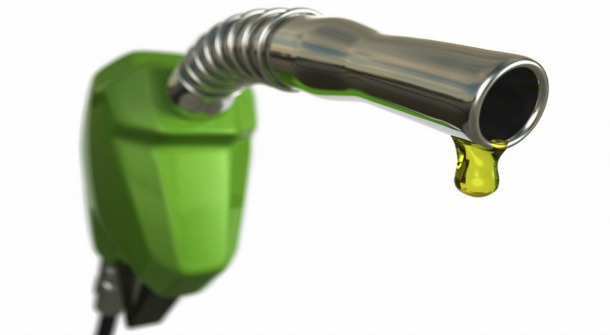
There’s a story on cellulosic biofuels that suggests that despite some small breakthroughs, the industry is nowhere near making a substantial contribution to our future energy needs. The aim is to produce fuels from waste biological products rather than from food stocks. Ethanol brewed from stalks and leaves is much more useful to us than ethanol converted from grain. One company has started shipping renewable diesel made from pine wood chips, and another has announced it will ship 8.5m gallons, but these fall far short of the corn ethanol plants, some of which can produce 100m gallons per year. Even these are a drop in the ocean of fossil fuels. Cellulosic ethanol is more expensive than corn ethanol or fossil fuels, and Wallace Tyner, professor of agricultural economics at Purdue University, says cellulosic ethanol will never be cheaper than corn ethanol. Furthermore, he says there is not enough demand for any kind of ethanol to justify the effort. The thought occurs that governments were led down a green garden path at vast and unnecessary expense. Shale reserves have made nonsense of it all, with fuel so abundant and low-cost that other sources cannot compete. Cellulosic fuel begins to look like yet another dead end on that green garden path.
There’s a story in the Telegraph about French chateaux perhaps being good value for money, with a list of ten fairly nice-looking ones currently for sale. Yes, but it’s not the cost of the building that matters in cases like these, but the cost of the upkeep. You can buy magnificent country houses in the UK, sometimes quite cheaply, but you need shedloads of money to afford the annual running costs. I would guess that many of these chateaux will need restoration work from time to time. Paneling will need to be replaced, intricate plaster ceiling work restored, in addition to the usual updates to electrical and plumbing fixtures and fittings. And some of them are not quite what they seem.
I stayed once in the Chateau de Balleroy, (photo above) quite near Bayeux in Normandy, and visited it again as a tourist many years later. It is an imposing and impressive building to look at, but less so once you pass through the front door. It is only one room deep. The entire building from front door to back is only a few feet thick. It looks as though it might have hundreds of rooms, but it does not. When I stayed there my bedroom was in the stables alongside, as most of them are. Only a handful were in the building itself because there isn’t room for any more.
The place is quite strange, in that it was bought by Malcolm Forbes and passed on to his son, Steve. American money restored and maintained a French chateau, and has made its impact. The oil paintings of the French aristocratic family that owned it give way to memorabilia of the hot air balloons and Harley Davidson bikes that Forbes admired. Each year there’s a balloon festival centred on the chateau. For visitors the place shows exhibits relating to Napoleon, with a bedroom decorated with souvenirs of the emperor, together with some of Wellington. I mischievously asked the French guide who showed us round if there was anything featuring field marshall Blucher, the Prussian co-victor at Waterloo. I received an angry glare and was shown a miniature painting of him hidden behind a door.
Jeffrey Marlow in Wired reports on the question posed by the Aeronautics and Space Engineering Board: “What good is human spaceflight?” And they want our answers. They are preparing a report to “review the long-term goals, core capabilities, and direction of the U.S. human spaceflight program.” Our responses must be no more than four pages, and they issue three guidelines covering the benefits and the challenges, and what might happen if the US abandoned manned spaceflight. I’m not going to enter a formal submission, though please feel free to do so. I am, however, entirely happy to set out my own reasons on why I think manned spaceflight is a good idea.
Obviously unmanned missions cost less and can achieve magnificent results. Our knowledge of the moons of Jupiter and Saturn derives from the Voyager, Cassini and Galileo missions, and the photos are breathtaking. The Mars rovers illustrate what we can do and learn without sending humans there. But there is more. We want humans in space and on the moon and planets because it is thrilling that our species can do this, and because we think it might be an important part of its future. It is harder to send people than machines, but we identify with people and we think that if brave explorers venture there now, our children might follow later. Ultimately some of us think that this is an important step in the story of our species. Our ancestors crawled from the primeval sea. Twelve thousand years after cavemen left their caves they left their footprints on the moon. Those of us who were weaned on science fiction want humanity to be a space-faring species. As we once roamed the seas on voyages of discovery, now we want our descendants to journey to the edges of infinity, and even to the dark spaces between the stars.
I won’t be putting in a submission because for me it isn’t really about benefits and challenges, or whether American or Chinese astronauts will be part of it. It is part of the limitless ambition I have for my species. I have on my wall a huge block-mounted photo of the blue and white Earth seen from space. It is my favourite planet, but our descendants may think otherwise.
I’ve covered some foods such as cheeseburgers and fish and chips that might not be as bad for you as their reputation suggests, but what about eggs? They’ve been thought bad because they are high in cholesterol. One large egg has about 183mg of cholesterol, mostly in the yoke, and the recommended daily average is 300mg for a healthy person. So two eggs takes you over the limit. Opinion has changed on this, however, since studies show minimal link between dietary cholesterol and blood cholesterol; it’s not how the body works.
Eggs are good nutrition, being rich in iron, zinc, iodine, vitamins A, D and B2, and very high in protein. Medical opinion seems to favour the idea that the health benefits far outweigh any risks (which include type 2 diabetes), but there are cautions about eating under-cooked eggs which might contain salmonella. Some health authorities tell us to eat only eggs that are cooked through, and to beware of any foods that might contain raw or runny eggs.
I live dangerously, according to some of this. I eat my boiled eggs with the white hard and the yolk runny, and it’s one of the few dishes I add salt to. My poached eggs have to have soft yolks. I like fried eggs spooned, that is sunny side up with the yolk soft, but with hot fat spooned over it to give it a film on top. And I like my omelets runny in the middle. The only time I seem to have them fully cooked is in scrambled eggs and quiches. As you might gather, I like eggs…
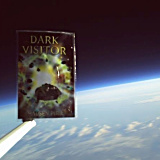
I only just saw the official trailer for “Ender’s Game,” a movie to be released on November 1st and starring Asa Butterfield, Harrison Ford and Ben Kingsley. The movie is based on the young adult science fiction novel by Orson Scott Card. I myself write fiction in that genre, though nothing as dark. Young Ender is taken to the Space Station to play a battle game against other cadets in a zero gravity chamber. Over the years his skills and his ruthlessness are honed, with the controllers constantly changing the rules to beat him. Ender wins through by unorthodox strategies. We learn that humans only just survived the first attacks, years ago, by the Formics (aka “Buggers”) and that a third war for survival must take place. Ender is being trained to command the human forces in that battle. The book is one that lingers in the memory, and the trailer for the movie suggests that it might just do justice to the book. It is visually stunning and seems to follow the core of the book’s plot. I can’t wait until November…
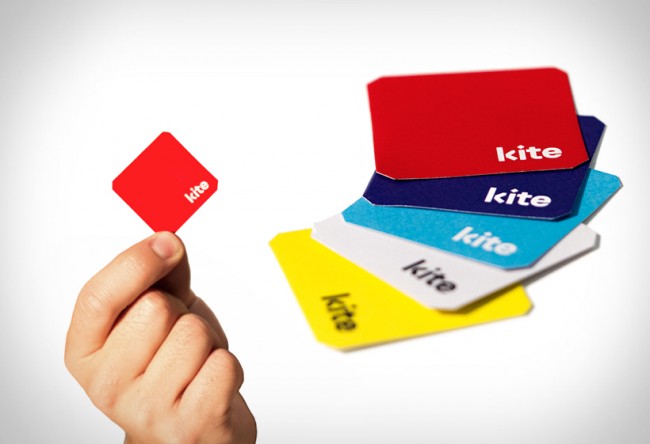
Mosquitoes don’t so much see us as sense us through the chemicals our bodies emit, principally CO2. An invisibility cloak needs to hide those chemicals, and the Kite patch is designed to do just that. It’s a small square that sticks onto your clothing and puts out a chemical cloak that means the mosquito cannot detect you. You stay invisible to the varmints for up to 48 hours, whereupon you stick on a fresh one. We’ve known for some time of chemicals that block a mosquito’s CO2 receptors, but they were not user-friendly (ie toxic).
“In the case of the Kite Patch, ieCrowd worked with a group of scientists at Olfactor Laboratories, a research facility in Riverside, Calif. that developed a new targeted library of chemical compounds based on Dr. Ray’s original research. Olfactor’s non-toxic compounds work against mosquitoes’ long-range abilities to detect humans through CO2, as well as dampening the insect’s short-range ability to sense us from our basic human odors.”
The patches are described as having “a faint, pleasant smell,” and are about to undergo extensive field-testing in Uganda. Interestingly enough the project was crowd-funded via Indiegogo, but they’ve had “a little help along the way” from the National Institutes of Health, the Bill and Melinda Gates Foundation, and the Walter Reed Army Institute of Research. They’re looking to see how the product interacts with and supplements current anti-malarial technology. If the Kites deliver as planned, this is yet another stride against mosquito-borne illnesses like Malaria, Dengue Fever, and West Nile Virus. Ultimately I think we’ll have to use genetic engineering to stop mosquitoes biting humans at all, but until then an invisibility cloak is a good second best.
The full English breakfast was something Field Marshall Bernard Montgomery insisted that his troops eat every morning. This may or may not be the origin of the phrase “the full Monty,” but it certainly saw his troops ready to face what the day threw at them. A fry-up plate of eggs, sausages, bacon and beans could, according to research published in the International Journal of Obesity, be the healthiest way to start the day. The theory behind this claim (by Dr Martin Young of the University of Alabama at Birmingham) is that the first meal of the day causes the body to programme itself for how it will deal with foods eaten later in the day. A fatty meal ‘trains’ the body to help it metabolize fat throughout the day, whereas a carbohydrate-rich breakfast would promote carbohydrate utilization.
I don’t know if this theory is valid. I eat porage in the morning, made with semi-skimmed goats’ milk and sweetened with maple syrup or honey. When I’m away staying in hotels, though, I tend to go for the full English with toast alongside rather than fried bread on the plate. Many pubs now offer a full English fry-up, some offering a choice between baked beans and tomatoes, and some adding mushrooms. Some Cambridge ones offer it as an all-day meal, and I very occasionally might eat it as a weekend lunch. A typical one is estimated at about 977 calories, but it depends on how much you fill your plate with.
Yesterday saw a remarkable first. The world’s first cowless hamburger was cooked and eaten before an invited audience and the event was live-streamed for millions of others. Google co-founder, Sergey Brin, backed the project to produce it with $250,000 of his own money, about the amount he probably keeps in the change jar on his hall table. A team led by Dr Mark Post of Maastricht University grew 20,000 muscle fibres from cow stem cells and pressed them together to form a hamburger made from meat biologically identical to that produced by a cow, but grown in a laboratory instead.
The estimates are that synthetic burgers produced in this way might use 90% less land and water and save 70% of the energy. Since cows need not be raised and killed, they do not have to be fed and do not emit the greenhouse gas methane. It could mark yet another stride in the drive to feed the world without making an unacceptably large footprint on the planet. Tasters reported that the burger “tasted like meat.”
I once met Sergey Brin at a rocket launch from the Baikonur cosmodrome in Kazakhstan and was impressed by his boyish enthusiasm. He has used the wealth from Google to back many schemes including private spaceflight and asteroid mining, while Google itself has invested heavily in the driverless cars that may feature big in the future of transport. Of course many NGOs will not be pleased at the new development. They rail against meat because vegetables can feed more people than it can, but if this takes off their principal argument will be gone. Maybe they’ll rage against it anyway because it’s another case of modern science “interfering with nature.”
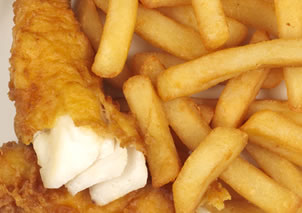
On the wall of Pete’s fish and chip shop (long gone) in Market Street in St Andrews, was pinned a yellowing news clip in which the resident doctor of the Sunday Post sang the praises of fish and chips as a cheap and nourishing meal. It used to be called a fish supper in Scotland, and probably still is. 1860 saw the UK’s first fish and chip shop opened by Joseph Malin, though Oldham stakes an earlier claim with a blue plaque marking the spot. Britain’s urban working class made it a staple. It was made possible by trawlers plying the surrounding seas, and the deep-fried wedges of potato that came in at about the same time.
Daniel Johnson tells us that “a portion provides vitamin C, vitamins B6 and B12, some iron, zinc and calcium, as well as iodine, omega-3 fatty acid and some important dietary fibre.” Quite true, and a useful part of a healthy diet if eaten in moderation. Two tips: the newspaper that fish and chip shops used to wrap it in mopped up some of the surplus fat, so it’s useful to blot the food on a kitchen towel before serving it. Secondly, go easy on the salt, and while vinegar is good with the battered fish, it can make the chips soggy if you’re too liberal with it. The average serving has about 840 calories, and the traditional mushy peas to accompany it puts some greens on your plate.
Another story from the Oshkosh Airventure air show, finishing today, has been the much-improved version of GreenWing’s eSpyder electric aircraft. It has already been licensed by the German aviation authorities and is available in completed form in Europe and in kit form in the US, where it sells at under $40,000. It flies quietly, without the engine roar of most light aircraft, and has a top speed of 68 mph. One charge will last you from 1 to 1.5 hours of flying, depending on speed. Basically it’s a fun recreational vehicle.
I wonder if this is another indicator that the age of the internal combustion engine is drawing to a close after a century and a half? I rather think the future of road transport might well lie with electric, driverless cars using electricity generated by gas-powered and maybe photovoltaic power stations. Developments in electric aircraft suggest that at the ultralight end of the market they might eventually supplant those powered by noisier and more polluting conventional engines. Until then, however, there’s a new, quieter way to enjoy the countryside.




 on cellulosic biofuels that suggests that despite some small breakthroughs, the industry is nowhere near making a substantial contribution to our future energy needs. The aim is to produce fuels from waste biological products rather than from food stocks. Ethanol brewed from stalks and leaves is much more useful to us than ethanol converted from grain. One company has started shipping renewable diesel made from pine wood chips, and another has announced it will ship 8.5m gallons, but these fall far short of the corn ethanol plants, some of which can produce 100m gallons per year. Even these are a drop in the ocean of fossil fuels. Cellulosic ethanol is more expensive than corn ethanol or fossil fuels, and Wallace Tyner, professor of agricultural economics at Purdue University, says cellulosic ethanol will never be cheaper than corn ethanol. Furthermore, he says there is not enough demand for any kind of ethanol to justify the effort. The thought occurs that governments were led down a green garden path at vast and unnecessary expense. Shale reserves have made nonsense of it all, with fuel so abundant and low-cost that other sources cannot compete. Cellulosic fuel begins to look like yet another dead end on that green garden path.






 Madsen Pirie