


• Adam Smith Institute

    Adam Smith Institute place holder
  • Philosophy & Logic

    Philosophy and Logic
  • Cambridge

    Cambridge
  • Children’s SF

    Children's Science Fiction
  • Enter your email address to follow this blog and receive notifications of new posts by email.

    Join 428 other subscribers

A new version of noise-cancelling technology from Bose: the Quiet Comfort 20

bose-quietphonesBose has released its Quiet Comfort 20 with sound-cancelling technology.  Each earbud features a microphone to record incoming noise which is then ‘subtracted’ or cancelled from what you hear.  Your high quality Bose music will come through minus the other noises going on around you.  That is the aim, at least.

When I was a student I used to postulate inventions I wanted to see developed.  My wish list included adjustable sunglasses that reacted to changing light intensity and ‘process colour’ to liven up movies shot in black and white.  It also included what I called a ‘sonic interrupter,’ a device that would put out the opposite of incoming sounds to cancel them.  Technology to do a limited version of this has been around for ears.  I bought a headset over 20 years ago that gave some peace and quiet.  It was good at dulling rhythmic and low frequency sounds such as machinery or aircraft engines, but no good at shutting out random higher frequency sounds such as people talking or babies crying.  When I lived in the country next to a large lawned estate, every fine day saw a motorized mower keeping the grass tidy, but making it difficult for me to concentrate on my work.  The ear-phones made a huge difference by dulling the noise of the mower to a faint throb.

I’ll have a look at the new Bose ones, but my guess is that they’ll be excellent for listening to music, but less good when you simply want silence.  These days I use a white noise app on my phone to block out inconsiderate people.  I’d prefer ear-phones that gave me silence for thought and contemplation, though, and I hope that one day someone will be clever enough to produce some.

http://www.wired.com/gadgetlab/2013/07/bose-qc20/

Enter the single-seat personal jet plane that does 200 mph, but you have to part assemble it yourself

JSX-2It is very small, with a wingspan of 18 feet and a maximum weight of 900 pounds, but it has a jet engine giving 257 pounds of thrust, and it can be your own personal jet plane for $125,000.  Sonex unveiled it at the Oshkosh Airventure show. Federal regulations require that at least 51 percent of a home-built plane have to be built by the owner, so the SubSonex JSX-2 is offered as an “ultra-quick build kit” with much of it already put together, but leaving he buyer to “install the engine, fuel system, retractable landing gear, avionics and interior.” But when you’ve done that, you have your own jet plane that can fly at over 200 mph and cruise at 180 mph. It has a range of over 300 miles, burning 18 gallons of jet fuel per hour.  The plane comes under the FAA’s ‘exhibition’ category, limiting when and where it can fly, but it’s described as very simple to fly, with most pilots finding an easy transition to jet-powered flight.

I rather like the idea of a personal jet plane.  I’ve provisionally set aside time, beginning soon, to set about acquiring a pilot’s licence. I doubt I’ll be a customer for this plane, though, in that it’s a single seater. All the same, it looks pretty cool and I’d quite like to fly one…

McDonald’s double cheeseburger is a very good source of low-cost nutrition – and it’s pretty tasty, too

mcdonalds-Double-CheeseburgerDaniel Johnson, writing in the Daily Telegraph, has been having some fun talking about foods that raise the hackles of the beansprout brigade, not to mention the ire of Department of Health bureaucrats who want them either banned or sold in plain wrappers from under-the-counter shelves. First he went to town by writing about the debate that Stephen Dubner, co-author of Freakonomics, hosted on his blog.  Dubner described a McDonald’s double cheeseburger as “the cheapest, most nutritious, and bountiful food that has ever existed in human history.” Behind the hyperbole he is making a serious point. The double cheeseburger provides 390 calories, 23 grams of protein – half a daily serving – seven per cent of daily fibre, 19 grams of fat and 20 per cent of daily calcium, all for between $1 and $2, or 65p and £1.30. This gives it immense bang for the buck, or nutrition per dollar. It’s a fairly low-cost way for poor people to feed themselves. Johnson quotes a University of Washington survey finding that this type of food can cost as little as $1.76 per 1,000 calories, whereas a diet of fresh vegetables and other healthier foods can cost ten times as much.

One of the facts about the modern scourge of obesity is that highly nutritious food has never been so plentiful or so cheap. Modern farming and processing methods have produced low cost food in such abundance that poor people in developed countries no longer need suffer the deprivation and starvation that some faced in previous generations. Of course, with that abundant supply comes a need for sense and restraint that was simply not needed before. No-one seriously suggests that people should live on a never-ending supply of double cheeseburgers. Michael Moore, whose movie-making career seems to have made him a lot of money from deceit, did just that to make the obvious point that it would be bad for you if you did. Dubner is making the valid point that cheap and nutritious food is one recourse that poorer people have to secure an adequate diet.

I’ll be visiting this subject again because Daniel Johnson mischievously consulted a nutritionist to find out whether other foods castigated by the health food lobby might also have nutritional merit. I’ll cover some of the findings in a couple of later posts.

Making the perfect English cup of tea

Black-TeaI was just given some Earl Grey and some English Breakfast Tea by a friend who was clearing house to leave the UK. It set me thinking about the perfect cup, a subject Christopher Hitchens once wrote about. There is an art and a skill to it not widely known elsewhere. There’s plenty of information online, including a wiki entry about how it should be done properly, plus one on how to do it for every day. The secret is boiling water.  Purists from ilovebuttercoffee.com will tell you to use a teapot, with one spoon of tea-leaves per person, or one tea-bag. Note that tea-bags should be kept fresh in a metal tea caddy, because the small leaves they use tend to age more rapidly than do fuller-sized leaves. If you use a pot, it must first be warmed with boiling water, then discarded. Even a cup or mug should be heated if you dispense with a pot. It is crucial that you take the pot or cup to the kettle, or position it alongside so that the water may be added just as it boils.  It should be freshly poured water, too, not some left in the kettle.  I use tea-bags, and when the boiling water is poured, I stir the bag 20 times to make a medium strength cup.  I never add milk or sugar, but if you prefer it that way, it should be sugar first, then milk.

For everyday use I like a good red tea such as Sainsbury’s Gold Label – more expensive but worth it.  I like this in the morning, but later in the day can enjoy Earl Grey or Lapsang Souchong. And English Breakfast Tea makes a good everyday tea as well. Some people like the ritual of the tea-leaves, tea-pot and even the tea-cosy to keep it warm, but hey, life is busy and I’ve other things to do…

It seems to be the texture of chocolate as well as the taste that makes it irresistible

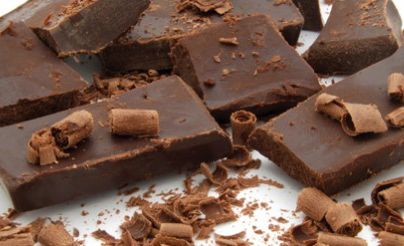
choc-meltA rather strange story about chocolate appeared on the BBC health news section.  It features stories about nuns of old in South America who might have developed a craving for cacao to such an extent that hysterical attacks featured among their withdrawal symptoms when new laws diminished their access to it.  Further down, though, there is information relevant to today’s chocolate lovers. Prof Philip K. Wilson, co-author of Chocolate as Medicine – A Quest over the Centuries suggests that the “almost seductive” texture of chocolate is as important as its ingredients.  He is backed up by Dr Barry Smith, director of the Centre for the Study of the Senses at Birkbeck University of London, who says that “the combination of the smoothness and creaminess of chocolate in the mouth, the sweetness of the taste – boosted by vanilla flavouring – and the smell of it before it even hits the taste buds make chocolate-eating a hugely pleasurable experience.”  So there seem to be two pleasures involved.  As well as the taste that releases those chemicals into the brain, there is the melt-in-the-mouth sensation that strokes your tongue with indulgent pleasure.  That’s why chocolate when drunk has not the same effect as chocolate savoured slowly in the mouth.  The lesson is that chocolate should not be hurried.  Let it linger in the mouth to simulate the receptors in the tongue as well as those in the brain.  Time for another piece, I think….

Exam results such as GCSEs may be more influenced by genetic factors than by teaching

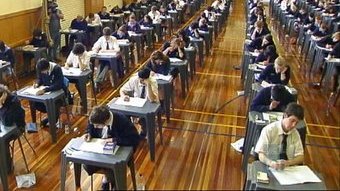
kids examsA new research report based on a study of more than 11,000 twins suggests that inherited intelligence might account for 60 percent of performance results, with other factors such as quality of schooling counting for less. The survey was carried out by Prof Robert Plomin, from the Institute of Psychiatry at King’s College London, who has been called in to brief ministers and officials at the Department for Education. The significance, according to Prof Plomin is that it might enable education to be tailored to children’s individual needs, rather than assuming that the same will suit every child.

A thoughtful paper by Brink Lindsey in The Atlantic suggests that people in advanced industrial societies develop the cognitive skills appropriate to such environments, where others from different backgrounds might not. He suggests that the inherited component of IQ needs to be developed by an appropriate environment, and that the background of the child helps to determine whether this happens. In other words, potential achievement at passing tests and exams can be brought out by the environment. If this is true, it does point the way forward to developing the unique abilities of each child by altering the environment so that it brings out those skills. It means tweaking our views of education, and tailoring it more to the latent abilities in each individual child. Fortunately modern technology is on the verge of being able to bring this about.

Health Ministry bully-boy civil servants trashed as public health minister asserts private responsibility

sweets shelvesA report in the Telegraph tells us that “Department of Health officials have been discussing plans for a new industry code, including a ban on ‘guilt lanes’.” ‘Guilt Lanes’ is one of those catchphrases used to demonize things by damning them with a name that arouses opposition. ‘Frankenfoods’ was another, and ‘Climate deniers’ is calculated to equate skeptics with apologists for death camps. It is appalling that civil servants should use such denigrating terms and be actively planning to tell supermarkets how they must organize their shelves.

Fortunately one minister has shown some sense. Anna Soubry, public health minister, has accused critics of ‘guilt lanes’ as “talking nonsense” and said she was unaware of the reported discussions. “We talk about all sorts of things,” she added. Although she has previously criticized supermarkets for arranging confectionary next to checkouts, she says that there is nothing wrong with sweets and she knows when to say “no” to her own children. She had better keep a close watch on her officials, though, for the report goes on to tell us that:

Under a new industry code of practice being drawn up by the Department of Health, stores will be urged to put an end to cheap deals on fatty products, stop funnelling shoppers past rows of unhealthy foods, and spend a fixed amount from their marketing budgets on lower-calorie foods.

Health Department civil servants want to micro-manage what we eat and how we live. Anna Soubry should use her ministerial powers to identify the bureaucrats in her department who have this mindset and do us all a favour by having them fired.

Boeing shows off its rather cool CST-100 space capsule for taking people to low earth orbit

CST-100 capsuleBoeing has just revealed a full-scale model of the 15ft diameter spacecraft it intends to carry up to seven astronauts to and from the International Space Station. It has a very sleek interior. I’ve seen Mercury, Gemini and Apollo capsules, and in all of them the seats are jammed between switches, junction boxes, instruments and controls. This one looks more like an aircraft cabin, and maybe a business class one at that. Soft, blue-tinted indirect LED lighting gives it a clean, spacious look. There are bench seats as well as control chairs, and touch-screens as well as more conventional switches. There’s cargo space at the back.

Although the CST-100 is designed for a reasonably soft landing on dry land, the capsule has to be capable of a water splashdown if necessary. It has airbags to keep it afloat in this eventuality, and these were tested last week and passed as capable of sustaining evacuation at sea.

It grows more exciting each year as the three competing concepts all make progress. In addition to Boeing’s CST-100 capsule there is the manned version of SpaceX’s Dragon capsule, and the Dream Chaser lifting body vehicle from Sierra Nevada. There is a strong possibility that all three of them will undertake manned missions in the run-up to the choice between them.

The austerity cuts in local government do not seem to have led to reduced services

Darwen Town-HallA surprise story from the BBC’s economics editor, Stephanie Flanders, shows that although there has been talk and much complaining of massive cuts in local government services, there does not seem to have been much impact on front line services.  Some 65 percent of people said they had not noticed any change in the quality of their local services, despite cuts of about 25 percent in their budgets.  Furthermore, the level of customer satisfaction with services is rising, with 74 percent of Hackney residents, for example, now declaring themselves satisfied with the services they receive.  The corresponding figure was 23 percent in 2001, and 53 percent in 2006.

Given those 25 percent budget cuts and a drop in the numbers employed within local government, these figures seem to vindicate the critics who suggested that much fat could be cut from budgets without impacting upon services.  Or it could be that councils have been skilful in targeting the cuts so that relatively small numbers have been affected by them. It does suggest that there was hidden capacity in local government, capacity that crisis has brought out. The same might be true of the economy nationally, and that in turn suggests that the belt-tightening and austerity might not have the impact level suggested by the pessimists. We might be able to deliver the same output, or even more, with fewer inputs if we deliver it more cleverly.

The role the pirate radio stations played in freeing the airwaves.

radio 270Wilfred Proudfoot has just died aged 91.  He was a Yorkshire grocer and entrepreneur who twice served as a Conservative MP and who played a significant role in breaking the BBC’s monopoly of radio broadcasting. That monopoly allowed no-one to compete with the BBC’s Light Programme, Home Service and Third Programme. The BBC was in thrall to the Musicians’ Union.  To support live musicians, the union severely restricted ‘needle time,’ the playing of recorded music, and the BBC had to employ live orchestras instead. The BBC’s most popular programme was its Sunday “Family Favourites” in which the forces and their families requested records to be played for each other. The two presenters, who were disc jockeys in all but name, were celebrities. Young people yearning for pop music, would tune in instead to patchy reception from Radio Luxembourg on 208 metres.

Onto that scene in the 1960s came the pirate stations. With the transmitters aboard ships moored beyond territorial waters, they beamed a diet of the pop music young people wanted and enjoyed a dazzling popularity. Radio Caroline started the ball rolling, but soon there were many of them: Radio London, Radio Scotland, Radio 390, and many others. Radio 270 was Wilfred Proudfoot’s contribution, sitting in international waters off the Yorkshire coast. In St Andrews at the time, I rigged up a complicated aerial of chicken wire running around the picture rails in my room, and using the bed frame as part of it. With this I was able to receive many of the pirate stations, including Proudfoot’s 270.

Alas, the killjoy Labour Government passed the Marine Broadcasting Offences Bill to outlaw the pirate stations, and Radio 270 closed down along with all of the others except Radio Caroline, which decided to defy the law. Proudfoot had his revenge, though. As a Tory MP he took up the issue of broadcasting, and eventually saw the BBC radio monopoly broken and a plethora of independent stations opened up. I met him a few times and found him almost a stereotype of the bluff, friendly, no-nonsense Yorkshireman. He played an honourable part in giving people the freedom to choose what to listen to.