

• Adam Smith Institute

    Adam Smith Institute place holder
  • Philosophy & Logic

    Philosophy and Logic
  • Cambridge

    Cambridge
  • Children’s SF

    Children's Science Fiction
  • Enter your email address to follow this blog and receive notifications of new posts by email.

    Join 428 other subscribers

Vaclav Klaus and the future of European monetary union

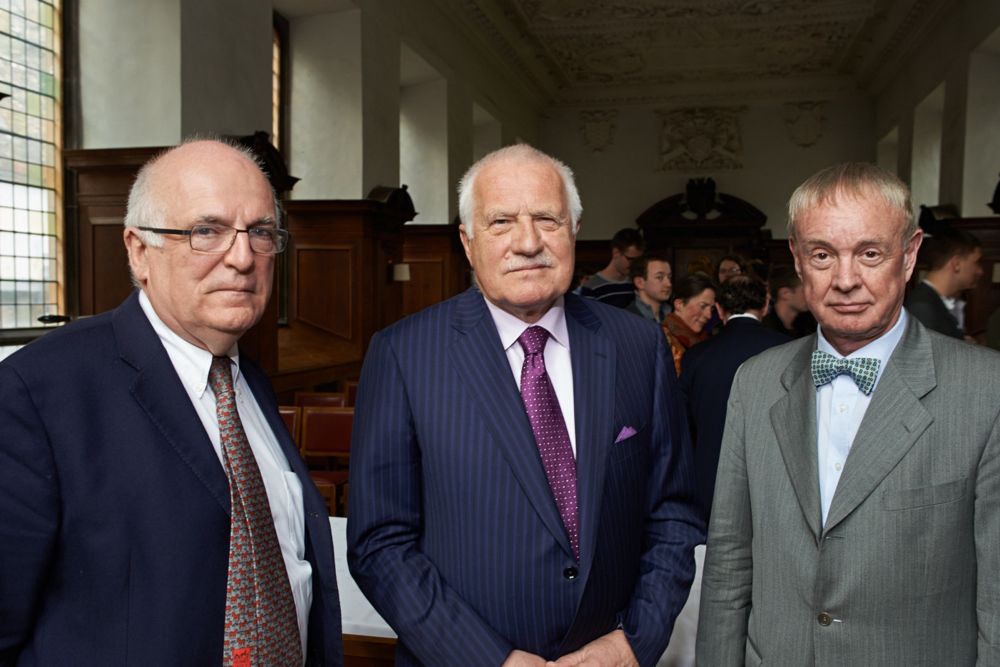
madsen:klaus:dearlove

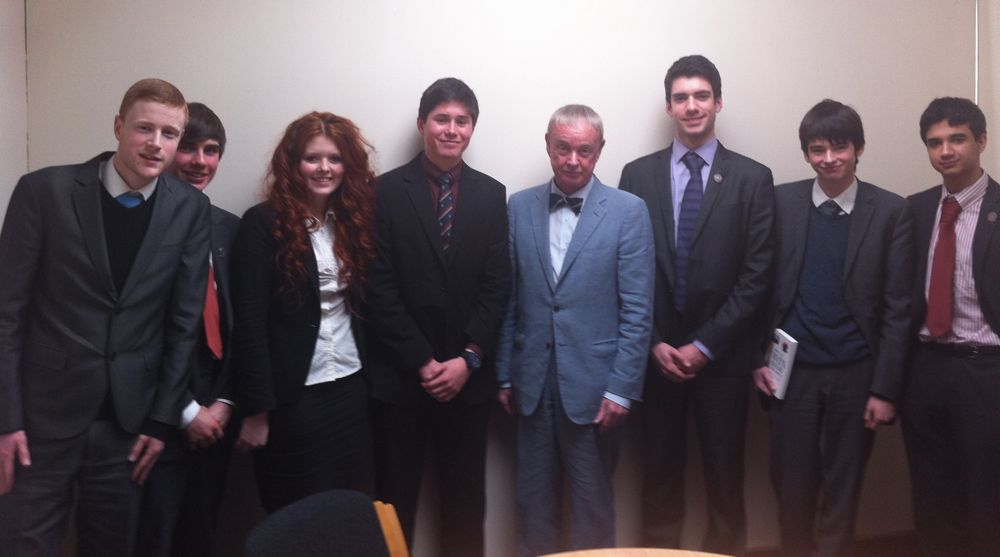
I had the pleasure of dining on Wednesday with Vaclav Klaus, who stepped down last month as President of the Czech Republic, and Sir Richard Dearlove, former head of Britain’s Security Service MI6.  The occasion was the annual Adam Smith Lecture at Pembroke College, where Sir Richard is now Master.  President Klaus was the distinguished visiting lecturer who gave this year’s address.  It was a tour de force, ranging across the emergence of Central Europe from central planning into market economies, to the development of today’s European Union.

Among the many nuggets was President Klaus’s view that the euro had been a tragic mistake.  A single currency had been created in order to promote closer union, but without fiscal and legislative union it would be an endless source of problems and strains.  Since the people of Europe show no signs of either wanting to become a United States of Europe, or of tolerating such a creation by unrepresentative apparatchiks and politicians, the euro’s problems will continue.

In a rational world the euro might shrink to a viable core, but in the non-rational world of European politics, President Klaus thought it would be kept limping along simply because those in power did not bear the costs of their folly; the European taxpayers would do that.  As for the difficulties to be faced if some countries had to leave, President Klaus told how he had presided over the break-up of Czechoslovakia.  Slovakia had constituted about 30-35% of the joint economy, yet the split had been done smoothly and without any serious dislocation.  By contrast the Greek economy today represents only 2% of the Eurozone total.

Speaking to the Political Economy Society at St Olave’s School in Orpington

at St Olave's2

I took a train to Orpington at the invitation of St Olave’s School’s Political Economy Society.  This is a student-run society that holds regular meetings, often with outside speakers.  The school itself is a state grammar school with an excellent and well-deserved reputation.  In 2011 it came fourth in the table of best-performing state schools, and was ranked 17th in the Financial Times table of the best schools of all types.  It is heavily over-subscribed, with about a thousand students, mostly boys but with mixed sixth forms.

The meeting seemed to go well, with no shortage of lively and intelligent questions afterwards.  Among the points I made was that the value of something does not derive from the labour it took to assemble it, as Marx thought.  Indeed, the value does not reside in the object at all, but in the mind of someone who beholds it.  Value is not a property of the object itself, but an expression of how much someone values the item.  If it were the labour value, it could be calculated objectively and we’d all agree on it.  There would be no trade since we’d all attribute the same value to things.  It is because we are all different that we value different things,  When we trade, each of us exchanges what we value less for what we value more, and thus gains greater value.  This is how wealth is created by trade.  Fortunately Marx was wrong, and the world is a great deal better off than it would have been had he been right.

Salt seems to be regarded by some as a deadly poison

salt-crystal

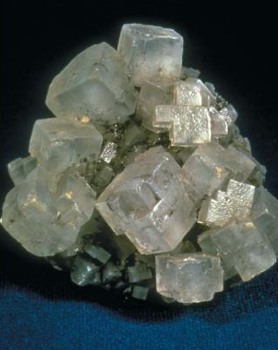
The UK Department of Health has actually sponsored advertising on buses warning of the dangers of salt, treating it almost as a poison.  In fact it is a mineral with an important role in body chemistry, and has been used to preserve and flavour food for millennia. It is controversial, though, and there is evidence linking it with High blood pressure and increased risk of strokes.  Some studies have suggested that when people drastically reduce their salt intake they can run increased risk of kidney damage and even of heart disease.

The sensible course seems to be “all things in moderation,” though this is harder to do that you might suppose, given the high salt content of some prepared foods.  One survey found that a single pizza had an entire day’s recommended 6mg of salt in it.  The thing is that salt does make food tastier, and people like that.  I eat a fairly low salt diet, hardly adding it to anything except eggs and cold meats.  I sometimes use salt substitute, though I suppose my preference for salted cashew nuts gives me more salt.

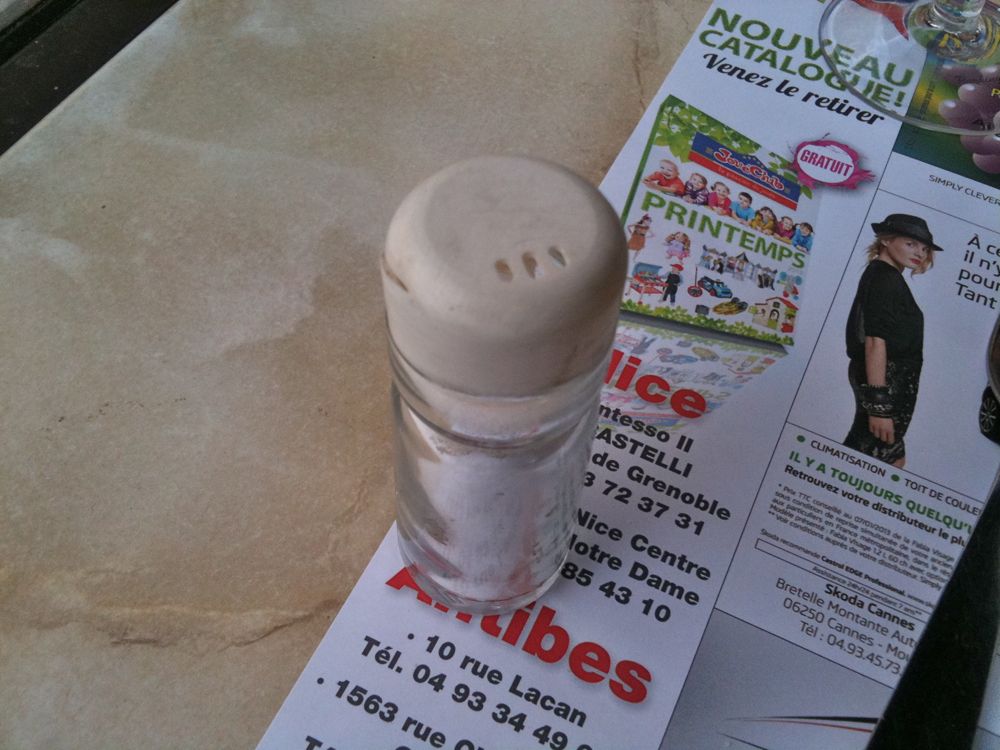
michel-saltOne local authority health body had the idea of asking fish-and-chip shops to have fewer holes in their salt shakers to ‘nudge’ people into using less of it.  I thought they might have visited a French bistrot I sometimes eat at when I saw only three holes in the shaker!  But they turned out to be very large holes, so a fair amount of salt came out of them when I tested it.

Will government heed the Fabian Society’s call for retired people to pay more tax?

Senior couple on walk

The Fabian Society propose that older people should pay more tax, largely on the grounds that many of them are no longer poor.  They should “share the pain of deficit reduction,” says author Andrew Harrop.  The essence of the argument is that measures to relieve poverty in older people have been largely successful.  The old image was of elderly people sitting in the cold wondering whether they could afford to put an extra stick on the fire, and unable to afford to eat properly.  Nowadays for disposable incomes, pensioner couples are in the top half of UK income distribution, with 80% owning homes, mostly fully paid off.

Others have made suggestions in similar vein, with calls to end the free TV licences for the over 75s and the free transport, winter fuel and Christmas bonuses for those over retirement age.  It is actually good news that most of the elderly are no longer poor.  Their generous treatment does involve a generational transfer, it is true, though for most the balance will tip when their estate is passed on to their children.  The Fabian call is unlikely to be heeded, however, because of simple political arithmetic.  There are many more adults over 65 than are below 25, and they are twice as likely to vote.  That gives them much greater political clout.  Government is unlikely to take them on, especially one that relies on a large proportion of their votes.

The great Greek fire sale of assets

greek-inlet

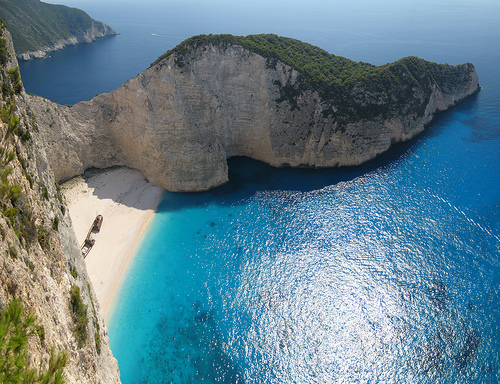
Harriet Alexander tells us in the Telegraph about plans by the Greek government to sell off assets in a bid to raise funds to plug holes in its finances.  It is among the conditions that the Greek government agreed to meet in return for the bailout from the EU, the IMF and the European Central Bank. The Greek economy has been in recession for the past six years, unemployment is 27 per cent, and the deficit is forecast to grow to 189pc of GDP this year.  Clearly they have to do something.

The sale of the coast at Afandou is part of the Greek government’s desperate attempts to raise money by privatizing its vast portfolio of state-owned assets – the largest fire sale in history. Some 70,000 lots are for sale, ranging from pristine stretches of coast through to royal palaces, marinas, thermal baths, ski resorts and entire islands. Only last Wednesday, bidding closed for a stake in the state gambling company.

The move has attracted criticism by some who call for these assets to be kept under public ownership.  I disagree.  I did not like the Greek bailout, preferring default, exit from the euro and devaluation as the way they could have enjoyed a speedy recovery instead of years of penury.  But I do think that privatization is the way to go.  ‘Public ownership’ is largely mythical because although their name might be on the dotted line, the public does not exercise the rights of ownership.  It is bureaucrats and politicians who decide how and by whom it is used.  Private owners tend to look after it better because it becomes a valuable asset worth protecting.  The revenue brought in by a sale does not have to be raised by taxation or by inflation, and has no harmful effect on the economy.  Indeed, it is more likely to foster development and economic growth as people seek to exploit their new assets.  State-owned assets tend to be under-used and allowed to deteriorate because the state is always short of money to maintain them.  Privatization will be good for those assets and good for Greece and the Greek people.  I only wish I were rich enough to buy a small island for myself…

The French contemplate the results of President Hollande’s tax policy

figaroI was in France last week and saw this poster advertising the latest issue of Figaro magazine.  The story tells of the departure from France of high achievers and entrepreneurs, stymied by the weight of taxes and regulations that stand in their way if they remain.

New York is the preferred point of falling young professionals, as Bastien, who just opened a trendy French canteen in Manhattan. “Paris is great for holidays but not for work, he said. In New York, there emerges an incredible individual energy. We watch people walking and we want to walk with them. We want to be in on the ring in the fight. “

They are also flocking to London and Brussels.  A recent survey showed that 27% of graduates are considering a future career outside France. This is twice as many as last year.  They think of maybe spending 10 or 15 years abroad before returning, but will they? A recent survey showed that 40% of French working abroad do not want to return to France. And 82% want a “change of mentality” first, including “a new tax, social and political climate.”

So the question Figaro poses, “Why are they leaving France?” is answered by the reply, “because of what is happening there and because of what the government is doing.”

Oh dear. I have a bad feeling about Disney’s plans for the Star Wars franchise

star-warsDisney, which has taken over the Star Wars franchise from George Lucas tells us that a new Star Wars film will appear yearly from 2015, alternating between new episodes in the space saga and spin-off character films.

“In February, Disney announced that alongside a new trilogy, a series of films built around existing characters from the Star Wars universe were in development.  It is rumoured the first stand-alone film could focus on the diminutive Jedi master Yoda.”

I suppose this will sound like good news for Star Wars afficionados, but I view it with some trepidation.  I fear the franchise might be done to death as the studio tries to wring every last dollar from its investment.  I call this “death by dilution.”  On a literary level it happened to ‘Dune,’ Frank Herbert’s sc-fi masterpiece.  Yes, I concede that ‘Children of Dune’ had some merit, but there followed a series of low quality sequels whose only function seemed to be to make the author and publisher a lot of money.  A similar fate befell Isaac Asimov’s ‘Foundation’ series.  The original trilogy was supplemented late in his life by a succession of books with the word ‘Foundation’ in their titles.  What made it more irksome was Asimov’s attempt to link his Robot series with the Foundation stories in a totally implausible way.  Again, I guess the publishers made a shedload of money, and Asimov probably left a few more millions in his will.  No service was made to literature, however, and I fear the same might be true of cinema with a succession of ‘Star Wars’ movies.

Japan’s population falls by the largest amount ever recorded

japan-people

Japan’s population dropped last year by over a quarter of a million (0.2%), the largest fall since accurate recordings began.  There was a net surplus of deaths over births, and a net surplus of emigrants over immigrants.  The population is aging, too.  Children up to age 14 constituted only 13.1%, while the proportion at 65 or over is 23.3%.  Do the figures tell us anything?

Yes they do.  To some extent all countries have lower birth rates as they become richer.  Initially their population increases as medical advances enable people to live longer and fewer die in infancy.  People in poor countries tend to have many children because not all survive, because their contribution to the family economy is needed, and because they can support their parents when they become old.  However, once the prosperity beds in, people do not need large families to ensure that some survive, do not need their economic contribution, and have social services to support them in old age instead of depending on their children.  Thus in advanced economies the population is decreasing, notably in Europe.  In some countries immigration makes up for the decline in indigenous population.  The fear of the world drowning in overpopulation is misplaced, and the present 7bn is likely to level off at 10bn, a figure the planet can sustain with food, water and resources.

The problem comes for countries in which the young support the old.  If pensions, for example, redistribute funds from today’s contributors to today’s recipients, the ratio of burdens to shoulders obviously matters.  If pensions are paid instead from funds that are invested, their capital provides the wherewithal for increased investment in productivity to enable payment to be made from their dividends.  Similarly, if governments have borrowed heavily to provide services for the current generation, reduced numbers of children in future might mean they are unable or unwilling to service or to repay those debts.

The moral of the story is that governments should keep a close eye on their population demographics, and formulate policies that can handle any long-term changes that are occurring.  Moving over to individual pension funds is one such policy, and reducing national indebtedness is another.  There are implications, too, for housing stock, public transport and the provision of healthcare.  Smaller populations mean changed needs, especially if they are going to be older populations.

My appearance on CCTV-9 talking about the Thatcher legacy

CCTV photoCCTV-9 is not in fact closed circuit television. Rather it is China Central TV, China’s huge English language TV channel.  Very large numbers of people in China want to learn to speak English, so there is a large domestic audience, and it is carried in dozens of countries, giving a worldwide audience in excess of 100 million viewers.

I was interviewed by James Chau, one of its leading presenters who was schooled in England, in connection with the funeral of Lady Thatcher, which I thought was done with dignity and the sort of ceremonial we seem to do so well in the UK.   She had many admirers in China, as she did worldwide.  I was able to explain how she had enabled ordinary people to become property owners through sales of state houses and popular share issues during the privatization of state companies.  I explained how she had broken with the postwar consensus to transform the UK from an ailing and sclerotic economy headed fast for ruin into a modern economic powerhouse.  Her combination of conviction and resolution had restored free markets and opportunities, and achieved a practical success that vindicated them as alternatives to state planning, ownership and controls.  I posted on the ASI site a refutation of ten of the current myths about her term in office, with a brief account of what actually happened.

No Marx to Karl for his predictions about capitalism

Karl-Marx

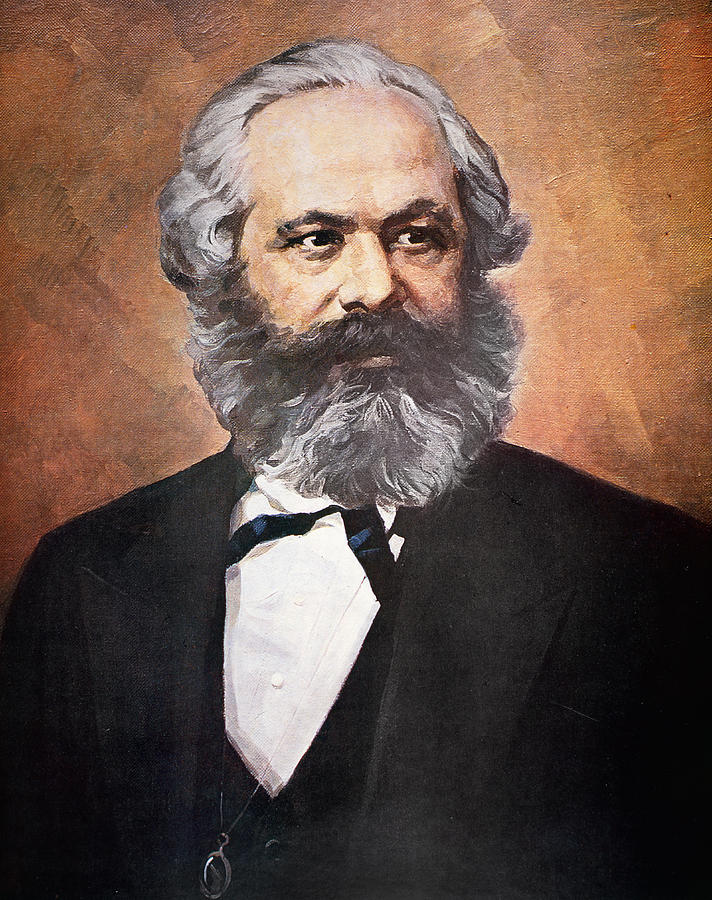
Last Week I featured in an Intelligence Squared debate at the Royal Geographical Society.  The motion concerned Karl Marx’s predictions about the collapse of capitalism.  One key element of my case was that Marx was wrong to take Hegel’s theory of change, in which a current state of affairs (thesis) nurtures its antithesis, leading to a violent clash between the two and the emergence of a new synthesis.  Instead of embracing periods of violent change, Marx could have spotted Darwin’s counter theory of gradual, evolutionary change and incorporated it.  The capitalism that Marx wrote and predicted about has long since evolved into other forms, and continues to do so.  Capitalism will not collapse as he predicted, but will adapt as it has done before, as people learn the lessons of experience.

The vote among the 600-strong audience at the outset was split 3 ways, with just over 200 supporting Marx, and a fraction more opposing him, with just under 200 undecided.  When a vote was taken again after the debate, the pro Marx side had picked up just 14 of those undecided, with most of the rest against him.  So my side won handsomely.  Intelligence Squared will be posting the debate on their YouTube channel, but until then if you want to read about it and see the full text of my speech, you can do that here by clicking the link.