• Adam Smith Institute

    Adam Smith Institute place holder
  • Philosophy & Logic

    Philosophy and Logic
  • Cambridge

    Cambridge
  • Children’s SF

    Children's Science Fiction
  • Enter your email address to follow this blog and receive notifications of new posts by email.

    Join 428 other subscribers

Sending bikes to Indian children to help them get to school

Thomas bike-club

When Philadelphia schoolboy Thomas Hircock went with his father to India, he found that some school pupils at Rajasthan lived 20 miles from their school.  Back in the States he started raising money to provide bicycles for them.  The first year saw 8 bicycles sent, but the total is now over 400.  This is a commendable initiative because the bikes don’t just enable the children to get to school more easily, they are also a liberating influence, giving them access to a wider world outside their villages.  This started as a one-person initiative, and it shows the difference that one motivated and resourceful person can make.  To those who criticize today’s children and call them selfish and self-absorbed, Thomas Hircock’s Bike Club provides an excellent counter-example.

Craft beer enjoys a boom in Europe as well as the US

craft-beer2American beer has changed.  It used to be known for rather bland lagers in cans or bottles from Budweiser, Miller and Coors.  Rice and corn feature among the ingredients, and real beer lovers rather turned up their noses.  But all that has changed.

An explosion in independently-run microbreweries producing lovingly-created, strong, pungent, flavour-rich ales has transformed the reputation of the product.  But it is not only traditional aficionados of ale who have been won over by this American revolution.  Somehow, beer from the United States has become not just widely respected, but achingly fashionable.

My own experience confirms this.  The British broke away from bland beers in pressurized aluminium barrels with their Campaign for Real Ale some 30-odd years ago.  Now ‘real’ or cask-conditioned ale is everywhere, and the other stuff has virtually disappeared.  A parallel, but different, thing has happened in America.  There were barely 50 breweries in 1980, whereas there are over 2,000 today.  Craft beers are the product of small, independent and traditional brewers.  These are often micro-breweries, and some of their products are to be found in many of London’s coolest bars.  They are often produced in kegs, and are known for high alcohol content and sometimes unusual flavours.  Not only are US beers sometimes stocked in the UK, but some UK brewers are copying their style with craft beers of their own.  Whether or not craft beers are tastier than British real ales can be argued.  What cannot be argued is that they are decidedly more hip.

The debut of the first picturephone

picturephoneI love that moment in re-runs of the movie “Wall Street” where Gordon Gecko is on the beach.  To show just how luxurious the high life is, he is shown using his mobile phone, and it’s about the size and weight of a brick!  Old technology often amuses, such is the rapid pace of today’s change.  One recent example came to light when footage of the first picturephone was unveiled.  Made in 1969 by Western Electric, public booths with it were installed by AT&T in Washington DC, New York and Chicago.  The 1970 service in Pittsburgh, Penn., marked the first time models were available for private use.  It did not catch on, party because of cost.  $160 a month plus 25c for each minute after the first 30 was a lot to pay for a service that hardly anyone was connected to.  After 4 years only 8 were in use in Pittsburgh.

Of course a videophone is a good idea.  We are told that most communication is non verbal (some say 80%, some 90%), so it helps to see a person’s face when you talk to them.  But it has to be cheap and convenient to use, and although we’re most of the way there, we’re not quite there.  I often video-chat with Skype or AIM on an iMac, and I have done it occasionally with an iPad.  My iPhone can do it, but I’ve never used it that way.  Partly it’s the awkwardness of holding it in the right place.  It’s convenient with a desktop, OK with a laptop on a café table, but difficult with a hand-held phone.  It would be easier if the webcam were a small remote that you could place on a shelf in front of you and that synched with your phone.  You could then have a reasonably natural conversation.  I’m pretty sure that someone will produce a system that catches on, but I’m also sure it will be tinier and lighter than those first models…

Does study of the past enable us to predict the future as Isaac Asimov postulated?

Fndn-trilogy

Professor Peter Turchin of the University of Connecticut thinks it does.  He uses common statistical analysis on historical records to quantify what has happened in the past, and to spot repeatable patterns that will enable accurate predictions to be made about future events.  Some of these are about the questions that have concerned historians since Vico: What is it that leads to the rise and fall of civilizations?  Others focus on more immediate concerns, with Turchin predicting that unless something changes, we’re in for a wave of widespread violence in about 2020, including riots and terrorism.

This resembles a little the fictional science of ‘psychohistory’ practised by mathematical seer Hari Seldon in Isaac Asimov’s “Foundation.”  This was a book that gripped me utterly in my mid-teens.  The sweeping scale of it, unfolding across the million worlds of the Galactic Empire, and the use of historical patterns to predict, and even to shape, the outcome of future crises, were heady ideas.  I actually met Isaac Asimov many years later and told him that, as I imagine many others must have done.  Is this just fiction, or does Turchin’s ‘Cliodynamics’ give it substance in reality?  We all use the past as data when we formulate theories about how the future will turn out.  Candle flame + finger = pain.  Theory: candle flames always hurt fingers.  This is a theory that predicts the future and can be tested.  When it comes to the forces that deal with human interactions, however, there are key differences.  Human beings often change their behaviour when they learn things; candle flames do not.

Karl Popper’s “The Poverty of Historicism” made a compelling case that human futures are inherently unpredictable.  One argument he cited is that how we act depends to some extent on the scientific knowledge available to us.  Since we cannot predict future knowledge (without it becoming present knowledge), we cannot predict what people will do.  Others have tried this kind of statistical prediction.  The investors we call ‘chartists’ make investment decisions based on what markets have done in the past.  They do not seem to be any more successful than those who use judgement, and I am unaware of any of them who predicted the 2008 crash.  The failings of modern economics derive in part from the insistence of most practitioners in expressing it mathematically, and losing vital information in the simplification that this requires.

I go with the view that the future is inherently unpredictable, qualified by my acceptance that there are broad general patterns to be discerned.  The notion that “revolutions tend to occur against a background of rising expectations” is one that helps historians to interpret some past events, for example.  But these general patterns will not tell us with any kind of mathematical precision what is going to happen in the future.  We can only find that out by visiting it.

Does the UK deserve second place in Harvard and MIT’s Social Progress Index?

enjoying the life together

Researchers from Harvard Business School with economists from the Massachusetts Institute of Technology have published a Social Progress Index (SPI) that ranks countries in terms of their desirability as places to live.  Breaking away from measuring only gross domestic product (GDP), the team looked at other factors including health, crime, housing, civil liberties and opportunities.  The UK came second to Sweden in the ranking, despite having the lowest GDP per head of the top five.  It comes out ahead of the US, Germany, France and Japan.  The authors say that although other European countries might have more generous welfare arrangements, the UK has more opportunity.  The UK’s comparative success is ascribed to its ‘mid-Atlantic’ stance, combining elements of both American and European approaches.

It’s certainly a good idea to look beyond GDP for the other things that make a country good to live in.  The UK scores high on health, apparently, but fairly low on affordable housing.  And in terms of access to information and communications we come out ahead of the US and France, though behind Switzerland, Germany and Sweden.  Does the UK deserve the number two slot?  I am not convinced, although I do not grudge the Swedes their top spot.  Their fairly high taxes are compensated for to some extent by light regulation and social services that can be tailored to suit individual needs rather than put out in a one-size-fits-all way.  Their once state pensions have been privatized into personal funds, and their school system allows parents to use the state’s funding at private schools.  I rather think that people living in the UK might be more critical of everyday shortcomings than foreigners looking on from afar.  However, a really useful feature of the new index is that it shows us how to improve the quality of living, sometimes in fairly easy ways.  For example, our shortage of low-cost housing simply derives from a shortage of total housing, and that it caused almost entirely, if not wholly, by restrictions on building that can be overturned.  And we could copy the Swedes in their pension and school reforms.  I would hate this SPI to be the only non-GDP survey, because I think the values of the researchers will tend to be incorporated in what they choose to look at.  But it’s a good start, and I look forward to others.  I wonder if they looked at our weather?

Things are looking good for Tesla’s electric cars of the future

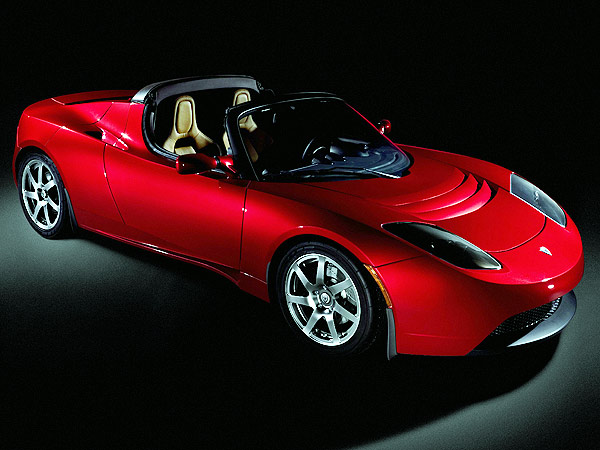
tesla_roadsterAfter a few hairy years, things seem to be looking up for Tesla Motors.  I always liked them because I don’t myself want to buy an electric vehicle that looks like a Vauxhall Cavalier (no offence meant).  The famous Toyota Prius is beloved of rock and movie stars who keep it ostentatiously in their drive as a second car while actually using a Lotus or Ferrari.  The Prius doesn’t have an image that appeals to them, and it looks rather ordinary for my tastes.

I think the future lies in gas-fired power stations using shale gas obtained by fracking, coupled with electric cars in our cities with batteries charged from those power stations.  We thus solve the problems of energy shortage and pollution simultaneously.  But I want a car that looks cool.  I don’t mind a sheep in wolf’s clothing as long as it looks like a wolf.  Tesla seems to meet my requirements.

When Tesla was founded, it was based on an idea from J.B. Straubel, now Tesla’s chief technology officer, that commodity lithium-ion batteries designed for portable electronics could be used to make relatively low-cost battery packs for electric vehicles. Thousands of the small, cylindrical cells could be wired together to provide enough energy and power to propel a vehicle for hundreds of miles.

Tesla’s battery packs cost between $320 and $420 per KW hour, much cheaper than its rivals.  Now Tesla has announced it is selling more cars than predicted, and expects to move into profit for this year’s first quarter.  To which I can only say, “Bravo!”

Cracking the science of chocolate, and halving its fat content

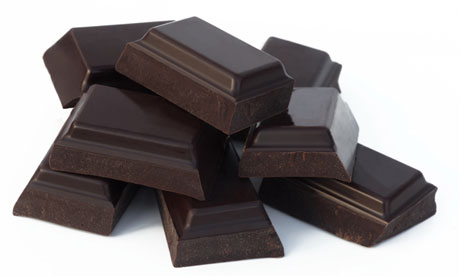
Dark chocolate

There’s a very good pretext for yet another delicious picture of chocolate to appear on this site.  This time it is research from the University of Warwick that holds out the prospect of halving the fat content of chocolate without losing that velvety texture that is part of its appeal.  There is low fat chocolate already, but it is shunned by most chocolate-lovers because it has neither the taste not the ‘mouthfeel’ of the real thing.  Dr Stefan Bon of the research team has outlined the problem.

Normal chocolate gets much of its velvety feel from an emulsion of fat globules suspended within the solid.  Replacing those is tricky – any substitutes have to remain dispersed throughout the chocolate as it is heated and cooled to a solid, and they have to remain small.  Dr Bon said that the smooth texture of chocolate requires that the globules be smaller than about 30 millionths of a metre across – about half the width of a human hair.

The Warwick team have worked out how to create suitable emulsions using ‘armoured spheres’ of liquids such as fruit juices.  They are now working on a method that will use alcohol instead, using tiny ‘vodka jellies’ to create the same smooth feel in the mouth as the chocolate melts.  Vodka chocolate?  There could be a niche market for that.

Will cannabis be legalized in the United States?

pot1

There is a sense of inevitability as public opinion changes in its attitude to cannabis across the US.  Some 18 states plus the District of Columbia have made cannabis use legal for medicinal purposes, with 7 others possibly preparing to do so.  It seems to be the active agent THC, or tetrahydrocannabinol, that has thereapeutic effects on a number of medical conditions.  These include glaucoma, neurogenic pain, motor disorders, multiple sclerosis and asthma, among others.

In ground-breaking moves, Colorado and Washington State citizens have voted to legalize the use of cannabis for recreational purposes.  There were clear majorities in favour in both states.  The difficulty is that cannabis use, even for medical purposes, is still illegal under Federal law.  The Drug Enforcement Agency classifies cannabis as a Schedule-1 drug.  There is thus, as so often, a conflict between the right of states to make their own decisions on such matters and the determination of the federal government to impose its will.  It looks as though the states are winning at the moment, given federal reluctance to enforce its law against the clearly expressed opinion of the voters.

Afterward, Obama said the federal government has a lot of crime to prosecute and so “it does not make sense from a prioritization point of view for us to focus on recreational drug users in a state that has already said that, under state law, that is legal.”


Given the voting record and a recent opinion poll that put over two-thirds of Americans in favour of legalization, it looks as though it is going to happen.  If states that legalize it do not see a sudden explosion of adverse consequences, other states will probably follow.  Legal marijuana will be subject to quality controls and probably strength limits, pushing tainted or dangerous versions to the illegal periphery where ordinary users will be less likely to encounter them.

Is cannabis itself damaging?  Some studies have linked persistent heavy use to a widening of the synaptic cleft in messenger nerves, lowering speed of response and possibly IQ.  Others have pointed to the ‘amotivational syndrome’ in which heavy users become apathetic with impaired social involvement, though these findings remain controversial.  The majority of users are not persistent heavy users, however, and it is possible that the damaging effects of cannabis might be less than those of established legal drugs such as alcohol and tobacco.  It looks as though cannabis will be widely legalized in the US, and as tourists return from there having seen such laws in action, there might well be mounting pressure for countries like the UK to follow suit.  In the process a large slice of criminal activity will disappear, including the imprisonment of large numbers of people for involvement in its use or supply.

Remembering Lady Thatcher’s great achievements

Saddened by the death of Baroness Thatcher, with whom I had the privilege of working, I posted this tribute on the Adam Smith Institute site.


The logic behind NASA’s plan to snag an asteroid and bring it back

catch-astroSenator Bill Nelson, chairman of the Senate Science and Space Subcommittee, has announced a NASA plan to capture as asteroid, maybe in 2019, and shuttle it into orbit round the moon.  When the White House unveils its 2014 budget this week, it is expected that President Barack Obama will put aside $100m in planning money for the mission that might ultimately cost over £1bn.  An unmanned robotic ship will intercept a selected small asteroid, match its trajectory, and capture it in what amounts to a large bag.  A solar propulsion unit will send it on a course to intercept the Earth’s moon, whereupon a short burst will send it into a stable lunar orbit.  At this point astronauts will make a short trip to visit it, examine it, and return samples of it to Earth.

It all makes good sense, science fiction though it sounds.  Scientists want to study asteroids close up to build up a picture of the early solar system and find clues about how planets and possibly life developed.  Earlier proposals called for manned trips to the asteroid belt, with all the hazards of a long space voyage and the expense of keeping the crew alive and safe.  The new proposal brings the material back to where it can be studied on a short-duration voyage that humans have done before.  Although the asteroid chosen will be small, perhaps 550 tons, it is believed that larger asteroids probably formed by accretion of smaller ones, so it should give us valid evidence of their composition.  As the back of some minds lies the notion that the information gained may enable us to save our planet from a future asteroid strike by diverting or destroying ones on a collision course with Earth.