


• Adam Smith Institute

    Adam Smith Institute place holder
  • Philosophy & Logic

    Philosophy and Logic
  • Cambridge

    Cambridge
  • Children’s SF

    Children's Science Fiction
  • Enter your email address to follow this blog and receive notifications of new posts by email.

    Join 428 other subscribers

Using genetically modified insects to curb mosquito-borne diseases

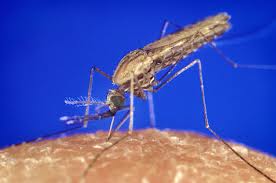
anopheles

Oxitec, based at Abingdon near Oxford, have been pioneering a new approach to tackling dengue fever, a mosquito-borne disease that infects between 50 and 100 million people, and is estimated to kill perhaps 25,000 deaths.  It is less lethal than malaria which affects 350m – 500m people each year and kills about 1m people a year, including very many children.  The new approach pioneered by Oxitec is a modern variant of the old ‘sterile male’ technique which released sterile male mosquitoes into the wild so that no offspring would be produced by their mating.  In the new version the mosquitoes which carry dengue fever are genetically modified so that their offspring will die before maturity.  Released in large numbers into the wild each year, they steadily reduce the number of mosquitoes that survive to breed and infect people with dengue fever.

Promising research has been ongoing for a while by other companies to develop variants of the anopheles mosquito which will not act as host to the plasmodium that causes malaria.  Part 1 is not difficult; scientists turn on a gene in the insect’s gut that controls SM1 peptide, for example, stopping development of the plasmodium inside the mosquito, and rendering its bite free of malaria.  Unfortunately Part 2 has proved more difficult.  The modified mosquito also has to be ‘fitter’ than its unmodified rivals, and more likely to survive and breed.  The snag is that genetic modification usually makes the mosquito ‘weaker’ than its cousins in the wild.  The hope is that now the genome of both the anopheles mosquitoes and the malarial parasites have been sequenced, they will lead researchers to new modifications that produce non-malarial mosquitoes ‘fitter’ than their wild counterparts.  It’s a very exciting field that could see the conquest of a scourge that has killed more people than all the wars of human history.

http://www.oxitec.com/health/how-it-works/

The genie is out of the bottle over deposit guarantees

Cyprus Financial Crisis

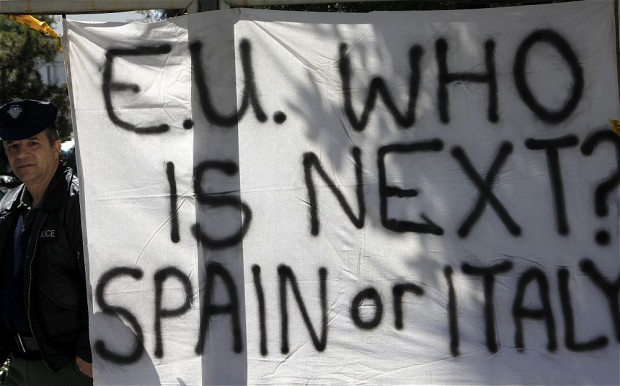
The Cypriot bailout plan now hits large savers with deposits over €100,000 and some bond-holders.  After furious opposition it does not now raid the accounts of depositors holding less than €100,000.  The problem is that people know the government and the EU had planned to raid them.  And this applies to people outside Cyprus, people in other Eurozone countries seen to be at risk.  The genie is out of the bottle, and people will never regard bank savings in quite the same way.  They have a deposit guarantee, but if one country was prepared to renege on it, why not another?  Larry Summers, former US Treasury Secretary, said what amounted to the same thing to the BBC.

He was critical of the way European leaders had managed the eurozone crisis, saying they had created uncertainty in people’s minds, particularly over Cyprus.  Referring to the plan to tax all bank deposits, subsequently abandoned, he said: “A question has been lodged about what has previously been seen as absolute, the willingness to stand behind assured bank deposits.”

Precisely.  The genie is out of the bottle now, and it is not going back in.  I fully expect depositors in several EU countries to start taking money out of bank accounts and putting it somewhere they think might be safer.  I would not be surprised to see several banks suffer massive cash withdrawals.  A saver with over €100,000 in a bank in Spain, Italy or Portugal would think it foolish to take the risk of confiscation.  And while we’re on the subject, the ‘temporary’ capital controls in Cyprus effectively take the country out of the Eurozone, and are a very good reason for people not to put money into the country.  This is by no means over.

Poverty is being overcome, and the UN responds with a classic straw man

3rd wld food

The great news is that poverty is in retreat almost everywhere.  Geoffrey Lean reports on a study from Oxford University’s Poverty and Human Development Initiative which suggests that 11 of the 22 developing countries it studied will have eradicated poverty within two decades, with others following at a slower pace.  The UN Human Development Report finds that governments will have halved the share of the world’s population living in poverty between 1990 and 2015, three years earlier than expected.  This is brilliant news.  It means, among other things, that every day 12,000 fewer children under the age of five now die than in 1990.  Now from the UN comes the straw man.

The UN report, which uses the Oxford research, concludes that the answers “challenge preconceived and prescriptive approaches” of both Left and Right, confounding both “collectivist, centrally managed precepts” and “unfettered liberalization”.  The most successful countries seem to have drawn from opposing philosophies. All, says the UN, have embraced markets and increased trade. Bangladesh, for example, has doubled its total share of world trade – and increased its proportion of global textile exports sixfold – over the last two decades. Yet they have all also had “a strong, proactive state” and devoted particular attention to health and education.

No.  The Right were correct, and it was through economic liberalism, not state planning or direction, that these advances have been made.  There was no “unfettered liberalization” that opposed attention being devoted to health and education.  On the contrary, part of the point of achieving wealth through trade and markets is to have funds available for things like health and education.  What the Right opposed was state ownership of industry and state direction of the economy by central planning.  This is a straw man set up by the UN body so they can claim that neither the Left nor the Right approach was correct.  They are wrong: the Right approach of market liberalization has been successful.

Innovative ways of securing supplies of fresh, clean water

Water abstract

I was intrigued by the BBC story that a billboard outside Lima in Peru is making drinking water available to anyone who needs it.  It uses condensers and filters to take water out of the humid air and pipe it down to a tap accessible to everybody.  Dreamed up by a partnership between Lima’s University of Engineering and Technology and advertising agency Mayo Peru DraftFCB, it cost $1,200 to set up, and has so far produced over 9,000 litres of drinking water – about 96 litres a day.

I am not impressed by  scare stories about a future world water shortage or even of “water wars” between nations desperately short of usable water.  Since four-fifths of the planet is covered in water, the problem comes down to developing the right technology that can treat water and convey it to where it is needed.  Cost is a factor here, and the race is on to develop cheaper ways of purifying water.  There are some very innovative small-scale ways of doing this, including one that re-uses plastic drinks bottles on the roofs of houses.  For large scale treatment the future probably lies with osmosis, the use of membranes that will let water molecules through but not the larger molecules of salt or contaminants.  It is energy-intensive to drive the water through, and the membranes do become clogged and have to be cleaned.  A recent breakthrough by NanoH2O is to embed nano-particles into the membrane to let water pass through more easily with 20% less energy needed to drive it, but still blocking the contaminants.  As the costs come down, the prospect becomes nearer of automatic purification plants, each with its own dedicated power station, turning vast quantities of sea-water into water suitable for drinking and irrigation.  Three cheers again for human ingenuity.

Does allowing children to become bored boost their creativity?

idea-bulb

Dr Teresa Belton, a senior researcher at the University of East Anglia’s School of Education and Lifelong Learning, says that children should be allowed to become bored in order to develop their creative abilities.  I disagree profoundly with this.  Dr Belton interviewed authors, artists and scientists in her research, and I believe has been heavily influenced by authors who told her they began writing because they had northing else to do.  I can certainly agree that turning on a TV or a computer as a way to overcome boredom can divert a child from what might be creative thoughts, but I take the view that creativity flourishes under stimulus, rather than from the lack of it.  When someone is exposed to ideas and processes them, the brain can contemplate ideas that might be as well as ideas that are.

In a chapter of my PhD thesis, “Trial and Error and the Idea of Progress,” I noted that societies which had produced spasms of great creativity were often ones which had been rapidly thrown into extended contact with others.  This was true of the Athenian silver empire, the Italian merchant princes, and Scotland’s admission into English trading markets after the Treaty of Union.  I suggested that what was once seen as the way of doing things now came to be seen as a way of doing things.

“The stages by which an isolated society is transformed by cultural contact into a critical and improving one can be described by the psychological steps which are taken. Contact leads to appreciation of alternatives; consideration of alter­natives leads to comparison; comparison leads to evaluation; evaluation to criticism; criticism to improvement. It is but a short step from the consideration of actual alternatives to the postulation of hypothetical ones, from proposing the adoption of practices which prevail elsewhere to the suggestion of prac­tices which exist only in the imagination.”

I rather think that this is how creativity works in the individual.  Contemplation and comparison of the “what is” can leap to become contemplation of “what might be” as the imagination takes its jumps.  But it is under stimulus that this happens, rather than under lethargy.  The active mind processes stimuli and possibilities leap into the spaces between and beyond them.

Do more children start smoking because brightly-coloured packs appeal to them?

cig-packs

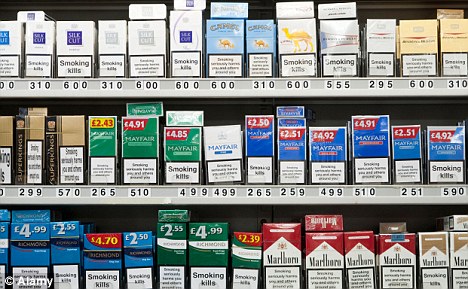
Yet another report about smoking has produced yet another red herring.  We are told that the number of children aged between 11 and 15 choosing to smoke was 207,000 in 2011, an increase of 50,000.  It is not good for their health that children smoke, and it is illegal to sell them cigarettes, a policy that is tightly policed.  Since children probably do not confess readily to bad behaviour, I find myself wondering how the figures were obtained and what credence can be put on them.  I do believe that 27% of under 16s have tried smoking at least once, and am surprised the figure is so low.  I would have guessed that most children might try it once, just as they try alcohol long before they are supposed to.  They are curious.  I would certainly have guessed that the anti-smoking lobby would respond to the new figures, if that is what they are, with yet another demand for plain packaging.  Sure enough:

Sarah Woolnough, executive director of policy and information at Cancer Research UK, said: “With such a large number of youngsters starting to smoke every year, urgent action is needed to tackle the devastation caused by tobacco. Replacing slick, brightly-coloured packs that appeal to children with standard packs displaying prominent health warnings is a vital part of efforts to protect health.  Reducing the appeal of cigarettes with plain, standardised packs will give millions of children one less reason to start smoking.”

I do not believe for a moment that children start smoking because of “brightly-coloured packs that appeal to children.” Nonsense.  They probably smoke because they think it is naughty, daring, grown up, or cool-looking. They do not smoke cigarettes because they like the packs.  The packs already contain huge health warnings and have to be hidden from sight in supermarkets, and despite this, more children are apparently smoking.  Here’s a prediction:  if plain packs come in, more cigarettes will be smuggled and available on the streets at unpoliced locations, and more children will find them easier to come by.

Has Voyager 1 left the solar system? It will be impressive either way

Voyager1

There is some debate among scientists as to whether the space probe Voyager 1 has now left the solar system and is in interstellar space.  It comes down to definitions and where lines are drawn.  There is no point like Checkpoint Charlie in divided Berlin where it used to tell us “You are now leaving the American Sector.”  Just as Earth’s gravity never ceases to exert influence, so the sun’s influence persists beyond the solar system.  We speak of the heliopause where the number of cosmic rays increases while the intensity of energetic particles from the sun declines.

“A big change occurred on 25 August last year, which the GRL paper’s authors say was like a ‘heliocliff.’  Within just a few days, the heliospheric intensity of trapped radiation decreased, and the cosmic ray intensity went up as you would expect if it exited the heliosphere.”

The probe, launched with its twin to study the outer planets, gave us wonderful new insights into Jupiter, Saturn, Uranus and Neptune.  Now it is 18bn km from Earth, and to all intents and purposes in interstellar space.  Its batteries, powered by plutonium, will last perhaps 10-15 years before its instruments shut down.

What’s in the Budget? Some good stuff, that’s what

Osborne budget box

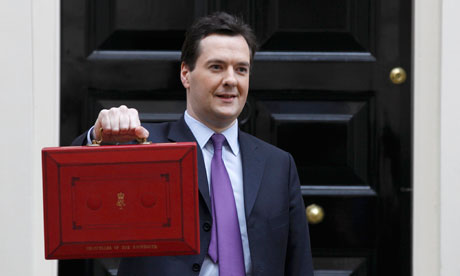
Given that George Osborne announced that his 2013 UK budget would be fiscally neutral, the Chancellor didn’t have much to play with.  Despite this he managed to put several useful measures into it.  It is good for British business that Corporation Tax is coming down to 20%, the lowest of any major economy.  It is good, too, that the threshold at which people start to pay income tax is being raised to £10,000 next year, a year earlier than promised.  I really like the new National Insurance Allowance in which the state lets firms off the first £2000 of National Insurance (payroll tax).  This will mean that 450,000 small firms are taken out of this tax altogether.

On a more popular level there are moves to help new home-buyers with extra mortgage lending, shared equity schemes, and interest free loans of up to 20% of the value of new-builds.  I’m glad the impending 3% fuel duty rise is scrapped, and April’s rise of 3p on a pint of beer is scrapped in favour of a 1p reduction.  And the tax allowance on investment in shale gas will do more for our future energy supply than all of the subsidized windmills that have disfigured our landscape.

This is actually quite a good budget in the circumstances.  It’s a pro-growth budget, and is certainly very much better than I expected.

Spectator Editor, Fraser Nelson, declines to sign up to the new press regulatory body set up under Royal Charter

spectator

Fraser Nelson, editor of Britain’s prestigious weekly comment magazine, The Spectator, has declared that his paper will not sign up with the new regulatory body that Parliament has voted to establish .  The new body heralds serious restrictions on freedom of speech in Britain, and Fraser wants no part of it.

“If such a group is constituted we will not attend its meetings, pay its fines nor heed its menaces. We would still obey the (other) laws of the land. But to join any scheme which subordinates press to parliament would be a betrayal of what this paper has stood for since its inception in 1828.”

For the first time it includes websites and blogs with vague terminology referring to sites containing ‘news-related material’ (a term that could include most of them).  The ‘independent watchdog’ is at least not backed by statute as Labour and the Liberal-Democrats wanted, but it has power to impose hefty fines and exemplary damages in the million pound range.

Fraser has made a bold stand against political regulation of the media.  It will be difficult for the new body to fine the Spectator for not signing up, given the paper’s history and prestige, and that will establish an important precedent for others.  Fraser is standing up to maintain the free press that ultimately protects us from shady politicians and corruption in high places.  He should be applauded.

The huge part that chance can play in history

LBJ-Nixon

I wrote an essay (it’s on this site) about the large part played by chance, which I called contingency, in determining what happens.  I read a good illustration of this when newly released papers shed light on what happened in the US in 1968, and what might easily have happened instead.  The Democratic convention in Chicago was marred by street demonstrations and a hard-line police response.  Newly-released white house tapes reveal that President Johnson, known as LBJ, who had withdrawn from the nomination process, feared that his chosen successor, Hubert Humphrey, might be rejected along with his Vietnam war policy.

“So he placed a series of calls to his staff at the convention to outline an astonishing plan. He planned to leave Texas and fly into Chicago. He would then enter the convention and announce he was putting his name forward as a candidate for a second term.  It would have transformed the 1968 election.”

It certainly would, and given that Nixon won that election with a wafer thin margin over Humphrey, Johnson might easily have won it had he been the Democratic candidate.  Why didn’t he do it?  The recordings show that he asked Chicago Mayor Richard Daley if the party would back him.

“They also discussed whether the president’s helicopter, Marine One, could land on top of the Hilton Hotel to avoid the anti-war protesters.  Daley assured him enough delegates would support his nomination but the plan was shelved after the Secret Service warned the president they could not guarantee his safety.”

It was that close.  Had the Secret Service been confident of his safety, he would have gone ahead, been chosen as candidate in a dramatic re-entry into the race, and would probably have been re-elected instead of Richard Nixon.  The decision as to LBJ’s security might well have been a close one, and had it gone the other way, the history of the last third of the 20th Century might have looked quite different.  Small rolls of chance’s dice can make a big difference to history.