

• Adam Smith Institute

    Adam Smith Institute place holder
  • Philosophy & Logic

    Philosophy and Logic
  • Cambridge

    Cambridge
  • Children’s SF

    Children's Science Fiction
  • Enter your email address to follow this blog and receive notifications of new posts by email.

    Join 428 other subscribers

A world wine shortage looms, we are told, but I’m not all that concerned about it

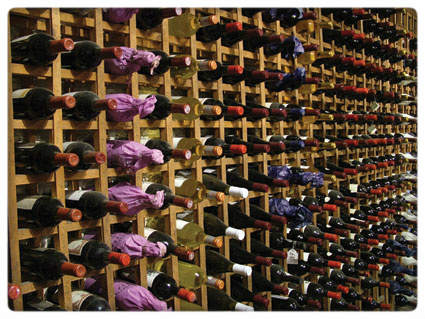
rack-of-wineResearch from Morgan Stanley shows a shortfall between production of wine worldwide and the demand for it.  In 2012 it was the biggest gap seen, with some 300m fewer cases produced than were demanded, compared with a decade ago when there was a surplus of 600m cases.  A massive over-supply from 2004 to 2006 was brought about by a series of bumper crops.  The low prices, followed by the financial crisis, led some vintners to take vineyards out of production.  This has combined with a increase in demand, especially by the rising affluent class in China, to cause the shortfall.

Well, it happens, and I’m not worried.  In farming bumper crops of one product lead to lower prices that cause farmers to switch to other crops the following year.  There is often a cyclical pattern.  A glut of wine brings lower prices, making it less profitable.  Scarcity means high prices and more acres committed to production.  I am quite confident that the higher prices resulting from the shortage will lead growers to plant more acreage in pursuit of the greater returns available.

If necessary new grape strains and hybrids will be developed to prosper in areas previously though inimical to grape-growing.  As ever, technology and ingenuity, stimulated by the pursuit of success will find ways.

One small step for NASA’s Orion, but a good stride towards making space an exciting place once more

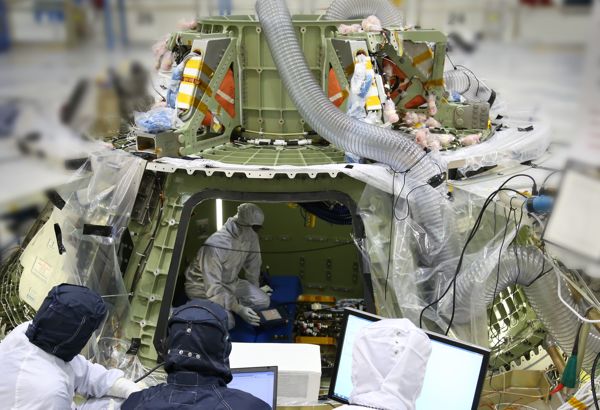
orion1Space exploration took a significant stride this week as NASA’s Orion capsule was powered up for the first time.  The craft has 66,000 parts so far which have been manufactured in many different places and shipped to the Kennedy Space Centre for assembly.  It rather calls to mind John Glen’s observation on his Mercury programme flight, “How would you feel if you were getting ready to launch and knew you were sitting on top of two million parts — all built by the lowest bidder.”  Orion has many more parts to come, and now looks quite different to how it will appear within its streamlined conical cladding.  This powered up test was to check its management computer together with its power and data distribution system.

Orion is designed as a deep space vehicle to take astronauts far from Earth orbit, first to an asteroid and then ultimately to Mars and other destinations within the solar system.  Its first flight test next autumn on a Delta IV rocket will shoot it 3,600 miles up, way beyond the near-Earth International Space Station.  Without a crew it will complete two orbits if all goes well, and re-enter the atmosphere at 20,000mph.  Later missions will see it integrated with its service module and launched atop NASA’s new Space Launch System heavy lifter.

With all of the private spaceflight ventures and the steady progress of NASA’s Orion, space is at long last beginning to recapture some of the excitement of its earlier programmes, and perhaps will catch the imagination of young people and fire them up to think of careers in space for themselves.

They might reopen part of the Post Office Railway under the streets of London

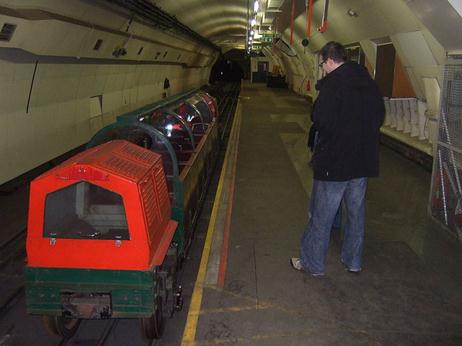
post-tubeThere’s an intriguing report in londonlovesbusiness that the recently privatized Royal Mail might reopen the little-known-about London Post Office Railway.  It’s an automatic narrow guage railway that the Royal Mail used to use for transporting mail across London.  It was used from its opening in 1927 to its closure in 2003, and delivered mail on driverless trains from Paddington in the West of London to Whitechapel in the East, at speeds of up to 40mph.

The more conventional people-carrying London Underground has many disused stations, including the one at Aldwych opened recently for a few days as part of a World War II commemoration.  I myself once pulled into one when a Jubilee Line train from Green Park to Westminster pulled in at Trafalgar Square station instead, having been misdirected underground.  It was weird seeing an abandoned and deserted station with posters of yesteryear adorning its walls.

There were six stations on the Post Office railway, with Mount Pleasant sorting office, the largest, still in use as a sorting office.  This is the one they plan to reopen.  The plan is to make it a museum rather than a working railway, but visitors will be able to ride the train between three stations.  I once suggested to government that they should investigate converting part of the network into a toll link for cars to cross London without the congestion they encounter up top, but I guess it proved impracticable.

The first copies of my new book just arrived

No matter how many times it has happened before, it’s still a thrilling moment when the first hard copies are delivered and you feel the pages and smell the printing ink.  I actually wrote the first draft of “Team Games” a few years ago and only this year brought it out of limbo to polish it, add extra chapters and edit it ready for publication.  This process took its length from 50,000 to 70,000 words, and I think the additional material improved it.

It is children’s science fiction, like my other titles for young adults.  I only wrote one sequel, “Silver Dawn,” featuring the same characters as “Children of the Night.”  The others are all stand-alone books with different characters and settings in them.  This one is no exception, though it is different in that it is set just slightly ahead of present day.  The cover might imply that it is set in a distopian future, but it’s not like that at all.  There is the familiarity of schools and shopping malls, but most of the children play an extraordinary and exciting game every day on the streets, a combat game with teams and contests and rankings.  It is a game deliberately devised by social psychologists to be more thrilling than the crime or drugs that some kids used to indulge in.  However, someone is using the game as cover for nefarious ends, and it’s up to Zac and his friends to stop them… The book isn’t on sale yet, but I’ll post when it is.

The aperitif makes a comeback as part of a UK trend towards more bitter drinks

aperitifsA nice piece by Ben McFarland and Tom Sandham in the Telegraph explores the idea of the aperitif, in many ways a lost art.  It is of course the pre-prandial drink that stimulates the appetite and gets the gastric juices flowing to make the meal itself more of a pleasure.  Sweet tea or coffee it is not, for an aperitif should tease the mouth and express “dry, bitter, light, herbal or sour elements.”  Bitter is useful because it activates hormones and enzymes that aid digestion.  The Italians gave us vermouth, Punt e Mes and herbal Campari.  The French gave us fortified blends like Dubonnet, and the Spanish gloriously gave us dry sherry.  I used to drink dry sherry before a meal as my aperitif of choice, preferring Apitivo slightly over Tio Pepe, and liking it served very cold indeed.  Sometimes in Denmark I’ve gone for Akvavit, and I love it served from a bottle clad in a thick cylinder of ice a few inches thick.

There’s a story in the BBC News Magazine that bitter drinks are gaining in popularity, which is something I’ve noticed anecdotally.  Aperol Spritz seems to be almost de rigueur among the smart and trendy set.

“I think the Aperol spritz was probably the most asked-for drink in the outdoor areas of most decent bars in London this summer,” says World Duty Free mixologist Charlie McCarthy.

Aperol, based on bitter orange and rhubarb, contains gentian and cinchona to enhance its bitter punch. Campari, with gin and sweet vermouth is also popular, and of course the classic dry Martini is classic for a good reason.  Everyone has their own favourite recipe for it.  Finally lexicographers should note that the aperitif is sometimes called a “pre-lash” in youthful circles.  The origin is obvious.  When setting out to get lashed, you start the evening with a pre-lash…

The movie of Ender’s Game is totally absorbing and visually stunning

ender's posterI went to see Ender’s Game on October 25th, its first day in the UK.  For some reason it followed a very peculiar release strategy.  It did not open in a central London cinema, and no times were shown for anywhere else until just a few days beforehand.  It did open in provincial cinemas, so I saw it in Letchworth.  It’s usually a bad sign when this happens.  In the past it has sometimes been done to get the movie out before it can be mauled by the critics.

I needn’t have worried.  Ender’s Game is enthralling and visually dazzling.  It is pretty faithful to the book, though some irrelevant side plots are omitted – they should never have been in the book in the first place.  Young Ender is recruited and put through his paces in training to become an instinctive and ruthless tactician of space warfare.  The bugs (aka formics) nearly destroyed Earth last time, and Earth is not about to lose the next fight.  The training matches in battle school are quite well done, though there are many fewer of them than in the book.

Critics might well slate the acting, though I thought it well up to the mark.  Asa Butterfield plays Ender as he should be played, cool and determined, holding himself in check.  Harrison Ford is positively grumpy as the commander playing against time to bring on his young prodigy.  In sum, those who’ve read the book will love the movie.  Those who haven’t will like it anyway, but some might find parts of it require an effort to follow.  It gets five stars in my rating.

Does anyone fancy riding a pressurized balloon on a fun trip to the edge of space?

gondolaThe internationally agreed definition of “space” is set at 100km (62 miles) or 330,000ft.  It is an arbitrary line, not in any sense a ‘real’ boundary.  It is above virtually all of the Earth’s atmosphere and is therefore declared to be “outer space.”  This is the reason that private space tourism companies have set their sights on it.  Virgin Galactic’s SpaceShip Two will take its passengers on a suborbital hop to 360,000ft, giving them several minutes of weightlessness in which to drift about their cabin.  XCOR’s Lynx will take a single passenger alongside its pilot to above the level deemed to be space.  The X15 pilots who flew above 50 miles were given astronaut’s wings.

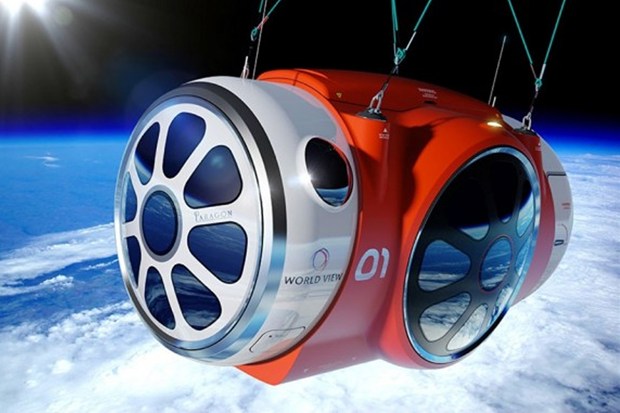
The term “edge of space” used mostly for high altitude balloon flights is generally reckoned to be about 100,000ft (19 miles), and above.  The students of Cambridge University Spaceflight regularly send balloons with cameras and telemetry 100,000ft high, and set a UK record at 118,786ft.  At that height the atmosphere looks like a blue film wrapped around a curved Earth below, and the sky is black.  Now a private firm, World View, plans to offer fare-paying passengers the chance to ride to the edge of space in a pressurized gondola suspended from a balloon.  At 100,000ft they will have a view similar in many respects to that which will be enjoyed by the suborbital voyagers.  They will be able to spend hours up there, unlike the short hoppers, maybe watching a sunrise over the curved Earth below.  They will not experience zero-g, however.  At $75,000 per trip, it is by no means cheap, though it is less costly than the suborbital fares currently on offer.  I don’t think I’ll do it.  I flew Concorde a few times, and still have photos I took of a curved Earth horizon under a black sky.  Even though Concorde’s top cruise altitude was only 60,000ft, it was still much higher than most other passenger planes, which are below 40,000ft.  I don’t think I’ll do the balloon simply because it’s not space.  You can’t really claim to have seen the planet from the outside, as I think you can say above 100km.  And although their six passenger, two pilot gondola is officially classified as a “space vehicle” by the Federal Aviation Administration, their customers are not awarded astronaut’s wings on their return.

Physical exercise seems to boost children’s academic ability as well as their bodily health

kids-exerciseA new study from the Universities of Strathclyde and Dundee (published in the British Journal of Sports Medicine) suggests that intensive exercise boosts the academic performance of teenagers.  The study of 5,000 youngsters found that exercise was linked to higher exam grades in English, Mathematics and Science.  For boys a daily exercise of 17 minutes registered an academic improvement, and for girls it was 12 minutes.  The improvement averaged about a quarter of a grade for each 15 minutes of activity.  The effect was noticeable at 11 years old, at 13 and in the exams taken at 16 years old.  Girls in particular showed improvement in science correlated with physical activity.  The authors suggest that a full 60 minutes of daily exercise could conceivably boost performance by a full grade, though they admitted that since very few children actually did this amount, they were projecting from very small numbers.

It sounds plausible, especially since other studies link regular exercise with mental as well as physical well-being in adults.  It seems sensible to do regular exercise if you can.  I do about 35 minutes in the gym pretty well every morning unless I’m traveling.  The fact that it’s a routine makes it easier.  It’s my way of starting the day.  Since I’m unlikely to take many more exams, I can’t really assess whether it improves my academic performance, though I certainly feel more mentally alert as a result.  My caveat over the report is that there does not appear to have been a control group.  The correlation between the exercisers and the achievers might possibly therefore result from higher levels of motivation rather than from the effects of exercise on performance.  It could conceivably be character we are looking at rather than stimulus.

English apple varieties seem to be losing sales to those bred down under, but this is not necessarily a bad thing

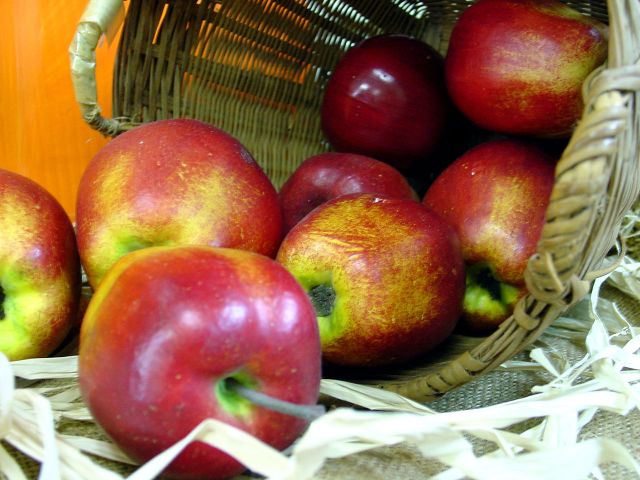
apple-basketLast Monday was National Apple Day in the UK.  The story may have escaped your attention, but it came amid a report about food waste which suggested that forty percent of apples in Britain are wasted.  Hot on the heels of that one came a story that traditional British varieties of apple have been losing out to slickly promoted imported ones.  It makes sense to give apples their national day in late October at the height of their season, and it seems to have been an exceptional one in the UK, thanks to a good summer followed by some rain.

We divide Britain’s many hundreds of varieties into two categories.  There are the ‘eaters,’ such as Cox’s Orange Pippin and Granny Smiths, that tend to be sweeter, and there are the ‘cookers,’ bigger and sharper-tasting, of which Bramley’s is the most famous.  But sales of UK varieties, especially of eating apples, have been falling as we buy more and more foreigners, including Braeburn and Gala – and now Royal Gala – which hale from New Zealand, as does the recently developed Jazz.  Another popular variety, Pink Lady, also comes from down under.  Actually Jazz and Pink Lady are really trademarked brand names rather than varieties.  Jazz is Scifresh and Pink Lady is Cripps Pink.  They succeed because they are more consistent and reliable than rivals, in that more of them are produced to the size, shape and colour to enter Class I, which is what sells in supermarkets.  And people like their apples sweeter and crunchier these days.

I like most apples.  Along with mango it’s probably my favourite fruit.  I use apples as the base for fruit compotes incorporating various berries and sometimes plums.  I make apple and bramble pies and crumble and apple pie with cinnamon (using many varieties), and apple sauce (using Bramley’s).  I like Sainsbury’s Basic Apples which are nicely firm and acidic, and also happen to be the cheapest.  There were none last week, and I hope this absence is only temporary.  I don’t feel unduly patriotic about eating British varieties; I’m more concerned to eat the ones I like best.

Food wastage is a problem, but one easily solved with a little ingenuity

fridgeQuite a fuss was made about the revelation from Tesco that over two-thirds of its salad bags are wasted.  It prompted stories about food waste and calls for supermarkets to stop encouraging people to buy more food than they can use.  The criticism struck me as misplaced, in that the real story was about consumers wasting food, not about supermarkets wasting it.  A BBC magazine story says that 40 percent of apples and nearly half of all bakery items go uneaten.  I find this scarcely credible, but if true, it points to bad management by people of their food stocks.  The article gives “six tricks to revive old food.”

I waste hardly any food at all, as I think I’ve said before.  It all comes down to management.  Leftovers can be frozen for subsequent meals.  Supermarket two-for-one offers can be snapped up with one frozen for later use.  Today’s meals can be planned on the basis of what was left over from yesterday.  Remaining vegetables can be recycled into soups.  Quiche is a great catch-all for leftovers, be they of bacon, sausage or vegetables.  Meats can go into hotpots and casseroles.  It’s not difficult.

As for keeping things fresh for as long as possible, wrapping in plastic bags in the fridge or freezer does a lot.  I keep spring onions and leeks in a mug of cold water, refreshed daily.  It’s fun to watch them grow.  Spare mushrooms will freeze if you peel them first, and will then be good for later omelets and stews.  Apples will keep if you separate them from each other with paper towels.  Does anyone else have good tips on how to avoid wasting food?