


• Adam Smith Institute

    Adam Smith Institute place holder
  • Philosophy & Logic

    Philosophy and Logic
  • Cambridge

    Cambridge
  • Children’s SF

    Children's Science Fiction
  • Enter your email address to follow this blog and receive notifications of new posts by email.

    Join 428 other subscribers

David Cameron’s move to commit parliament to a referendum on EU membership is cleverer than the media will recognize

referendum_en

It is always amusing to see when the UK media develop a ‘narrative’ on a subject and interpret every new development or incident in that light.  The narrative is currently “Tories in disarray on Europe,” so every turn of events is adduced as yet more evidence of this.  David Cameron’s plan to introduce a bill in this parliament to make a referendum binding in the next one is described as “a panic reaction,” “ill-conceived,” “adding fuel to the flames,” and all the usual stuff.  In fact it looks rather clever.  The government cannot bring in such a bill without the consent of their coalition partners, which the Liberal-Democrats will not give, so it will be introduced as a private members bill which most Tory MPs will support.  A few Labour MPs will support it as well.

It puts Labour on the back foot, in that if they oppose it they will be denying the UK public the right to have a say in their future.  That is partly what David Cameron has in mind.  He also has in mind that it will strengthen his hand in negotiations with our EU partners for a more independent relationship with them.  And he undoubtedly looks at how this might neutralize some of the UKIP support recently seen.  All in all, it’s a rather clever piece of politics that addresses many problems simultaneously, but the media will not take it that way.  They will shoehorn it into their ‘narrative’ as “more evidence of Tory disarray,” “public relations disaster,” and so on.  Ah well, they’ll learn.  As for the referendum, I think it’s going down.  The local council elections lit a fuse that leads at the end of it to Britain’s withdrawal from the EU.  Our partners simply will not allow us to run our own affairs, because if they did, everyone else would want the same.  I predict that there will be a referendum, and the electors will vote to leave.

Royal mail privatization attacked by Conservative Party group

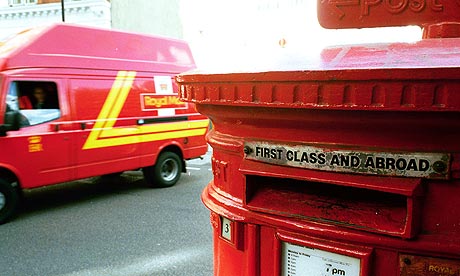
royal-mail2Rather inaccurately describing the Bow Group as a “leading right-wing think tank (it is none of those three), the Telegraph reports its dire warnings about the impending privsatization of Royal Mail.  In a letter to every Tory MP, the Bow Group chairman, Ben Harris-Quinney, said:

“The privatisation of Royal Mail is likely to swiftly form a poisonous legacy for the Government now, and a poisonous legacy for the Conservative Party going forward.”

Mr Harris-Quinney added privatisation could endanger “the financial stability of Post Offices” in rural areas by separating Royal Mail further from the 11,500-network.

Oh yes, and he also warned that the price of stamps is likely to rise when people can least afford it.  Ah, Memory Lane, and the scents and sounds it brings back.  Of course, people said this of Post Office telephones when that was privatized in 1984, and they have said it about every privatization since.  In most cases prices fell in real terms as competition clicked in.  Look at our phone services now.  In some cases prices rose to provide the recapitalization required after decades of under-funding and poor maintenance under state management.  The result has been a modernization of services that have helped British businesses to compete internationally.  The odds are overwhelming that a privatized Royal Mail will introduce modern technology faster, giving us a more streamlined, more effective service.

A new strain of wheat that could see crop yields increased by 30 percent is developed in Cambridge

new-wheatThe National Institute of Agricultural Botany is just around the corner from me in Cambridge.  I mean that almost literally, in that if I turn right onto Bridge Street and walk awhile, I’ll come to their buildings.  It is with some Cambridge pride that I learned of their announcement of a new type of wheat that could help to feed the world in the future.  Wheat already provides 20 percent of the world’s calories (and rice provides another 20 percent).  The Green Revolution saw increasing yields as new strains, better management and fertilizers took effect, but the increase has slowed.  Future increase will use genetic engineering to increase the acreage on which wheat can be grown, plus the yield from each plant.

The Cambridge development was not achieved by genetic modification, as the Institute carefully points out, no doubt to prevent environmentalist thugs from smashing their labs and trampling their crops.  Instead the scientists used cross pollination and seed embryo transfer to incorporate some of the qualities of goat grass, an early ancestor of wheat, into modern varieties.  Goat grass is one of the varieties of primitive grasses that evolved into modern wheat about 10,000 years ago when our ancestors took up farming.  The researchers were looking to add greater resilience and disease resistance, but found that one strain achieved a 30 percent increase in yield.  There is much testing and regulatory approval to be done, but after that, bigger harvests lie down the road.  It is this sort of imaginative progress that gives to lie to the doom-mongers who tell us that the world will starve.  Well done Cambridge!

Speaking about Karl Marx on capitalism at the Intelligence Squared debate

madsen-IQ2

I wrote about my participation in last month’s Intelligence Squared debate on Karl Marx. The motion was whether he was right to say that capitalism will collapse under its own contradictions. Of course I did not think so, and spoke accordingly.  It was quite a big night at the Royal Geographical Society, with an audience of just over 600 people.  The debate is now up on the Intelligence Squared site, and anyone who wants to catch it can do so here.  My 7 minutes start at 0:30:05, and I’m on for a brief 95 second summing up at 1:33:40.  As I reported, although the audience was roughly evenly divided at the start, our side won over most of the undecideds, giving us a majority of over 100 at the end.

A novel way to attack malaria by making the mosquitoes resistant to it

malaria

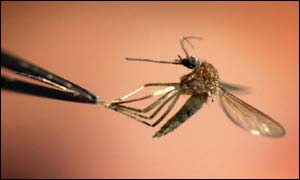
The ultimate conquest of malaria is producing innovative new approaches.  The most cost effective so far has been training people to use mosquito nets treated with chemicals.  Many others have concentrated on new methods of treating infected humans, or of immunizing them against the plasmodium parasite.  Some try to replace the anopheles mosquitoes by genetically modified ones that will not carry the plasmodium.  Now something totally new is at the development stage.  Researchers have found a bacterial strain that can infect mosquitoes and make them resistant to the malaria parasite.

Researchers at Michigan State University have looked at the Wolbachia bacterium which commonly affects insects including some butterflies and ladybirds.  It does not normally target anopheles mosquitoes, but any temporarily affected were made malarial resistant.

“The challenge was to turn a temporary infection into one that would be passed on. The research team found a strain of Wolbachia that could persist in one species of mosquito, Anopheles stephensi, for the entire length of the study – 34 generations.”

Although it is only one strain of anopheles, more associated with malaria in the Middle East and South Asia than in Africa, the technique could theoretically be applies to other types of mosquito.  And a different strain of Wolbachia has already been shown by Australian researchers to curb the spread of Dengue fever by mosquitoes in the wild.  I rate the conquest of malaria to be one of the most exciting and worthwhile activities that people are engaged in.  It is attracting some really talented researchers and creative thinkers.  The extinction of smallpox was an historic day for humankind, and who can doubt that malaria’s turn will come, freeing people forever from the curse of their most ancient and persistent enemy.

Sheep’s milk makes very good cheeses and yoghurts and it’s also very good for you

lambsThere’s an article by Rose Prince in the Telegraph about the new popularity of sheep’s milk products.  I first discovered them long ago when an illness made me intolerant of lactose, the sugar present in abundance in cows’ milk.  Basically if it isn’t sufficiently processed inside you, it feeds bad bacteria in your colon, causing or aggravating inflammation.  This is one reason why so many are intolerant or allergic to dairy products.  One solution is to turn to sheep’s and goat’s milk products, which have very much less lactose and which I came to like a great deal.  Even now I still prefer yoghurt made from sheep or goats’ milk, and always use semi-skimmed goat’s milk.  The sheep’s cheeses are incomparable, and I always choose them in a restaurant, and often to eat at home.

Few farms produce ewe’s milk in Britain, and the Tweddell family, who have lived here for 20 years, only began farming dairy sheep in 2000. ‘The land is hilly and un-ploughable, and so is ideal for sheep,’ Crispin Tweddell says. ‘I had eaten some sheep’s milk cheese and thought it stunning.’ The Tweddells supply the milk to make Spenwood, a pecorino-type cheese, and the acclaimed Wigmore, a soft, bloomy rind cheese, and, since 2008, when they bought the Woodlands Dairy from a fellow Dorset farmer, they have also produced a natural, creamy organic yogurt from sheep’s milk.

I concur heartily.  Spenwood and Wigmore are fantastic.  I also like a blue sheep’s cheese like the Lanark Blue that over-zealous health and safety officers tried to drive out of business.  Sheep’s milk is higher in vitamin D, and lower in the fats that raise the levels of low density lipoproteins.  It’s healthy and it’s delicious; what more could you want?  Oh yes, sheep’s yoghurt is stable when heated and so can be used to thicken soups and puddings without curdling.

The best part of the Queen’s Speech was in the things that were not in it

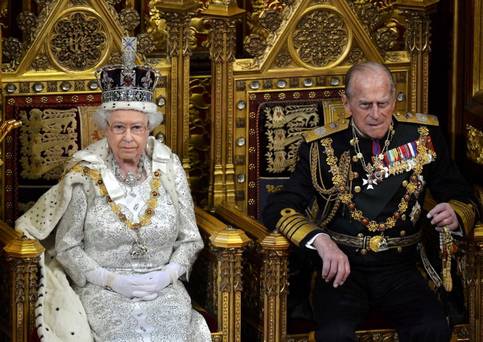
queens-speech2 The Queen’s Speech was fairly workmanlike, even dull.  It was a nuts and bolts affair concerned with policy detail rather than one offering the broad sweep of new ideas.  This is fair enough for a mid-term agenda, but we’ll need exciting new ideas next time.  As I trailed yesterday just before the contents were officially known, the main virtue of this one was the fact that it did not contain some of the awful stuff that earlier leaks had told us it had planned to.

Big Brother was kicked out when the Communications Data Bill was a no-show.  This, ostensibly for national security (as they always say), would have given every busybody under the sun the right to snoop on our e-mails, phone calls and text messages.

Big Brother sailed out arm in arm with nanny.  The infamous ‘plain packaging’ failed to appear.  There is no respectable evidence that pack design encourages smoking rather than brand switching, and the anti-smoking extremists wanted it simply because they want everything that is anti-smoker, regardless of whether it makes any difference.  Nanny also took minimum alcohol pricing away with her, again, a very good thing since its sole effect would have been to put more money into the pockets of supermarkets.  The zealots who want to regulate our lives “for our own good” are seething with impotent fury at the loss of the measures they had lobbied so hard for (mostly with taxpayers’ money), but the rest of us can celebrate a small respite from their relentless war against our freedom to choose.

Three Queen’s Speech policy ideas I proposed on the Radio4 Today programme

Queens-spchI had to get up early to be in the studio by 6.40 in order to go on at 6.50 on the day of the Queen’s Speech setting out the government’s agenda for the year.  John Humphrys was the presenter on the BBC Radio4 ‘Today’ programme, and I was on with Tom Papworth of Centre Forum.  We each were asked to list 3 proposals that would not be in the speech, but we wish had been.  We knew by then, thanks to advance briefing, what the speech actually contained.  I was delighted that the snoopers’ charter allowing the authorities to spy on our private communication had gone, plus the crazy nannying idea for plain packaging of tobacco and minimum alcohol pricing.

For my three proposed reforms I chose (1) allowing employees of small businesses to be treated as self-employed, (2) raising the threshold at which income tax begins to be levied to the minimum wage level, and (3) medicalizing hard drugs and legalizing recreational drugs.  My arguments are listed here on the ASI site, and if anyone wants to listen to our 6 minutes of discussion, the link is here, and scroll to 49 minutes deep, where it starts.

World War 2 Hurricane fighter seen in Cambridge

varsity view

I went up to the top deck of the Varsity Hotel, a fairly new feature on the Cambridge skyline.  There’s a bar on the flat roof on the sixth floor, and since the surrounding countryside is pretty flat, it gives a good view of the town and its environs.

hurricane

There was an extra show this time, though, because a vintage fighter plane made a noisy approach.  It seemed to be a World War 2 Hawker Hurricane, painted in RAF colours.  It circled the area three times, then sped off to the southeast.  My best guess is that it was part of a practice or preparation for the Spring Air Show being held at Duxford on May 26th.  There is an aircraft museum at Duxford, just south of Cambridge, and World War 2 planes often feature in its flying displays.  The Hurricane was one of the two mainstays of the Battle of Britain.  It was not as fast or as manoeuvrable as the Spitfire, but was cheaper to make, easy to fly, and was resilient.  Often the Hurricanes would go after the attacking bombers while the Spitfires took on their fighter escorts.  The sight and sound of it certainly livened up an early summer evening above Cambridge.

Now the man who started the euro wants it broken up

1. Parteitag der Linken

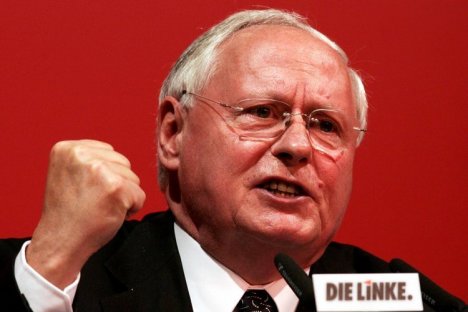
Oskar Lafontaine, despite his French-sounding name, was the German finance minister who launched the euro 14 years ago.  Now he has publicly called for the currency to be dismantled to avoid a political catastrophe.  The occasion was a deal by the EU to give France and Spain an extra 2 years to meet a deficit target of 3 percent of GDP.  This has been hailed by the French finance minister Pierre Moscovici as the end of the policy of austerity and the triumph of the French approach over the German one.  Indeed, from the opposite side of that divide, German Vice-Chancellor Philipp Rösler has attacked that decision by the European Commission, thinking it “irresponsible” to make concessions to the austerity programme.

Lafontaine fears the backlash from Spain, Portugal and Greece against what they regard as German hegemony, and warns that political disunity will follow unless the euro is dismantled, allowing countries to deal with their debts without having misery forced onto their populations.  He thinks the anti-German feeling and rhetoric which is already evident in the Southern countries will increase yet further, to the detriment of harmonious relations within the EU.  He warns of an impending crisis to come, bigger than any yet seen.