
• Adam Smith Institute

    Adam Smith Institute place holder
  • Philosophy & Logic

    Philosophy and Logic
  • Cambridge

    Cambridge
  • Children’s SF

    Children's Science Fiction
  • Enter your email address to follow this blog and receive notifications of new posts by email.

    Join 428 other subscribers

Some horsemeat in our burgers is no big deal

Chevaline

The discovery of traces of horsemeat in some supermarket burgers generated great interest plus a veritable punfest in which I joined until I was hoarse.  It generated outrage in the UK because horses are regarded more as pets since their use as draft animals virtually disappeared.  The DNA tests which established this are so sensitive that if the same abattoir were used for horses and cattle, there might be DNA traces found.  Even if actual horsemeat went into the burgers there is no question of danger; it might even improve them.

Horsemeat is widely eaten in many countries, as Susanna Forrest reports in a very informative piece in the Telegraph.  I myself have eaten it abroad several times and found it delicious.  It is somewhat gamier than beef and contains very little fat.  The reason it is not widely eaten in the UK is cultural rather than dietary, and even though it is hardly ever sold here, the UK does export horsemeat to several countries.  It was quite common during and after World War II, when food was difficult to come by and rationed.  I remember on visits to Grimsby as a child a shop called “Here we Sell Horseflesh for Human Food” (that was the actual name of the shop, though locals called it simply “the horsemeat shop”).  It seems a pity nowadays that we reject perfectly good and very tasty meat, though of course it should be properly labelled.

When the Bundesbank brings home its gold, is it a warning of turbulent times ahead?

bullion

A story by Ambrose Evans-Pritchard in the Telegraph reports that Germany’s Bundesbank is to bring much of its gold reserves held abroad back to Germany.  All its gold held in Paris is to relocate to Frankfurt, plus much of that held in New York.  Germany’s gold, 3396 tons of it worth about £115bn, is the world’s second largest holding after that of the US.

This move sets alarm bells ringing at several levels.  One wonders just what financial shocks the Bundesbank is anticipating that might require sudden liquidity on this scale? Is the world moving to a de facto new gold standard as countries move out of euros and dollars?  Maybe we will all curse Gordon Brown even more than we have done already for selling a huge proportion of Britain’s gold reserves for euros at a time when gold was at its low point in the market.  Gold is traditionally regarded more as a hedge against chaos than against inflation, though it often serves both functions.  Alarmingly Evans-Pritchard reports that:

“Veteran gold trader Jim Sinclair said the Bundesbank’s move is a pivotal event in the gold market and the latest warning for investors that they should keep metal bars under their physical control, rather than relying on paper contracts.”

This is the kind of news that has us all reaching for our seat-belts because there might be a rough ride coming.

Another music shop goes under, and the book trade will be the next casualty

HMV-dog

HMV, the chain music store, has gone into administration. Many commentators have pointed to changing technology as a primary cause of the store’s demise.  Few people buy music in the High Street these days.  Some download from sites such as iTunes, and many young people, traditionally the market for popular music, do not even buy downloads, but watch their preferred tracks free on YouTube.

The book industry is following a similar path.  Many people prefer to read digitized versions on their Kindles or iPads, and the market is very difficult for new authors to break into.  As a writer myself I see some of the trade close up, and it does not look promising.  One of my literary friends, quite a celebrated author, tells me:

“There’s no money in books. My sales are so few, I know my readers by name. If you look at the bestseller lists, the only books that sell are the ghosted memoir rubbish by TV celebrities.”

To that I would add books ghost-written for sports stars, plus books by already well-established best-selling authors.  Since J K Rowling and Harry Potter publishers are really looking only for blockbusters.  Where they might once have encouraged and developed new authors and built up a readership over time, now they look only for instant success.  In practice this means that the only authors who make money are ones who the publishers back with a big promotional budget.  The book review pages of newspapers and magazines are largely reserved for books from publishers who take paid advertisements in those publications.  The books piled upon tables at the front of the bookshop are there because the publishers have paid the bookshops for the privilege.  If there is no money in books, the curtain may be coming down on the professional writer.  The book trade as we have known it is withering before our eyes, with no clear sign of how it might be revived, or of what might replace it when it has gone.

Russia’s future in space might be threatened

Soyuz(b)

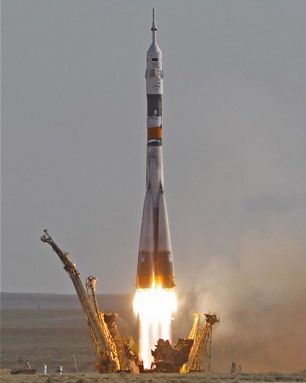
Baikonur has been the launch pad for nearly all of Russia’s space achievements.  From Sputnik 1, the first artificial satellite, through Yuri Gagarin’s first manned flight, down to present day re-supply of the International Space Station, it is from Baikonur that the rockets have lifted off.  Now it might be threatened.  Baikonur is in Kazakhstan, which was once part of the Soviet Union but is now an independent state.  Baikonur is rented by Russia as a Russian enclave operating under Russian law.  Both times I have visited I needed a visa to leave Russia to land in Kazakhstan alongside it, and another one to re-enter Russia after passing through Kazakhstan afterwards.

It might be just bluster to up the rent, but the head of the Kazakh Space Agency has called for reducing the number of launches and “revising” the lease agreement. He seems peeved that the Russians have not invested in a new facility there to house the new Angara rockets. It would be a sad day for space enthusiasts if Baikonur were to close. Not only is it the site for most of Russia’s space effort, it is a place rich in history.  You can still visit Korolov’s house next to Gagarin’s on Sputnik Row, and see accounts of the greatest disaster in the history of space exploration when an explosion at take-off killed 126 people, including the Commander of the Russian Strategic Missile Forces. If it did close it would be the end of a legend.

Film-making with the Raindance Festival is first of my 2013 hobbies

film-making1

My theme for the year 2013 is ‘hobbies,’ and the first one is coming up.  I am going on a one-day film-making course with the group behind the Raindance Film Festival.  As well as technical aspects such as camera work, lighting and sound, I want to know more about screenwriting, directing, producing and of course editing.  I am a director manqué, and would like to direct a motion picture, even a short one.  When I watch movies, I do so with a director’s eye, looking to see how scenes have been put together, how continuity is achieved, and how the director has contrived to achieve the effects that we see.  I’ll probably write a brief note about it here afterwards.

There will be twelve such ‘hobbies’ during the year, at about one per month.  The second one coming up will be falconry.

A signature garment that represents my philosophy

empirik1

I couldn’t resist this fleece.  It’s winter and I need something warm and light, plus it’s in my colours (blue/grey).  It’s the name, though: Empirik.  That’s close enough to “M Pirie” to be amusing, but it’s also close to “empirical,” which describes my way of thinking.  I sometimes joke to student debate audiences that the philosophy of empiricism was named after me (M-Piricism), but the honour belongs in reality to Sextus Empiricus.(160-210 AD).  I featured him in my “101 Great Philosophers”, pointing out that he was actually more of a skeptic than an empiricist, arguing against certain knowledge of truth or falsity.  The fleece also makes a passing nod to contingency, in that the collar contains a concealed hood that can be deployed to cope with unanticipated hail, sleet or snow.  It will be a regular companion this winter.

Stripping people of knighthoods and peerages after death

honour medals

When someone who has been honoured is disgraced while still alive, there is a procedure to remove some of the honours previously awarded to them. Sir Anthony Blunt became plain Mr Blunt again when it was revealed that the Queen’s art advisor had been a Soviet spy and recruiter. Similarly OBEs and the like have been stripped from disgraced beneficiaries.

The Jimmy Savile case raised cries for this to be done posthumously, in that Savile died before allegations of child abuse surfaced. Cooler heads pointed out that the award is for life, and ‘dies’ with the person. Despite this, it is a common cry when someone’s alleged crimes are only revealed posthumously. The case of Sir Cyril Smith, a one-time Lib-Dem MP, is one of the most recent. It seems unfair to some that these people escaped unscathed by death from the obloquy they should have faced.

Posthumous removal of honours would open a very large can of worms. Many famous characters from the past would be potential candidates. Should Richard III be stripped of his kingship because of the princes in the Tower? A standing committee would be needed to review cases that were presented and to conduct investigations. And since it would not be sufficient for a dead person to be simply accused of undeserving behaviour, some procedure would be needed to establish their guilt or innocence. Such a procedure could not, of course, hear their defence or give them their day in court. Issues such as these make it likely that when the outrage has died down, the dead will be allowed to stay dead, with their reputations tainted but their honours intact.

“Half of All Food Wasted” is good news

food-crops

Although the report from the Institution of Mechanical Engineers was greeted with shock and horror, the news that half of all food produced is wasted is actually a source of optimism.  The point is that it is easier to fix than most other ways of producing extra food.  Much is wasted in developing countries between farm and consumer because it is stored or transported badly, with some of it consumed by pests or allowed to rot.  In the developed world there are over-zealous sell-by dates and a reluctance by retailers to take misshapen vegetables, or a tendency to promote over-buying by generous two-for-one offers.

All of this is much more easily redressed than trying to increase the output of food.  If we attend to the wastage we can double the world’s supply of food without planting an extra acre.  So there is no incentive to cut down rainforests or to engage in more intensive farming, no need for extra pesticides and fertilizers.  All we have to do is stop wasting what we already produce.  The remedy is better storage, more efficient transport, and better protection against pests and moulds.  In the developed world we can learn how to keep food for longer by efficient storage, and use the badly-shaped vegetables in prepared food.  In carrot and coriander soup, no-one cares what the carrots looked like.

So the news about food wastage gives us reason go suppose that out food supply problems will be relatively easy to solve.  We can feed the future population with a smaller footprint on the planet than some had supposed.

James Buchanan, Nobel Laureate, 1919-2013

James-Buchanan

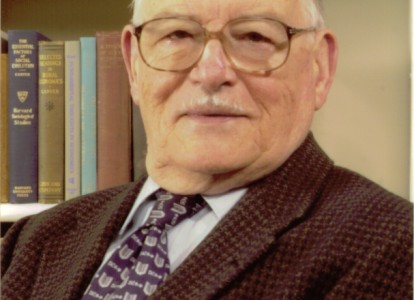
James Buchanan has just died at the age of 93. I knew him, though not well, through the Mont Pelerin Society which he attended for many years.  He was awarded the Nobel Prize for his work on Public Choice Theory.  Before that time people behaved as though politicians and civil servants were endowed with dispassionate righteousness to correct “failings” in the market economy.  Buchanan showed that they maximized their advantage in the same way that business people did (though some would say more harmfully).

The Adam Smith Institute was founded to seek a creative counterpart to the Public Choice critique, and to devise policies that would steer round the self-interest of legislators and administrators. One commentator has said of his importance:

“As a testament to his lasting contribution, the current graduate student in economics does not think twice about modelling the state as consisting of rational, self-interested and utility-maximizing agents. It’s now habit.”

Farewell, James, and well done.

Good luck to Gerard Depardieu with his Russian Citizenship

photo

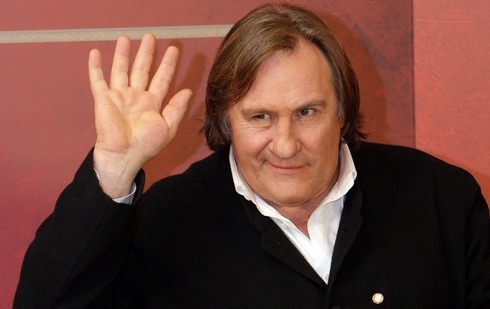
French (and now Russian) film star Gerard Depardieu seems more angry at being called pathetic by the government of Francois Hollande, than about the extortionate rate of income tax they sought to levy on him.

Depardieu says, “I was born in 1948. I started working aged 14, as a printer, as a warehouseman, then as an actor, and I’ve always paid my taxes.”  He has paid over €145million euros in total tax over the years, and employs 80 people. Last year he paid taxes at 85%. He adds, “I am neither worthy of pity nor admirable, but I shall not be called ‘pathetic”.

Movement across frontiers has long been a traditional way to escape oppression, and it is only the mobility of its citizens that restrains the rapacity of politicians. It is not yet known if Depardieu will choose to pay Russian taxes (at a flat rate of 13%), or maybe opt to pay them in Switzerland. But it looks increasing unlikely that he will pay them in France. Those who advocate higher taxation of high earners take note. It can only be a matter of time before one of the high tax lobby publishes a suggestion that high earners be prevented from leaving the country.  Maybe a wall…?