


• Adam Smith Institute

    Adam Smith Institute place holder
  • Philosophy & Logic

    Philosophy and Logic
  • Cambridge

    Cambridge
  • Children’s SF

    Children's Science Fiction
  • Enter your email address to follow this blog and receive notifications of new posts by email.

    Join 428 other subscribers

Obama does the right thing

President Obama has just signed the bi-partisan bill from Congress that shields US airlines from the EU’s attempted carbon emissions fee.  This was an attempt by the EU to unilaterally impose a tax on each ton of carbon emitted by planes flying into or out of Europe.  It was a ploy, probably illegal, to raise funds directly to the EU rather than through contributions from its member countries.  It was done without consultation with countries whose airlines will be affected, and aroused a storm of opposition, notably from China.  The EU has already announced a one-year postponement before its tax comes into effect.  Following the US decision, which passed with a rare show of unanimity in the Senate, the EU tax looks dead in the water, which is where it belongs.  It was clumsy and naïve, and would have siphoned off billions of dollars from the world’s airlines to stuff the already over-bloated budget of the EU.  It would have achieved no environmental effects of any significance either.

‘Fair’ taxes?

I really dislike the notion that firms should pay ‘fair’ taxes, as opposed to those the law stipulates.  Who is to decide what counts as ‘fair’ taxation?  The answer seems to be that it should be self-appointed custodians of the public good, as opposed to judges interpreting what the tax laws actually stipulate.

It is true that firms seek out low tax jurisdictions if they can.  They have an obligation to operate as efficiently as they are able to, but none to voluntarily pay more taxes than the law requires.  The European single market encourages firms to locate in one EU country in order to have access to the markets of all of them.  It was designed to do that.

If we resent countries like Luxembourg and Ireland making themselves attractive to businesses, we have the option of doing the same ourselves.  That is what we should be doing.  If our complaint is against firms that locate elsewhere and pay too little tax here, the best answer is to entice them to locate here and pay the taxes to us instead.

Choice restrains politicians

There is much talk of co-ordinated action against tax shelters, with governments urged to work together to prevent individuals and businesses settling in low-tax locations.  High tax advocates fume at their impotence as governments are unwilling to impose the swingeing increases that would precipitate a flight of capital, business and talent.

Politicians are restrained by tax competition, and this is a good thing.  It puts a limit on their predatory powers to confiscate the monies that others have earned.  Governments like to fund redistribution programmes because this buys them votes, but it also curbs and limits the wealth-creating process.  Mobility and tax competition both stand in their way, which is why socialists seek supra-national co-operation to close off avenues of escape.

Poorer people in society have generally done better as it becomes wealthier.  The sensible course is to boost the wealth-creating process, not to seek new ways of curbing it.

The second half priorities

In my speech to York University Conservatives last week I pointed out that the UK coalition government is now halfway through its anticipated 5-year term.  The first half has been dominated by the need to rescue the nation’s finances from the disastrous black hole into which Gordon Brown and his Labour government had sucked them.  The second half should stress essential reforms and a pro-growth agenda.  I set out a programme that might just fall within the range of what the coalition might be able to put through.

I started by suggesting that income tax and National Insurance should be combined, recognizing reality, and that the minimum income for paying income tax should be £12,500 (which is roughly the minimum age).  The most pro-growth reform would be to allow small businesses to treat their employees as self-employed, removing nearly all the non-wage costs of employment and thereby boosting job-creation.

On education I suggested they might allow for-profit schools (as in Sweden) in order to bring in investment to increase the numbers of free schools established. I called for research funds to be accessible by universities that choose to go private and free from state direction.

On the environment they should allow houses to be built on ‘brown’ (previously used) land within the green belt, and that subsidies for renewable energy should be phased out as we move to more gas-fired power generation.

I wanted the cap on skilled immigration lifted so international firms can bring in essential employees.  And on welfare I suggested there might be a time limit on unemployment benefit and a lifetime limit on the amount that can be claimed.  I suggested that policies such as these would get the economy moving significantly ahead of the next general election.

More children’s SF

I have 5 children’s SF books out, with “Children of the Night” about to be reprinted as a paperback.  I’ve been working on my first sequel, and finished my final edit.  It has now gone for professional polish before it goes to the printers and is published early next year.  I had called it “The Crystal Tiles,” but was advised to retitle it as “Children of the Night II – Silver Dawn” to make clear its status as a sequel.

Meanwhile I am now on the final edit of one called “Team Games,” a story I wrote quite some time back, but which has not yet seen the light of day.  It soon will, however, and should also be published early next year.  This one is interesting because it is pretty close to present day on Earth, as opposed to outer space or other planets.  The difference is the adrenalin-packed game that’s been devised to keep youngsters away from drugs and crime…

Celebrating Thanksgiving

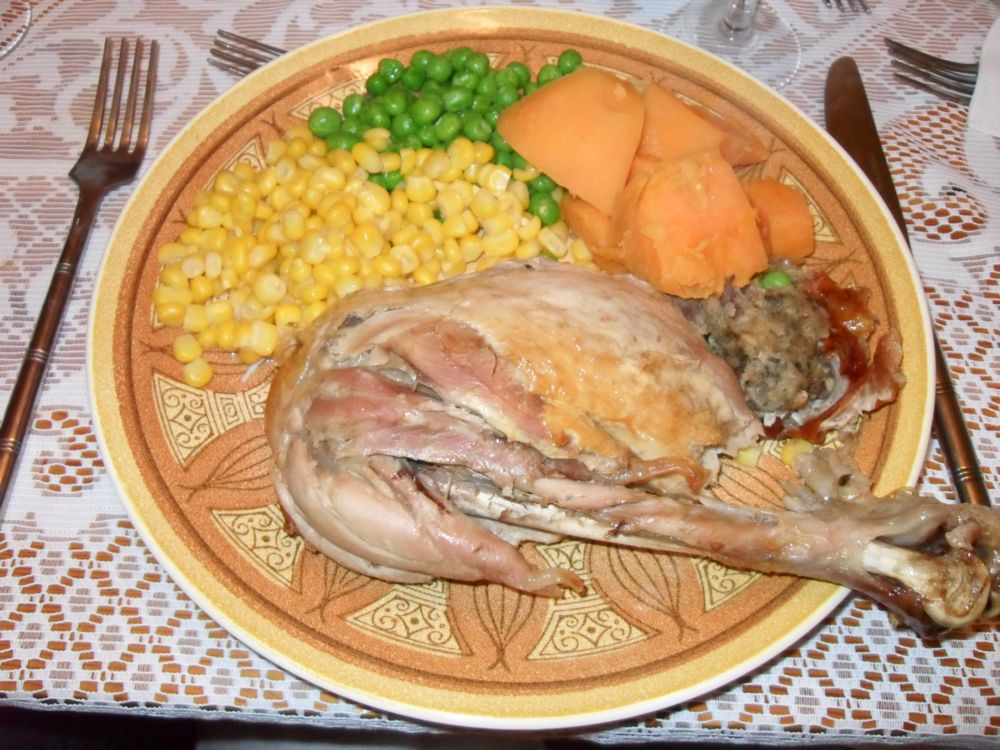
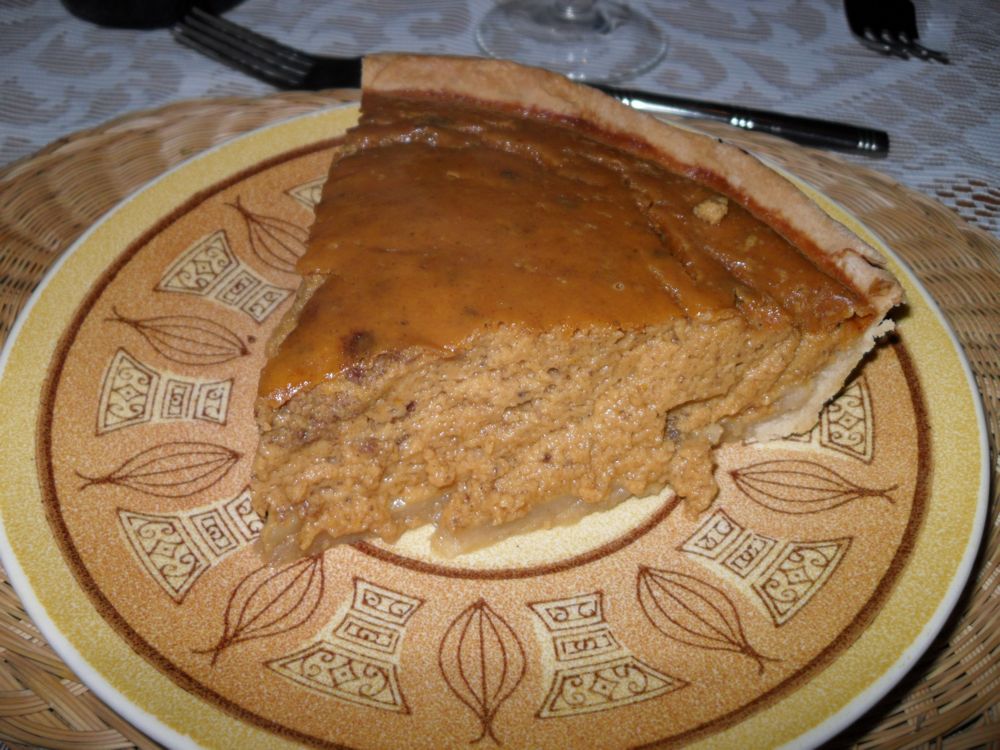
We’ve always celebrated Thanksgiving in the Adam Smith Institute, even though it’s an American festival.  The directors cook a meal for the young staff members.  It’s not quite up to legendary US standards, but it does feature New England clam chowder, roast turkey and sweet potatoes, and pumpkin pie to follow.

After the meal we always watch Mickey’s Christmas Carol, and our newest employee gets to decorate the Christmas tree.  In the UK the end of Hallowe’en means the start of the Christmas season, but we follow the US custom of having Thanksgiving as a useful break in between.  We’ve done it this way for decades…

Off to York

Thanksgiving is over and done with, and today I’m headed for York.  I’ll be speaking at the University tonight, then going for a meal with some of the students.  My title is “Second half priorities,” pointing to the fact that we are half way through the planned 5-year term of this coalition government.

Its first half has been dominated by the austerity measures, designed to haul the UK part-way out of the pit of debt and deficit it was dumped in by its predecessor.  Now it’s time for more positive stuff, and I’ll be talking not just about an agenda for economic growth, but of the opportunity for some major structural reforms of the entire tax system.

Sherlock the outsider

Ever since I heard, as a teenager, the BBC radio serialization of “Hound of the Baskervilles”, I have been a fan of Conan Doyle’s creation of Sherlock Holmes. I even co-authored with my colleague, Eamonn Butler, “The Sherlock Holmes IQ Book.” It is, I suppose, our fascination with the detached analytical thinking of the man that contributes to his eternal appeal.

Writing about Holmes in the current issue of the (always readable) Prospect magazine, Edward Docx takes it a stage further, presenting Holmes as a great outsider:

Consider: Holmes is not of the ruling class, the lower class or the middle class. He is an insider, but also an outsider. We know nothing of his education, next to nothing of his childhood, very little of his views or experiences or feelings concerning the dozen or so ordinarily staple subjects by which a writer creates character. Holmes isn’t of any profession save the one that he has founded. He is not an employee of business, or of the state, and frequently disdains the laws and precepts of both. He forms no attachments but he interacts with the same equanimity whether he is with urchins or kings. Though he concerns himself with crime, he does not concern himself with the causes of crime… He is asexual, remote, aloof, analytical but enduringly lovable—the loyalty and regard of Watson is our witness to this and as important in the creation of the fiction as Holmes himself.

I think he has a point. Holmes is not one of us. He leads a life completely unlike any of our lives. He stands outside and, as onlookers do, sees more. Therein lies a large part of his appeal.

End of an era

The BBC reports that the last typewriter made in the UK has been produced at a factory in North Wales.  It was a Brother machine, and has gone to the Science Museum in London.  It is the end of a distinguished career for the instrument originally invented in the US in 1830, but which did not become popular until Remington began to mass produce them in the 1870s (adding them to the firearms range they also mass produced). They were credited with helping women to join the labour force in occupations other than domestic service.

The last one was an electronic model, but my own fond memory is that I used a manual one to write my PhD thesis at St Andrews.  The thing clattered away as I turned out the pages, and each evening I would bind what I had produced with a paperclip and add it to the growing pile of chapters under the table.  I ran through more than one ribbon, preferring the crisp appearance of a single use carbon ribbon as opposed to a cloth multi-use one.  Pounding on the keys one finger at a time, I almost certainly shortened the life of the machine, but it served me well and I remember it with affection.

Europe’s future?

I was asked by a Russian journalist if I thought the EU austerity programmes would run up against popular resentment, and what was my forecast for the EU.  My answer was that austerity has already provoked strikes and demonstrations, and is stoking up social unrest.  It has probably reached its limit.

Unemployment is very high in Greece, Spain, Portugal and Italy, especially youth unemployment which tops 50 percent in two of them.  The need is for economic growth to generate new jobs and new income streams.  That means lowering taxes and regulations, especially on small and new businesses, easing labour markets by removing fixed working hours, employment protection and entitlements.  It means giving enterprise the space to see what it can do.

Will it happen?  Probably not.  The EU is too set on the political goal of union and uniformity to allow the flexibility that individual countries need.  And within those countries commitment to the ‘social model’ is too strong to give free enterprise its head.  What could easily happen instead is 10 years of Japanese-style stagnation, with the Eurozone lurching from crisis to bailout and back again.  It need not happen, but it might well, owing to a failure of politics, not of economics.