
• Adam Smith Institute

    Adam Smith Institute place holder
  • Philosophy & Logic

    Philosophy and Logic
  • Cambridge

    Cambridge
  • Children’s SF

    Children's Science Fiction
  • Enter your email address to follow this blog and receive notifications of new posts by email.

    Join 428 other subscribers

World poverty has halved in two decades, and it was achieved by economic growth, not redistribution

world-devOn a day of good news about the birth of a royal baby who will one day be king of the United Kingdom and many of its commonwealth nations, the Economist has a story about even more good news. World poverty has halved in two decades. The measure used is the $1.25 a day of consumption that is the average poverty line for the 15 poorest nations. This figure shrank from 43 percent in 1990 to 21 percent in 2010. This was not achieved by redistributing wealth from richer countries, but by having wealth created in poorer ones by economic growth. Roughly 1bn people have been lifted out of poverty, two thirds of them in China and the rest in other developing countries.

In 2005 there was a great call by politicians and celebrities to “Make Poverty History,” and wristbands bearing that slogan became fashion accessories. In response I designed some for the Adam Smith Institute that bore the message “I buy goods from poorer countries.” These were publicized on the ASI site and sent free to anyone who asked for one. We distributed many thousands. My point was that to say “Make Poverty History” does not actually do anything, whereas our slogan was a declaration of personal action. It is by opening our markets and buying the goods from developing countries that we have helped them lift people out of poverty. Globalization has achieved major results where foreign aid’s contribution was only marginal.

With the world economy by no means yet out of its recent troubles, this is no time for complacency. There is a further billion to be raised out of deprivation, but we now know what works and what does not. We must allow more goods from these countries into our markets, and they in turn must make outside investment in them an attractive option. Free trade, free markets and freer economies can indeed make poverty history, and billions of people will face a better life in consequence.

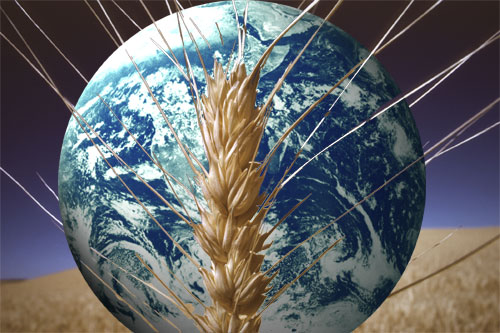
Food prices predicted to treble and nations to compete for access to land and water for crops according to “experts.”

foodsecThe head of the Global Food Security working group, Prof Tim Benton of Leeds University, claims that food will be “the key issue” and that there could be food shortages in Britain. Helpfully he suggests ways of reducing the demand for food, saying that ideally our calorie consumption should be cut by one-third, that pack sizes in supermarkets should be cut, and that buy-one-get-one-free offers should be outlawed. And restaurants should play their part by serving up smaller portions.

Part of this twaddle derives from believing alarmist and implausible estimates for world population growth which has already begun to slow, and will probably peak at about 10bn. Part derives from a Malthusian underestimate of human ingenuity. We are producing more per acre, and GM crops will give us the ability to increase yield further, and to produce crops tolerant of saline or arid conditions.

It is the same type of linear projection that gave us “peak oil,” now looking laughably silly in the light of the shale revolution and the advances coming along in photovoltaic technology. The world does not work like that. When humans see problems they turn their intelligence and creativity to devising solutions. If prices rise with demand, resources are committed to increasing supply, and to developing the technology to make it possible. For what it’s worth, I think it far more likely that we will be able to produce enough food, and that we’ll be able to put more of it towards those who are currently not receiving enough of it.

Should doctors wear business attire or medical scrubs rather than casual dress to inspire confidence?

scrubs1Hippocrates, the fount and origin of modern medicine, thought doctors should be “clean in person, well-dressed, and anointed with sweet-smelling unguents,” but there has been debate about what dress is appropriate for physicians to wear in these more casual days. An obvious point is that doctors are members of a profession and that professional attire as well as professional conduct is expected. When I was a professor of logic and philosophy in the US, I dressed casually on campus, like a student indeed, but I never appeared before a class without a shirt and tie. On hot days I would sometimes take my jacket off while teaching. It puts students in the right mode if the teacher dresses properly.

Another factor in medicine is the possible health issue, with clothes perceived to be a possible source for the transmission of infection. Some years back government guidelines banned dangling ties, long sleeves and wristwatches, although there doesn’t seem to be hard evidence linking these items with infections. A desire to avoid the dangling tie is one reason many surgeons opt for bow ties. As I can testify, they are easier to keep clean!

Treatment is often more effective if the patient believes in it and trusts the doctor, so there is an added reason to look the part. In polls people preferred the traditional white-coat look, with scrubs (the v-necked green/grey top and pants worn by medical staff) and business attire coming after that and casual dress some way behind. As a patient my own preference is for scrubs or a starched white jacket. They seem to go with the activity.

Cambridge trees recover from outer-space teenaged moths, but where have all the wasps gone?

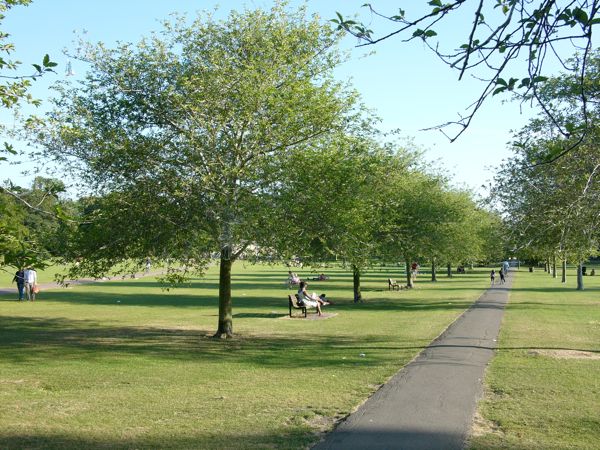
trees recoverCambridge has two pieces of good news to report. Those trees on Jesus Green which I showed enveloped in ghostly white film and stripped of leaves are now back in business. With the gypsy moth caterpillars gone, the protective white shroud they spun has disappeared, and the trees have all regrown leaves in abundance, as my photograph shows. Just a few weeks later it’s as if it never happened.

The other piece of good news is that wasps are barely to be seen this year. The plague of picnics, outdoor eating and beer gardens is conspicuous by its absence. I don’t recall seeing any yet this year. The experts tell us this is down to last year’s variable weather. In 2012 mild days in February brought the mated queens early from hibernation, but when the weather turned bad and available food dwindled, many did not survive to populate nests with their offspring. Bad news for wasps, but good news for picnickers. Since each nest might contain 5,000 wasps, that’s a great deal of hassle-free outdoor pleasure we can enjoy unspoiled.

Preserving half-used fruits and vegetables with silicone caps instead of plastic bags

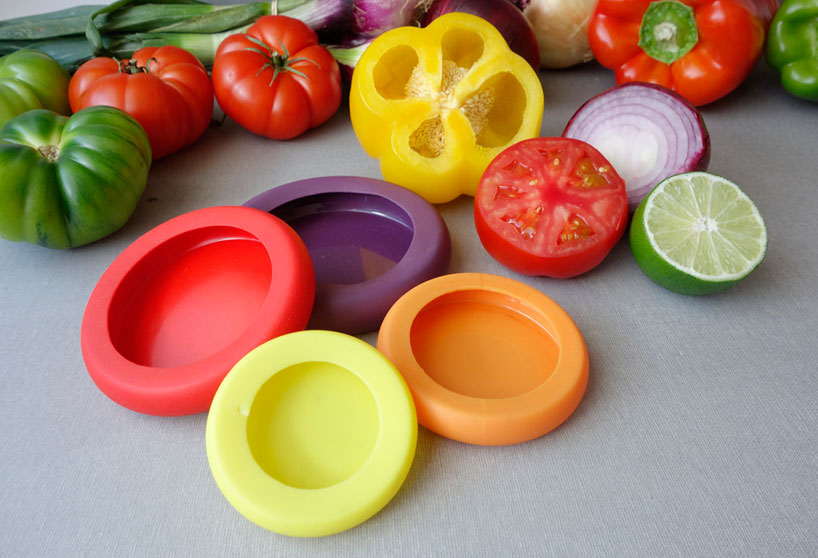
foodhuggersI use plastic bags to stop half used fruits and vegetables from going bad. My tomatoes are mostly small cherry vine types, so I don’t have leftover halves, but onions and peppers do tend to get part-used, and plastic bags tightly fitted around them keep them fresh longer. Red peppers in particular tend to rot quickly, so I keep them in a separate bag so they don’t contaminate the others. Now there’s a new way to keep food fresh. Food Huggers are a set of silicone caps advertised as dish-washer-, microwave- and freezer-safe. With luck your half used piece of fruit or vegetable will neatly fit one of the caps, so you just press it into place. The two designers raised $200,000 from a Kickstarter campaign, far more than they needed to get into production. Since plastic bags are not totally effective (and a tad messy) I think I’ll give Food Huggers a go and see how good they are.

Toast and the English breakfast

toast+marmaladeCo-operative, the food retailer, reports a decline in that staple of the English breakfast table, toast. In place of that fluffy bread, lightly toasted on both sides before being spread with butter and marmalade, more of us are apparently choosing European bread. Having encountered baguettes, brioche, and croissants on our holidays, it seems we’ve continued to enjoy them back at home. We’re allegedly eating 20 percent less toast than we did a decade ago.

I start the day with porage, rather than toast, but I’m not averse to toast for elevenses. And when I’m away staying at hotels, I usually have toast with butter and honey to eat alongside my omelet or scrambled eggs. It used to be said that the upper classes and Southerners liked their bread thin and firm, whereas the working classes and Northerners liked it soft and spongy. I have never checked this out, but it’s certainly true that thin-sliced bread is easier to toast and spread, though somehow not as satisfying. I hardly ever have white bread if there’s an alternative, preferring wholemeal or other brown breads if they’re available. It must be many years since I bought a white loaf, and many decades since I bought a white sliced one.

Tesla electric cars aim to compete with petroleum-fueled ones by ultra-fast battery charging in 5 minutes

tesla-chargerElon Musk is at the cutting edge of automotive technology. His Tesla cars became a more viable alternative to conventional ones running on fossil fuels when he rolled out his super-charge stations offering a 30-minute charge time. Then in May he announced an upgrade that shortened it to 20 minutes. The latest announcement from his chief technology officer JB Straubel is that they are aiming to cut that again, perhaps to five minutes – pretty well the time it takes to fill a tank with regular fuel. The secret is high power charging. Conventional public charging stations operate at below 10kw, and popular fast-charging at 50kw. The goal is now 120kw. Fast chargers convert AC to DC power outside the vehicle, but at high power there are problems to be solved.

One challenge of fast charging is that delivering power to a battery very rapidly can cause it to overheat. To avoid damaging the battery, the outside charger needs to communicate with the electronics that monitor the state of the batteries, including their voltage and temperature, and quickly adjust charging rates accordingly. “To do that kind of charging, everything has to be designed and working in perfect synchrony,” Straubel says.

To increase the number of places that can handle 120kw ultra-fast charging, Tesla plans solar panels and storage batteries at its supercharging stations. It’s great to watch these developments following thick and fast upon each other. At the end of this road is the stuff we used to see in futuristic comics, a world in which electric, non-polluting, computer-controlled driverless cars whisk their occupants safely to their destinations at high speeds. It could come about even more rapidly if Tesla succeed with their plan to market cars in the $30,000 to $50,000 range within a few years.

The spaceplane Skylon and its air-breathing SABRE engines receive government backing for development, and might actually fly

skylonHere’s a story that surfaces every few years and has done for decades.  It is the spaceplane, the vehicle that takes off from a runway and flies into orbit using engines that breathe atmospheric oxygen for part of the way, and then turn to using an on-board oxidant when the air outside becomes too thin. Always the story is the same: the plane will make transcontinental travel rapid enough to do the UK-Australia trip in far less time than it takes to fly across the Atlantic these days. In the 1980s it was Hotol, the unmanned vehicle that could freight cargo into space, taking off and landing from conventional runways. Then hopes were invested in scramjet technology. The story in the UK always ended the same way: there was insufficient money to develop it, so it died.

This time there is a significant difference. The new version is Skylon, powered by the revolutionary air-breathing SABRE engine. Developed by Reaction Engines, it will power a hypersonic transcontinental craft and an orbit-capable vehicle. The difference is that minister David Willetts has promised £60m of government funding to get the project ff the ground (literally). Given that, the thing might actually fly. And about time, too, given the wait.

The press suggests it as a competitor to Virgin Galactic’s sub-orbital hops, but it is in fact in a different league. This one is slated to reach 19,000 mph and take people into orbit. Burt Rutan’s SpaceShip2 is dropped from a heavy lifting aircraft and uses rocket power to just reach the 100km frontier of space and give its passengers a few minutes of weightlessness. Not the same.

Now there’s a Prosecco policeman to ensure high quality sparkling wine

prosecco1It has to be a pretty good job, spending one’s time in bars and restaurants sampling sparkling wines to make sure that any sold as prosecco is indeed up to standard. He’s called a “special monitoring agent,” based in Treviso near Venice, and will check that prosecco comes from the bottle, without customers being palmed off with cheaper stuff served from taps or carafes. He has powers to levy stiff fines on any caught cheating.

Prosecco took off in a big way about three years ago in the UK. Before that time most people’s alternative to champagne was either cava or sparkling Loire, and prosecco was found somewhat light and slightly sweet by comparison. Then prosecco put its act together and started targeting the UK market with a range of high quality products suited to UK tastes. First restaurants started offering them, and then wine bars. I probably see more prosecco than cava these days.

I note with some amusement that the Italians are using EU laws to advantage. A few years back they had to rename their Tocai wine because of possible confusion with the more famous Hungarian Tokaji. Now they are insisting that as Croatia joins the EU its prosek wine must be renamed, even though it’s a yellow, sweet dessert wine rather than a sparkler. The name might confuse the uninitiated.

Long-distance high-speed travel by capsule in evacuated tubes using magnetic levitation

highspeed tubeThe company is called Evacuated Tube Transport Technologies (ET3), and they propose a tubular network that could carry passengers at high speeds through evacuated tubes. It rather calls to mind the time I remember when major stores used a small-scale pneumatic tube system to carry cash and receipts from a hidden back office to the counter assistants. This technology is much more advanced, however.

The tubes would be 5ft in diameter, and would carry car-sized passenger pods for 6 passengers , accelerated to high speeds by electric linear induction motors, and with a frictionless maglev ride though the evacuated tube. With minimal friction or air resistance, efficiency could be high. Speeds of 370mph are proposed for short trips within states, and of 4,000mph for long-distance or international travel. This could mean 45 minutes for New York – San Francisco, or New York – Beijing in 2 hours. The tubes could go under water where required, and there would be airlocks at stations to prevent air being admitted.

The company is very bullish on costs, claiming that its system would need only 1/20th of the material required for high speed rail, since its vehicles are so light. They say that automated passive switching would give two such tubes more capacity than a 32-lane freeway. The cost, they say, would be 1/10th of high speed rail, and 1/4 that of a freeway. Most of the electric energy used to accelerate the vehicles will be recovered as they decelerate, and ET3 can provide 50 times more transportation per kWh than electric cars or trains.

Will it happen? The name of Elon Musk, of Tesla and SpaceX, is associated with it, so it might well see some development. My best guess is that we might see a trial of it set up to serve a popular route. And if it has anything like the efficiency claimed for it, it could catch on. Would I ride it? You bet! Two hours to Beijing or Australia? Why wouldn’t I?