Posted on July 4, 2013 by Madsen Pirie
 There’s a discussion on the BBC site about the merits of flat tax, as idea that the Adam Smith Institute proposed for the UK in 2004. Several good points in favour of it are made by Rory Meakin of the Taxpayers’ Alliance. Its chief virtue is that it cuts complexity. In place of our 17,000 pages of tax code, one of the world’s longest, would be a few simple rules. In place of the various different rates, thresholds and exemptions, there would be a simple tax rate for all incomes earned above the minimum wage. This might be 22% or 25%, but would be substantially lower than the top rates currently in force.
There would be two principal effects. The simple low rate would reduce the incentive for both legal avoidance and illegal evasion. It would be easier just to pay the tax. The tax base would thus be broadened as more income became taxable. The second effect would be economic expansion as business activity became more worthwhile. There would be rapid growth, and a further broadening of the tax base from the increased economic activity. This would enable the low flat rate to raise sufficient revenue to fund services.
The arguments against are misconceived. The rich would pay a lower rate, but they would pay more tax, and a higher proportion of the total tax take. Low earners would not pay more because the raised threshold would remove those on or below the minimum wage from income tax altogether. Much of the tax code could indeed be eliminated because with low flat taxes business would not need all the exemptions and allowances. Only tax accountants and revenue officers’ unions would stand to lose.
There is one other virtue of a flat tax. Some people support high spending programmes if they think that someone else will be paying for them. With a flat tax it is clear that everyone would pay for them, and people would be less receptive to politicians promising benefits that others would pay for.
Filed under: Updates | 1 Comment »
Posted on July 3, 2013 by Madsen Pirie
 UK Prime Minister David Cameron has declared to students in Kazakhstan that he’d quite like to be Harry Potter. I think many people might say the same, but analysis of the world of magic and muggles shows that not all things in Potterworld are necessarily those we’d like to live amongst. A study has pointed to some of the downside, and it makes for hilarious, if sobering, reading. The government of witches and wizards seems to run just about everything, including the jobs on offer. Officials seem to be appointed without any public elections. The government seems to spy on its citizens and to put out or sanction propaganda. There is a very real class division between purebloods, half-bloods and muggles, and the economy, such as it is, seems dysfunctional, with goods and services being magicked into existence. Come to think of it, some of this territory sounds awfully familiar. Maybe David Cameron and the rest of our political classes would find themselves quite at home in Potterworld…
Filed under: Updates | 1 Comment »
Posted on July 2, 2013 by Madsen Pirie
 The World Happiness Database in Rotterdam has collated data from around the world to see which paths in life lead to happiness. It doesn’t seem to be goal-directed, because Prof Ruut Veenhoven reports a slight negative correlation in which those who list goals as important are less happy than those who do not. This could be because they have not yet attained their goals and feel discontented accordingly. Leading an active life and being involved in things does correlate strongly with happiness, however.
What’s the secret? The study suggests things like being in a long-term relationship, being active in politics and being active in work and leisure time. Going out to dinner is included, as is moderate drinking, but having children seems to lower happiness levels until they move out. Commuting seems to go with unhappiness if it involves over an hour’s travel. Men in particular are happier if they think they are good looking, as opposed to actually being thought so by others. It’s mostly predictable and rather pedestrian stuff, in that we would all guess that “having close friendships” would lead to a happier life.
I actually practise doing things that make me happier. I maintain contact with friends, and invite them out if too long an interval has passed since we last met. Since I retain memories of unpleasant or upsetting things, I try to avoid them entering my mind in the fist place. I practise devaluation and substitution for unobtainable things, but generally attain happiness by actually achieving the things I want to do.
Filed under: Updates | 1 Comment »
Posted on July 1, 2013 by Madsen Pirie
It was a brilliant idea to hold a conference in the Galapagos to bring evolution science into market economics, liberty and the social order. What was most remarkable of all was the number of different disciplines that were featured. These included neuroscience and anthropology, as well as game theory and an enthralling account of violence among other primate species. We were treated to accounts of how evolution has selected for characteristics that drive an entrepreneurial economy. What also emerged was how the evolving brain has developed instinctive strategies that work to mutual advantage in people’s dealing with each other. It was a meeting marred by accidents and misfortunes to several of the delegates, indicating that the islands are not the safest places, or perhaps that the MPS features a fair measure of older people who injure more easily. The sad death of Kenneth Minogue on the flight back was the most shocking, but it came at the end of what was for him a successful last conference that saw him reunited with many old friends. The society next meets in Hong Kong, in the late summer of 2014.
Filed under: Updates | Leave a comment »
Posted on June 30, 2013 by Madsen Pirie
There was a sad epilogue to the Galapagos conference of the Mont Pelerin Society when its former President, Prof Kenneth Minogue, died of heart failure on the flight back to the mainland. There will be many obituaries for so distinguished a thinker and writer in political theory, but my personal one is of someone who I knew as a friend for over 30 years. Born in New Zealand and educated in Australia, he taught at the LSE since 1959, latterly as Emeritus Professor of Political Theory. His scholarly contributions included “The Liberal Mind,” “Nationalism,” and “Alien Powers – The Pure Theory of Ideology.” He presented a 1986 tv series on “The New Enlightenment.” He influenced my own thinking with his insight that revolutionary leaders tended to do what was necessary to succeed, then rewrite the theory afterwards. Thus Lenin seized power in a non-Marxist way, and rewrote the theory as Marxism-Leninism. Similarly for Mao and Che. Ken remained lively and alert, and had just taken part in a successful and enjoyable conference when he died suddenly and among friends at the age of 82. I enjoyed countless meals and conversations with him over the years, and will miss his always insightful observations and his very good company.
Filed under: Updates | Leave a comment »
Posted on June 29, 2013 by Madsen Pirie
Prof John Kay of the London School of Economics delivered a paper to the Galapagos meeting of the Mont Pelerin Society on the issue of risk versus uncertainty. Risk refers to events that might happen and where the probability is subject to calculation, whereas uncertainty covers events that might occur but are not susceptible to this treatment. Prof Kay covered the history of a dispute between the side (led by Keynes) that asserted there was an important difference between the two, versus the opponents who recognised no such distinction. Historically the “no difference” school prevailed, but recent events have led to renewed interest in the other viewpoint. Hayek took the view that there are what Donald Rumsfeld called “unknown unknowns.” It comes easier to an Austrian economist to suppose that there are events that can neither be predicted not have their probability quantified. The world is a messy old place that stubbornly refuses to be put into boxes and be classified mathematically. Even without the unpredictability that human beings bring to it, nature can serve giant helpings of the unforeseen.
Filed under: Updates | Leave a comment »
Posted on June 28, 2013 by Madsen Pirie
There was a fascinating paper delivered to the Mont Pelerin Society by Prof Peter Whybrow. He looked at the great migrations of humankind, starting with the exodus of homo sapiens from Africa some 50,000 years ago. Prof Whybrow was looking at the gene associated with risk-taking, creativity and opportunism – what might be dubbed the “entrepreneurial” gene. It is more prevalent in populations which journeyed farther. It is prevalent today in migrants. We have long thought that it takes a self-selecting group to take itself to another part of the world to seek to better themselves; now there is a scientific basis. We know that a high proportion of start-up and entrepreneurial businesses derive from migrants or their children. It looks very much as though the economic consequences of migrant populations might have been derived from evolutionary origins.
Filed under: Updates | 1 Comment »
Posted on June 27, 2013 by Madsen Pirie
Wednesday was a day off for the Mont Pelerin Society, so we took excursions to see the wildlife of the Galapagos Islands. We saw the famous giant tortoises and the mockingbirds whose variation inspired Charles Darwin (rather than the finches). Then some of us took a boat ride to see the blue-footed boobies for which the islands are noted, plus the frigate birds and pelicans. Obliging turtles swam up to our boat, as did playful young sea-lions. We did spot marine iguanas on the shore. It was quite a wildlife-packed day!
Filed under: Updates | Leave a comment »
Posted on June 26, 2013 by Madsen Pirie
A friendly lizard greets me as I go to and from my room, but scuttles into the bushes if I let my shadow fall across it. It is day 3 of the Mont Pelerin conference, and today’s theme looked at humans interacting politically, co-operatively and morally. Prof Larry Arnhart kicked off, then Prof Kenneth Minogue. The two took different approaches, with Prof Arnhart taking the rather optimistic view that liberty has emerged as part of the evolutionary process to maximise outcomes. This is a view I share, on the whole. Prof Minogue stressed how liberty has really emerged only in a European context.
Prof Leda Cosmides explored how we make reciprocal decisions based on how much we value the other party, and then Prof David Rose suggested that the empathy which keeps us moral in small groups needs to have something added when we involve ourselves in large organisations. The final session of the day featured Prof John Tooby and Prof Gerald Gaus on man as a moral animal, and the involvement of the evolutionary process in that development. I’ll post links to the papers as promised, but it’s great hearing them delivered and being able to discuss them with the authors.
Filed under: Updates | Leave a comment »
Posted on June 25, 2013 by Madsen Pirie
This morning when I woke up I strolled across and saw dozens of crabs, mostly small but with some large ones, scrambling across the rocks. The Mont Pelerin conference is entitled “Evolution, the Human Sciences and Liberty,” and the day began with Prof Rob Boyd and Prof Maurice Bloch on cultural evolution. They were followed by Prof Joaquin Fuster on “Liberty and Evolution.” After lunch we watched a presentational video by Prof Stuart Kauffman which proved largely incomprehensible by excessive jargon from quantum mechanics. Better sense was talked by Prof Robin Dunbar and Dr Charles Murray on man as a social animal. Much to think about and much to digest intellectually…
Filed under: Updates | Leave a comment »




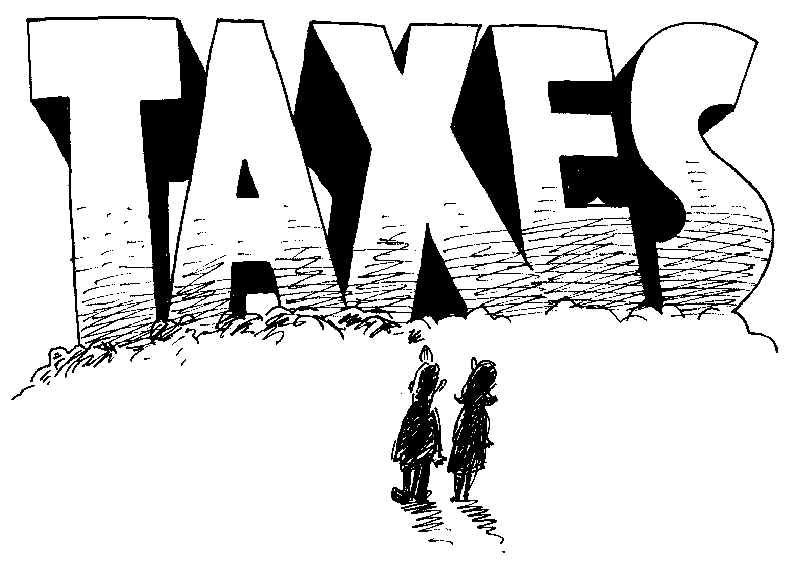 There’s a discussion on the BBC site about the merits of flat tax, as idea that the Adam Smith Institute proposed for the UK in 2004. Several good points in favour of it are made by Rory Meakin of the Taxpayers’ Alliance. Its chief virtue is that it cuts complexity. In place of our 17,000 pages of tax code, one of the world’s longest, would be a few simple rules. In place of the various different rates, thresholds and exemptions, there would be a simple tax rate for all incomes earned above the minimum wage. This might be 22% or 25%, but would be substantially lower than the top rates currently in force.



 Madsen Pirie