

• Adam Smith Institute

    Adam Smith Institute place holder
  • Philosophy & Logic

    Philosophy and Logic
  • Cambridge

    Cambridge
  • Children’s SF

    Children's Science Fiction
  • Enter your email address to follow this blog and receive notifications of new posts by email.

    Join 428 other subscribers

The smart bracelets that signal when civil rights and aid workers are in danger

braceletsThe Civil Rights Defenders group has produced smart bracelets to aid civil rights and aid workers at risk of being kidnapped or murdered.  The bracelets use mobile phone technology to send out alarm signals and alert others to the fact that the wearer is in danger.  They can be activated manually, or automatically if the bracelet is forcibly removed.  They signal who’s in trouble and where they are, and alert nearby staff who might be able to help.  They send out facebook and twitter messages, too.  The first ones started being given out this week.

I have often thought we should be using tracker devices on people at risk from kidnapping.  The bracelets are bulky, and hostiles might rapidly develop tactics to reduce their effectiveness.  They are a welcome addition to the safety of people at risk, however, and point the way to future developments.  I have often thought we should develop internal trackers, ones that can be fitted in the body cavity or implanted under the skin.  They would need to be largely non-metallic to evade detection, and should be capable of being switched on by a signal from afar, so they would not transmit signals until asked to do so.  Kidnap victims fitted with these could then be traced in order that rescue attempts could be mounted.

SpaceshipTwo flies with its nitrous system on board

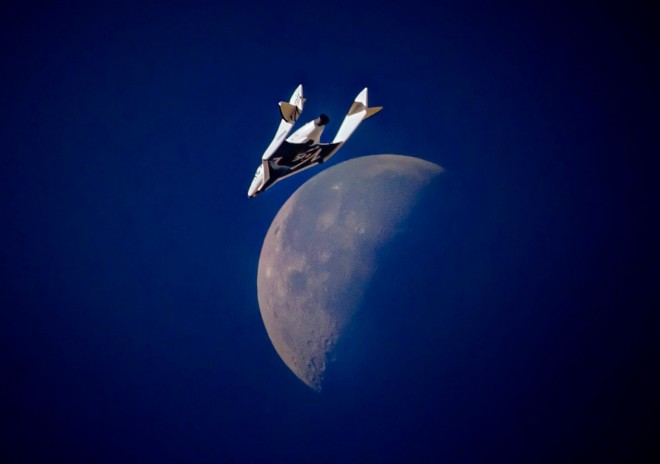
SS2+moon

Burt Rutan’s SpaceShip Two, made for Virgin Galactic to carry passengers on sub-orbital hops, did a nine-minute glide this week, testing the nitrous loading and venting system, as well as engaging the ship’s ‘feather’ re-entry system.  When the ship does make powered flights, it will be propelled by a solid fuel rocket using nitrous oxide as the oxidizer, and when it does re-enter from its brief forays into space, it will feather its tail like a shuttlecock to slow it down and prevent it over-heating.

The news of the test is only an excuse for me to post Virgin Galactic’s really cool photo of the craft passing the moon in the sky.  Its own ambitions are more modest, in that it will take its passengers 100km high into space and allow them to experience a few minutes of weightlessness floating around the cabin.

Do tech neologisms make people angry?

abc

The title of a piece by Tom Chatfield asks “Why do tech neologisms make people angry?”  This is the fallacy of the complex question, for he has not established that they do, and does not in the article itself.  He point to a 16th century poet who didn’t like neologisms (not particularly tech ones).

“In the 16th Century, neologisms “smelling too much of the Latin” – as the poet Richard Willes put it – were frowned upon by many.  Willes’s objects of contempt included portentous, antiques, despicable, obsequious, homicide, destructive and prodigious, all of which he labelled “ink-horn terms” – a word itself now vanished from common usage, meaning an inkwell made out of horn.”

The cue is for an article about new tech words, abbreviations and emoticons.  The author is described as “a commentator on digital culture, and the author of Netymology: A Linguistic Celebration of the Digital World.”

Fine, but the article is more of a romp through some modern trends rather than an analysis, and there’s little to back up the title claim that neologisms make people angry.  In his defence I might suggest that some sub-editor, rather than himself, supplied the title.  I find that some people affect disdain for Americanisms, often without realizing how many of the words they use themselves (like gadget, boss, barbecue, phoney) started out that way.  I myself find that I sometimes have to resort to Google to decipher the initials which young people use to each other.  Fortunately Mr Google invariably supplies me with a translation.  ROFLMAO.

This could be a safer way to achieve carbon sequestration

carbon-capture

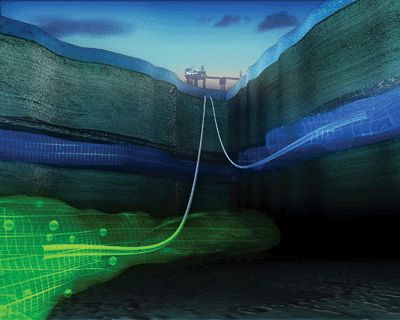
The International Energy Agency says that carbon capture and storage (CCS), a form of carbon sequestration, will be an important component in reducing the amount of CO2 emitted by industry.  Under CCS the CO2 is captured from power plant and industry emissions and compressed before being stored deep underground.  Typical locations proposed are former oil and gas fields and coal mines or deep saline aquifers.  Possible drawbacks include the increased seismic activity this might bring about, or the unintended accidental release of the carefully stored CO2 into the atmosphere.  Now a new method has been suggested.

“A study published this month in Geophysical Research Letters suggests that storing carbon dioxide underground in a type of volcanic rock called reactive mafic rock could potentially present little seismic risk, because the surface of mafic rock reacts with carbon dioxide to form a solid mineral.”

Mafic rock is the most common rock by volume on the planet, in large part because one type of it, basalt, makes up the seafloor.  So we now have the possibility of turning the surplus CO2 into inert rocks that pose no risk of increased seismic activity and no threat of sudden release of stored CO2.  The research is at an early stage, and the engineering that could achieve this result has yet to be developed, but it looks like a promising idea.

What is the total amount of gold ever mined?

g-bullion

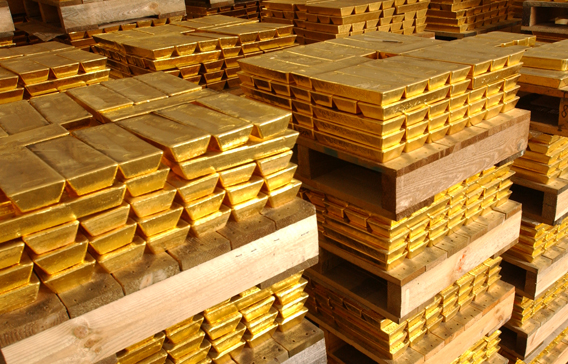
There’s an interesting feature from the BBC about the total supply of gold in the world.  This is not idle speculation done for amusement; it actually matters to those who advocate pegging currencies to gold as they used to be.  I read some time ago that all of the gold ever mined in history would come about one-third of the way up the Washington monument.  The BBC story seems to bear this out.  It quotes estimates which suggest that the world’s gold would all fit into a cube with sides of about 67 feet.  Thomson Reuters GFMS, which produces an annual gold survey, whose latest figure for all the gold in the world is 171,300 tonnes.  This corresponds to our cube, or a block nearly 32ft 2in above ground if it covered Wimbledon’s centre court.

It isn’t a great deal to use as the world’s currency, and there’s a new problem.  Gold has historically been recycled, melted down from one use into another.  Now however, it is used in tiny amounts in technology goods, and may not be economically recoverable.  The British Geological Survey estimates that 12 percent of gold production is now used like this, and for the first time in history we might actually be using up gold.  The US Geological Survey estimates there are perhaps 52,000 tonnes of recoverable gold in the ground waiting to be mined.  If ever we do use up significant amounts, we’ll need to find ways of finding more.  And at that point asteroid mining might step up to the plate…

Is chocolate with 100 percent cocoa worth eating?

dark-choc

Some sellers report a High Street trend towards chocolate that is 100 percent cocoa.  It goes against traditional chocolate that has vanilla and sugar blended in, together with milk if it is milk chocolate.  Cadbury’s for decades used ads which showed a glass and a half of full cream dairy milk being poured into one of their chocolate bars.  Their Dairy Milk has a minimum 26 percent cocoa, while Mars Galaxy has 25 percent.  Even Cadbury’s Bournville, a dark chocolate, has 36 percent minimum cocoa.  On the Continent, especially in Belgium, chocolate has traditionally featured higher cocoa percentages, and there was an EU move at one stage calling for British chocolate to be re-christened “vegolate.”  It came to nothing, except perhaps for inspiring an episode of “Yes, Prime Minister” featuring an EU attack on the British sausage.

Chocolate consumption goes back a long way, to the Mokaya over 3,000 years ago, and during the Aztec empire.  I eat dark chocolate every day, preferring something over 70 percent cocoa.  I have tried it with 100 percent cocoa, and find the taste lacks balance.  For me 85 percent cocoa is near the top of what I find pleasant, and some of the experts seem to agree with me. Alasdair Garnsworthy, head chocolatier with the Chocolate Society, says, “Chocolate with a high cocoa content can still be made using cheap beans. You can get chocolate with a lower cocoa content that is far better because it has been made with quality beans.”  It seems to matter more that you start with good ingredients than that you use 100 percent cocoa.

I think perhaps I have too many projects on the go at once

rat-treadmill

Last year was supposed to be my year of living at full pelt, but this one is filling up  quite rapidly.  First of all Bloomsbury have suggested I prepare a second edition of “How to Win Every Argument” with some new content.  I thought I might add a few more logical fallacies to it, and have a few introductory chapters on how to structure an argument, and how to argue in different contexts such as at a debate, on radio or TV, in print, or in a pub.

Then Harriman House said that they were pleased with “Economics Made Simple” and wondered if I’d consider doing another economics book pitched at a similar audience.  I thought about it and suggested “Sense and Nonsense in Economics,” which would be a lot of fun to write.

Then it was suggested to me that I should write a book aimed at school sixth formers giving the case for liberty in a fairly punchy way.  “Why Liberty” was my first suggestion of a title, with the book covering why liberty is not only the most moral system, but also the most efficient.

With “Silver Dawn” finally down the slipway, my thoughts turn to “Team Games,” a children’s SF book already written but needing just a final polish before it goes to press.  And close on its heels comes “Morven,” my space adventure story about a young xenotelepath.

I am investigating the possibility of doing a weekly video blog on the ASI site.  These would each be of 3 minutes in length and would simply involve me talking to camera on some of the issues that have attracted my attention and interest during the week.  They would command a regular weekly slot such as a Tuesday morning.  I am in the process of learning editing and titling techniques, and preparing to make a few trial videos to see how well it works.

With all of the other stuff I do, I am beginning to think that perhaps I have too many things on the go…

The Easter egg tradition continues

choc-eggs

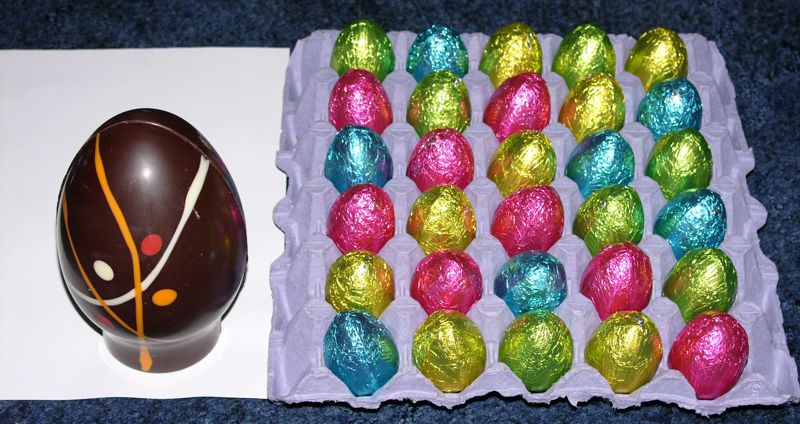
Although eggs are associated with the Christian festival of the Resurrection, the association of eggs with Spring (and fertility) is much older.  The practice of painting eggs goes back millennia, with Sumerians and Egyptians doing it 5,000 years ago.  There’s even a decorated ostrich egg that’s 60,000 years old!  The early Christians painted their eggs red to symbolize the blood of Christ, although any bright colours are used today.  My childhood never featured egg hunts, though we did roll painted hard-boiled eggs down grassy slopes.

The eggs are often of chocolate today, representing an Easter feast as the Lenten fast ends.  The small eggs in my photograph were there for young nephews and nieces who came visiting over Easter.  They were hollow ones made of milk chocolate.  The large egg was there to be shared by grown-ups, whose more sophisticated tastes like dark chocolate rather more than children usually do.  Happy Easter!

Now that “Silver Dawn” has had its launch party I can show the cover

SilverDawn3

It was a close run thing.  We’d scheduled the launch party for the latest in my children’s SF series for Monday Match 18th, but we didn’t actually have any books.  Then at lunchtime on the day itself a few boxes were delivered so we were able to go ahead.  “Silver Dawn” is my first sequel, featuring the lead characters from my earlier “Children of the Night.”  It is set in an alternative Earth, and although there are mediaeval trappings such as sailing ships and a powerful church and aristocracy, it is a work of science fiction, not fantasy.  There is no magic, and there are mechanical flying machines called dragonflies alongside those sailing ships.  There is telepathy, though, which is assumed to follow scientific laws.  My young protagonist, Mark, is a sensitive, who is just learning to develop his skills, not only in mental communication, but in mental combat.  He comes up against a powerful and mysterious cardinal, highly-placed in the Church’s hierarchy and a deadly opponent.  Fortunately Mark has his friend Quicksilver, the rat with whom he shares a telepathic bond.  It all makes for a very exciting story, especially with Gene, who qualified as the youngest drangonfly pilot and has skills that belie her years.  You can’t actually buy the book yet, but when it becomes available, I’ll post a link.

What is so special about triangular flapjacks that sees them banned?

triangular-flapjack

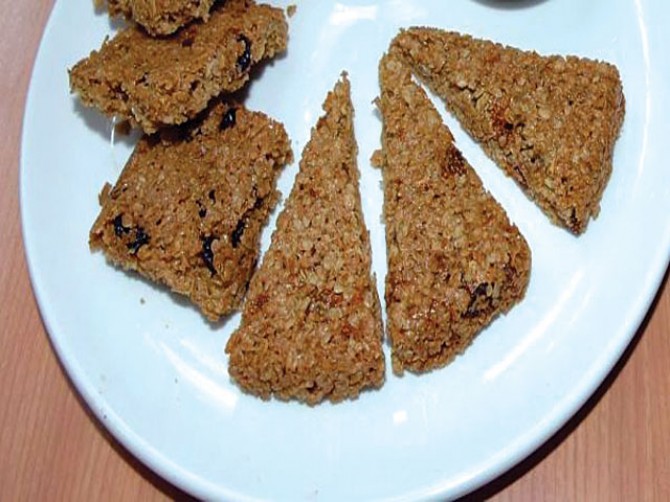
A BBC story reports that Castle View School in Canvey Island, Essex, has banned the serving of triangular flapjacks.  Apparently a boy was hit in the face by one when unruly students were throwing them around.  For once the blame for this idiocy cannot be laid at the door of the Health and Safety Executive.  They have opposed the action.

A spokesman for the Health and Safety Executive said: “We often come across half-baked decisions taken in the name of health and safety, but this one takes the biscuit.

This is quite witty, with “half-baked” and “biscuit” featuring in a story about flapjacks.  And they go on sensibly to point out that if pupils are throwing things at each other, this is a disciplinary problem, not a heath and safety one.  They are correct.  The square flapjacks which are still served could just as easily injure someone, and if it is the sharp edges of triangular ones that concern the school, they should look closely at the knives and forks they allow the students to handle; they could do more damage than a triangular flapjack.  To judge by American movies, ‘food fights’ are more common over there than they are in the UK (maybe they have food to spare).  I don’t think they are sufficiently prevalent in the UK to justify banning food that might cause injury in a fight.