


• Adam Smith Institute

    Adam Smith Institute place holder
  • Philosophy & Logic

    Philosophy and Logic
  • Cambridge

    Cambridge
  • Children’s SF

    Children's Science Fiction
  • Enter your email address to follow this blog and receive notifications of new posts by email.

    Join 428 other subscribers

Processed meats lead to early deaths, says study

processed-meats

A major medical study of nearly half a million people spread across 10 European countries covering 13 years has pinpointed processed meats as a significant cause of early deaths.  Those who consumed higher proportions of processed meats were found at greater risk of premature death.  The estimate was that in Britain perhaps 3,000 lives might be saved each year out of the 100,000 who die before age 65.  This 3.3 percent reduction could be gained by limiting processed meat intake to 20gm per day, the equivalent of one rasher of bacon.  Processed meat means that which has been preserved by being smoked, salted, cured or has had preservatives added to it.  It includes bacon, ham, sausages and salami, and is linked to increased incidence of cancer and heart disease.

Coming on top of the stories purporting to link fizzy drinks with obesity, it will no doubt only be a matter of time before some misguided group of doctors proposes a tax on processed meats to accompany the fizzy drink tax and the minimum alcohol price.  They could perhaps save a great deal of effort if they simply listed the food and drink that people were to be permitted to eat.  Then while everyone dined healthily on poached fish and streamed cucumber, the doctors could draw up a minimum exercise plan to inflict upon us…

While we should not live recklessly, it’s a good thing to have fun.  Yes, some sugary cakes are nice, bacon can be amazingly appetizing, summer barbecues with hot dogs are pleasant, fizzy drinks are refreshing and stimulating, and alcohol is a good way of unwinding in the company of friends.  It’s fine for medics to point out the risks that some foods might pose, but not in shrill tones that might raise our stress levels too high.  The trick is not to overdo these enjoyments too often.  Chill out and make your own decisions about what to eat and drink.  Act sensibly, but make sure you have enough fun to stay happy.

Interest groups and public policy initiatives

landecon-field

In the lecture I delivered yesterday to the Department of Land Economy at Cambridge, I analysed how interest groups which perceive themselves to be losers from policy initiatives can derail reforms that would be of benefit to the country as a whole.  The interest groups might be small, but they are self-conscious, and they regard their potential loss as significant.  The general populace by contrast is not sufficiently self-conscious to see the benefits for itself from the proposals, and perceives any potential losses as relatively small.

The approach I put forward calls for careful examination of reform proposals to identify potentially hostile interest groups, and to bolt on ad hoc measures to diminish their opposition.  This can be done by removing their potential loss, by compensating them with something they perceive as more advantageous, or by calling into being countervailing interest groups to outweigh them.  Fundamentally this is the approach pioneered by the Adam Smith Institute.

New edition of “How to Win Every Argument”

how-to-win

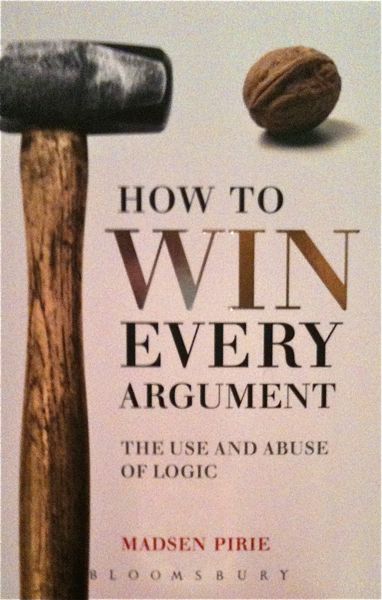
I have had some good news from Bloomsbury.  They took over Continuum who published my book on logical fallacies, “How to Win Every Argument.”  It is still selling steadily six years after publication, and Bloomsbury think it might be time for a second edition with some added text.  The original is primarily a list of logical fallacies, with each of them explained, some with what I hoped were humorous examples.  I thought I might this time add a few chapters at the front outlining the structure of successful arguments, and dealing with different contexts.  Arguing in a public debate, for example, is different from arguing one-to-one in private, and presenting an argument on television is not the same as presenting one over a dinner table.  Basically I agreed, and have undertaken to write the material for a second edition, and update any of the original fallacies that need it.  Meanwhile I am all agog to receive the first hard copies of “Silver Dawn” (children’s SF) within the next couple of weeks.

Tonight’s treat is a 1978 vintage Malmsey Madeira

madeira 1978

A special treat awaits tonight.  Xander found 4 bottles of aged Madeira in his cellar and invited me to put dibs on one of them.  I chose the 1978 Malmsey by Blandy’s.  The bottle has now been transferred to my safe keeping and is resting to allow it to settle.  Tonight there is a reception for The Next Generation of the Adam Smith Institute, with a 10-minute speech from David Davis MP on how to protect our liberties.

Afterwards I will adjourn to my nearby flat with Xander and maybe two close and trusted friends, there to sample this undoubtedly delicious and prestigious specimen.  I really like aged Madeira’s.  In Alex Liddell’s classic text, “Madeira,” he opens by describing the time when he sampled a 1789 pre-French-Revolution solera.  What he does not say is that I was there at the time and enjoyed a glass of it.  Since then I have sampled a bottle of the 1815 “Waterloo” Madeira, and four bottles of the 1824, one of which I took to the States and consumed on a balcony in Alexandria, overlooking the US Capitol, and reflecting that Jefferson was still alive in 1824.  I bought a bottle of the 1900 a few years back, and shared it with friends in Cambridge. Not surprisingly, I am looking forward to this one…

Relief all round as SpaceX’s second Dragon is captured

dragon-capture

The second private enterprise mission to supply the International Space Station has succeeded despite issues with three of the craft’s four thruster pods.  Once it reached orbit on Friday atop a Falcon 9 launch vehicle, a propellant valve malfunction threatened to prevent it deploying the solar array to give it power.  Successful trouble-shooting from the ground managed to get the thrusters back on line, and the robotic arm of the ISS successful grabbed it from orbit as it manoeuvred itself into proximity.

The reusable capsule is carrying nearly 1300 pounds of supplies, new equipment and scientific experiments, and will splash down at the end of the month similarly packed with a return load of equipment and spent supplies.  A failure might have given the development of private space-worthy vehicles a nasty hiccup, so it’s relief all round as it goes ahead with a successful mission.

Lecture at Land Economy in Cambridge

landecon

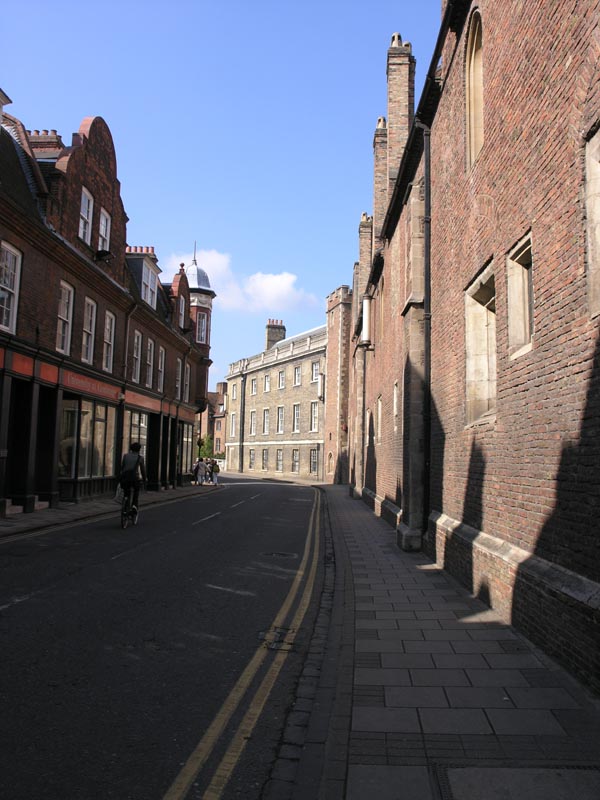
While I was in Nice this last week I managed to take in the Nice Carnival, a way of attracting tourists to the place in the low season of February.  It was visually enthralling, especially the ‘Flower Parade.’  However this was actually a time out from my work.  What I was really doing was preparing my lecture for Wednesday March 6th to the Department of Land Economy at Cambridge University.  I am covering the way in which the opposition of interest groups, who might otherwise thwart public policy initiatives, can be handled in such a way that they are brought on side, or their opposition is at least muted.  Fundamentally this is what the Adam Smith Institute has made its trademark approach.  I will probably post the written version of the lecture as a think piece on the ASI website, and put a link here for anyone who wants to look at the full text.

What the alcohol survey actually shows

booze

A survey of drinking habits in the UK has revealed that people under-estimate and under-report the amount of alcohol they consume.  The actual figures for consumption could be almost twice what previously published figures have suggested, with most drinkers regularly exceeding the maximum weekly intake recommended by doctors. Of course the medical anti-alcohol lobby has leapt onto the figures, claiming they back up its case for minimum pricing.

“Doctors said the study, published in the European Journal of Public Health, was further evidence that the Government needed to hold its nerve and set the minimum price for alcohol at 50p per unit.”

Sir Richard Thompson, president of the Royal College of Physicians, said this “is yet more evidence of the need for strong government action, including a minimum unit price for alcohol.”

But is it? Tim Worstall, rapidly approaching the status of a National Treasure, thinks not.  His case is that we know how much health damage is caused by excessive drinking.  We have the NHS statistics for procedures, hospital admissions, treatments and deaths.  If the new survey is correct, it will mean this health damage has been caused by twice as much alcohol as we had originally supposed.

“We are getting the same amount of damage from a greater amount of alcohol consumption. Therefore alcohol is less dangerous than we thought it was before.”

Nicely put, Tim. If all of those health statistics they trumpeted resulted from a great deal more alcohol than we had supposed, that does indeed show it to be not as harmful as we had previously thought.

The double helix turns sixty

d-helix

It was on the last day of February 1953 that James Watson and Francis Crick finally cracked the structure of deoxyribonucleic acid, popularly known by the initials DNA.  Others made important contributions, notably Maurice Wilkins and Rosalind Franklin whose X-ray diffraction images were crucial, but in 1962 the Nobel Prize was awarded to Crick, Watson and Wilkins.  The whole episode is brought marvellously to light in ‘The Double Helix’ by Watson himself.  It tells of the excitement of the chase and the fiercely competitive nature of the research.  They were alarmed that Linus Pauling might have beaten them to it when he published a proposed structure, until they realized that his alpha helix proposal was not even acidic, whereas DNA is quite a strong acid.

I live in Cambridge a few yards away from Crick’ former home next to the Hawk’s Club.  Ironically the sign to commemorate it is a yellow alpha helix hanging on the wall, rather than the double helix that DNA turned out to be.  I often visit the Eagle pub in Benet Street, which they dashed to just before closing time on the night of their great discovery, and drew in beer on the table the now famous double helical pattern.  They realized almost immediately that if the double helix splits with a couple of base pairs, to join with another separated half, there was a physical process that provided a mechanism for sexual reproduction.

DNA is now everywhere, helping in medicine, diagnosis, forensics and identification.  I signed up with 23andme a few years back to take a stroll through some of mine and see what might lie in store.  But it all started that night in Cambridge just 60 years ago…

Taking a trans-Atlantic voyage on the Titanic II

Titanic

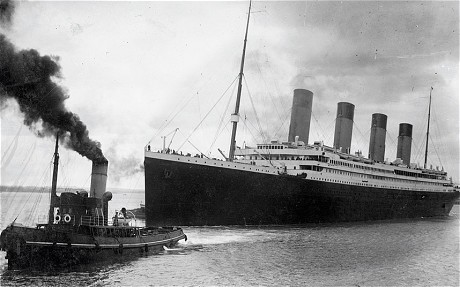
Clive Palmer, an Australian multi-millionaire who made his fortune in mining is planning a new venture: a replica of the Titanic to sail the blue riband route between Southampton and New York.  The ship will look exactly like its ill-fated predecessor and the interior design will closely follow the original – designers used all the trendy ideas for decorating small spaces, as well as left that famous grand staircase to the first class lounge, so brilliantly reproduced for James Cameron’s movie.

The Titanic II will include more lifeboats (of course!), a hospital and a helipad, and will, unlike the original, be air conditioned.  But the aim will be to replicate the atmosphere of the original ship’s era, with period clothes supplied in each cabin for voyagers wishing to dress the part.

Will it succeed, despite its association with a tragic past? Oh yes.  There will be a waiting list.  It will be like the Orient Express, which runs now for travellers who want to savour the experience of crossing Europe in a luxury train that replicates past splendours.  I will certainly travel on the ship, though not on its maiden voyage schedule for 2016.  This has nothing to do with superstition on my part, and everything to do with price.  The maiden voyage will be too expensive, given that when I do sail it, I will want to go first class.  I think this is a splendid idea, one that will make money for its investors. More to the point, it will bring a little magic into our lives.

Does Italy really need a strong government?

Silvio-B

The pundits have been spreading gloom about the Italian election results. “Worst possible outcome.” “Lack of strong government will spook the markets.” “No effective majority for reform.” And so on.  What “the experts” wanted was a strong government able to carry out the austerity measures imposed on Italy from Brussels (and maybe Berlin).  Yet a strong centre-left government led by ex-Communist Bersani would have been unlikely to bring the reforms Italy needs, such as the loosening of its labour market and changes to the costly public sector pensions system.  On the contrary, it might well have trod the road pioneered by Francois Hollande in neighbouring France, and back-pedalled on such reforms while pursuing an anti-business tax policy.

Italy may have been spared this fate by the indecisive nature of the result.  A wafer-thin Left majority in the lower house looks set to be matched by a narrow Right majority in the Senate, with both houses needed to rule effectively.  The EU-installed Mario Monti managed a bare 10 percent of the popular vote, while the joker in the pack (literally) has been ex-comedian Grillo with 25 percent.  There could be a Bersani-led coalition backed by Monti and Grillo, but it would be unstable, and still leave Berlusconi with a blocking majority in the upper house.  The most likely outcome seems to be another election soon, and after his dramatic comeback, a further Berlusconi government cannot be ruled out.  Now that really would tip the Eurocrats into hysteria…